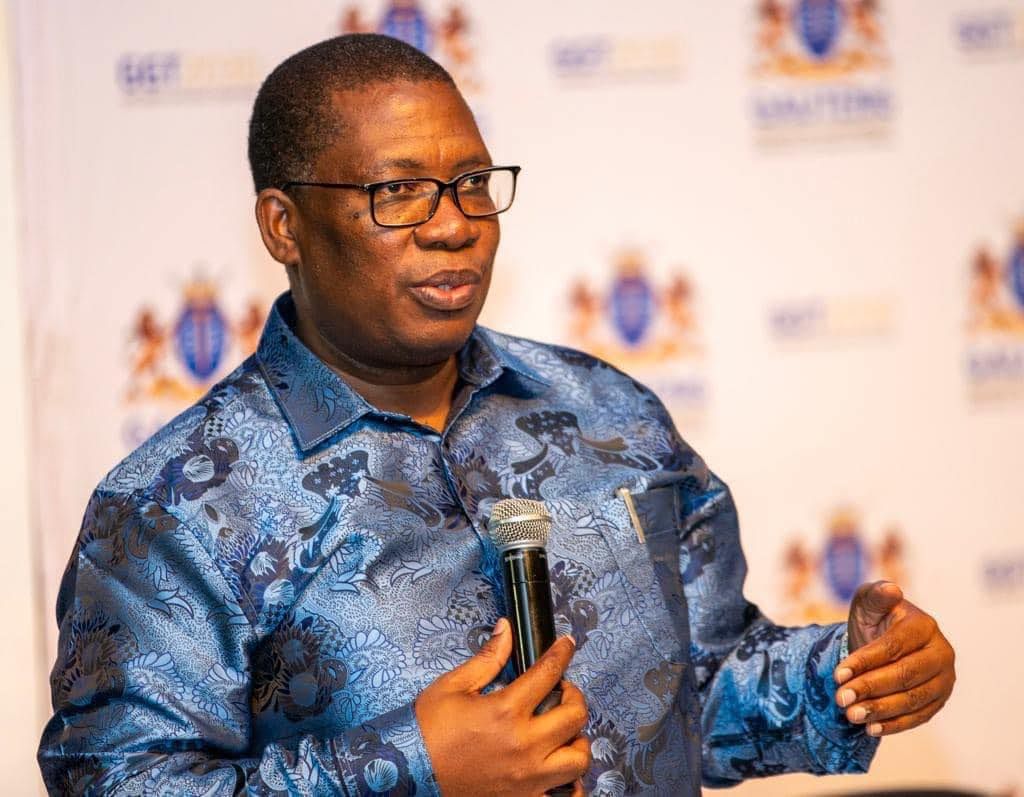
Panyaza Lesufi speaks at a Johannesburg briefing, warning that illegal informal settlements will be demolished. Image: The South African.
(The Post News)– Anti-migrants sentiment is becoming one of the most politically charged issues in South Africa, particularly in Gauteng. The latest comments 0n anti-migrants sentiments by Gauteng Premier and African National Congress (ANC) leader Panyaza Lesufi have drawn significant attention, with political analysts suggesting that this rhetoric is strategically aimed at boosting ANC’s voter appeal ahead of the 2026 local elections.
Speaking at a media briefing in Johannesburg after the Gauteng Executive Council meeting, Lesufi confirmed that the provincial government plans to demolish illegal informal settlements—particularly those occupied by undocumented foreign nationals. “We are tired of this government now,” he said, revealing that more than 400 new informal settlements had recently emerged in Gauteng.
Lesufi further explained, “Partnerships with municipalities will be strengthened, and proactive measures will be taken to halt further land invasions while ensuring lawful settlement development.”
Political Analysts: Anti-Migrants Sentiment is a Calculated Move
Political analyst Professor Ntsikelelo Breakfast said Lesufi’s statements are hard to separate from political strategy. “While one cannot rule out genuine concerns, the timing and tone raise questions. The ANC has traditionally taken a softer approach on this issue, but changing dynamics have forced a rethink.”
Breakfast argued that parties like the Patriotic Alliance (PA), ActionSA, and the ACDP have been gaining traction by embracing hardline stances against undocumented migrants. “Whether it’s true or not, economically, the working class blames foreign nationals for unemployment and poverty. There’s clearly a message resonating on the ground, and the ANC knows it,” he said.
Anti-Migrants Sentiment and 2026 Elections
The 2026 local elections loom large over these developments. Breakfast noted that the ANC’s support has been declining in urban centers, and anti-migrants sentiment might be one of the few issues capable of galvanizing disillusioned voters. “I can bet my bottom dollar they [Operation Dudula] will garner votes. They’ve gained strong support at the grassroots. That’s the reality—even if I don’t personally endorse them,” he said.
Another political analyst, Professor Theo Neethling, echoed these views, warning that Lesufi’s comments carry populist undertones. “This shift carries populist undertones. It seems intended to align with rising anti-migrants sentiment, especially with the 2026 elections approaching.”
Rising Informal Settlements Fuel the Debate
Lesufi pointed to an alarming trend where settlements are being established overnight. “The pattern is clear: identify land owned by the government, send a few people, and after 72 hours—once there’s no eviction—invite everyone who needs land to occupy it,” he said.
Links Between Service Delivery and Political Messaging
Breakfast warned that while migration may dominate headlines, service delivery failures remain the bigger issue for voters. “There is a strong link between poor service delivery and declining electoral performance. In the past, voters supported liberation movements. But younger voters are disillusioned. They’re not voting based on history—they want results.”
Neethling agreed, stating that focusing solely on undocumented migrants may not be enough to regain public trust. “The ANC is struggling, while the PA and IFP are capitalizing on public frustration. This could be an attempt to recover lost ground, but it also raises concerns about fueling xenophobic sentiment,” he said.
Anti-Migrants Sentiment: Political Risks Ahead
The push for mass demolitions could carry unintended consequences, including increased tensions and possible outbreaks of xenophobic violence. Human rights groups have warned against framing migrants as scapegoats for structural economic problems.
Lesufi, however, insists that South Africa cannot sustain uncontrolled land occupation. “Of course, one might ask: why now? But the reality is you can’t have a country where people are unaccounted for. Even in Europe, immigration is strictly controlled. The mismanagement of South Africa’s borders has consequences—on healthcare, education, and basic services,” Breakfast said.
About the Author