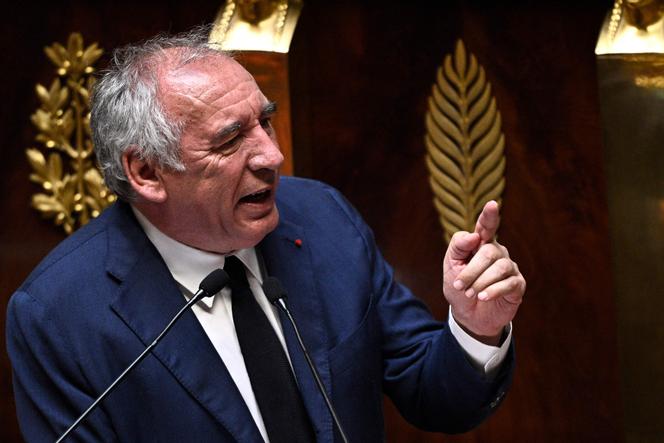
French Prime Minister François Bayrou hands in resignation after losing the confidence vote in the National Assembly. Image: Le Monde.
(The Post News) – France Prime Minister François Bayrou lost a key confidence vote in the National Assembly, bringing down his government and compelling him to step down. Meanwhile, France has embarks on another bout of political turmoil.
Bayrou, 74, lasted less than nine months in office, the country’s fourth prime minister in just two years. Monday evening saw 364 deputies oust his government while only 194 backed him. The result left Emmanuel Macron rushing to have someone ready as a replacement after his vulnerable second term came under fresh turbulence.
The President of France’s National Assembly, Yaël Braun-Pivet, said the choice triggered Article 50 of the French Constitution, “The prime minister must submit the resignation of his government.” Bayrou will submit his resignation to Macron on Tuesday morning, according to reports.
Bayrou: Gamble on Debt Crisis
Bayrou’s downfall was centered on the runaway public finances of France. He based the survival of his government on an austerity budget that called for €44 billion in spending cuts in the expectation of breaking the parliamentary deadlock. France’s government debt stands at €3.3 trillion, approximately 114% of GDP, the eurozone’s third highest after Italy and Greece. Its own last year was 5.8% of GDP, nearing double the EU’s 3% limit, and will remain above 5% this year.
Bayrou explained his controversial move, warning lawmakers that the country’s debt burden was “life-threatening.” In a final speech to parliament, he argued, “The biggest risk was not to act, to let things continue in the same fashion and have business as usual.” But the gamble did not work. Allies were taken aback, opposition parties accused him of penalizing taxpayers with austerity cuts instead of taxing businesses and corporations, and the resulting uprising in parliament wrote his fate.
Macron’s Limited Options
President Macron is now forced to appoint his sixth prime minister since 2017 and his third in under a year. His options remain gravely constrained by a broken parliament.
He could try to nominate another centrist or conservative to maintain the ties to right-wing Republicans, but that would be at risk of repeating Bayrou’s failure as well. Or he could appeal to the left, where the Socialist Party and other oppositional forces insisted on a greater role since they won most seats in the elections of the past year.
Likely successors include Sébastien Lecornu, 39, defense minister and staunch Macron ally. Socialist Party leader Olivier Faure, who commands a bloc of 66 deputies. Labour and Health Minister Catherine Vautrin. Justice minister and hard-line conservative Gérald Darmanin. But any new appointee will be confronting the same challenge that toppled Bayrou: getting a real 2026 budget through a divided chamber.
France’s political crisis began after Macron’s catastrophic wager in June 2024. Having incurred a bruising loss in European Parliament elections, Macron declared an unanticipated parliamentary election, hoping to secure “a clear majority in serenity and harmony.” What ensued was that the election yielded a hung parliament split between the left, center, and far right.
That fractured result has made government all but impossible. Michel Barnier, Bayrou’s predecessor, lasted only three months before being defeated in a confidence vote—the shortest term of any French prime minister in the Fifth Republic. Bayrou fared slightly better, lasting nine months.
This cycle of ambiguity has damaged Macron’s image at home, as he retains a front-runner status on the international stage in diplomacy regarding Gaza, Ukraine, and Palestinian statehood. The disconnection between global ambitions for France and domestic unrest has infuriated partners and unnerved investors.
Debt Dilemma
The root of the political crisis in France is its swelling debt burden. France has been paying out more than taking in for decades, and this has pushed the government to borrow more money. Today, debt is nearly €50,000 per individual.
Bayrou demanded deep reforms, in particular at pension and social spending levels, threatening that France’s demographic aging made the existing regime unaffordable. He argued that increasing the retirement age, which already increased from 62 to 64 in 2023, might be unavoidable.
Opposition parties disagreed. The left called for the corporation and rich citizens to be taxed more, with the far right demanding cuts in immigration expenditure. Without an understanding, any attempt at passing a budget is on the verge of breakdown.
Economist Alexandra Roulet explained the impasse: “To stabilize the debt, France would need a consolidation budget that reduces spending and raises some taxes. But politically, no party will give in.”
Macron has to make a quick decision whether to appoint a new prime minister or dissolve the National Assembly and call new elections. Most of the political leaders, like far-right National Rally leader Marine Le Pen, are demanding new elections. But Macron fears that another election would strengthen his rivals and have parliament remain divided.
Meanwhile, Bayrou remains acting prime minister until Macron finds a replacement. But the clock is ticking: France must have a budget soon, and further delay will continue to knock investor confidence. With Macron’s presidency continuing until 2027, France has at least two more years of potential political gridlock. Unless Macron identifies a leader who can build fragile cross-party coalitions, the country could stay mired in political drift.
About the Author