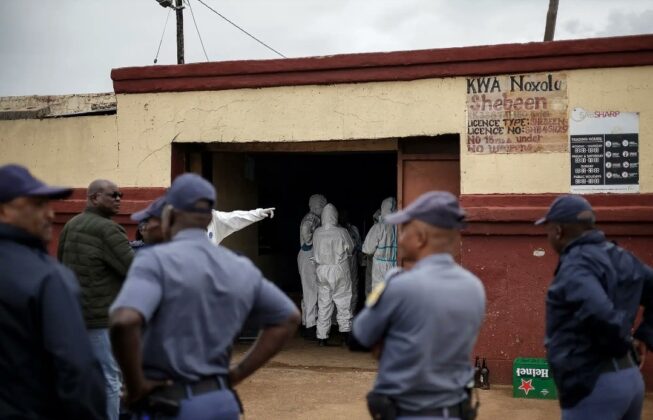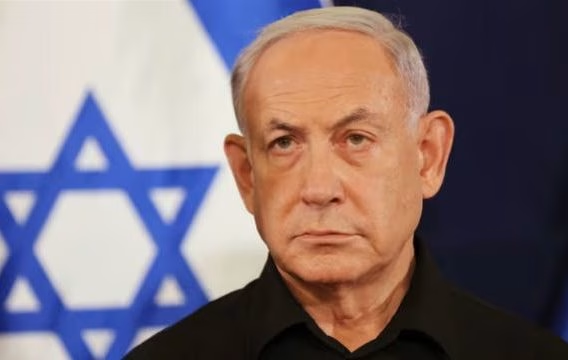
Israel Prime Minister Benjamin Netanyahu warns Qatar after Israel's unprecedented strike in Doha, sparking outrage across the Gulf and beyond. Image credit: Punch Newspaper
(The Post News) – Israeli Prime Minister Benjamin Netanyahu has plunged the Middle East into fresh uncertainty after threatening additional strikes on Qatar if it persists in hosting Hamas leaders. The threat was issued fewer than 24 hours after Israeli warplanes staged an unprecedented bombing in Doha, aimed at Hamas’s political headquarters.
The strike rattled Gulf states, imperiled tenuous truce talks, and was condemned even by Israel’s closest allies. While Hamas said five people were killed, including the son of longtime negotiator Khalil al-Hayya, the group’s top leaders were spared. Netanyahu pledged that Israel would not stop until Hamas’s political leadership is overthrown.
A 9/11 Parallel
Netanyahu defended the strike as a mirror image of America’s fight against terror after 9/11. “What did America do after September 11? It tracked down terrorists wherever they were. That is exactly what Israel is doing,” he said.
He accused Qatar of empowering Hamas by supplying it with money and a haven. “Qatar is providing Hamas leaders with mansions while Israelis are burying their dead,” Netanyahu said. His statements framed the Doha strike not as a diplomatic gamble but as a moral imperative.
Israeli President Isaac Herzog supported the position, accusing al-Hayya of stalling U.S.-brokered ceasefire talks. “He kept saying ‘Yes, but’ in negotiations,” Herzog told the Daily Mail, portraying Hamas as unwilling to compromise.
Yet Netanyahu’s local critics argue the attack derailed negotiations intentionally. Family members of hostages who remain in Gaza accuse him of prolonging the war for political survival.
Qatar Sharp Rebuttal
The Foreign Ministry of Qatar was quick to react, condemning the attack as well as Netanyahu’s threats as “reckless” and “a violation of state sovereignty.” Authorities noted that Hamas’s political bureau is in Doha because the U.S. and Israel once requested that Qatar mediate.
Qatari Prime Minister Sheikh Mohammed bin Abdulrahman Al Thani was more assertive. In an interview with CNN, he called the strike “state terror” and held Netanyahu responsible for killing the last hope of hostage families.
“I was sitting with one of the families of the hostages the morning of the strike. They were counting on mediation. Netanyahu shattered that hope,” he said. “He broke every international law.”.
Sheikh Mohammed stated that Qatar would consult with regional partners and call for an Arab-Islamic summit to agree on a collective response. “There is a collective answer that should deter Israel from continuing with this bullying,” he said.
The strike reshuffled Gulf diplomacy overnight. UAE President Sheikh Mohamed bin Zayed Al Nahyan visited Doha within hours, and Jordan’s King Abdullah and Saudi Crown Prince Mohammed bin Salman will do so later this week.
For years, Arab states talked about normalizing relations with Israel under the Abraham Accords. Now, many of the same governments are rallying to Qatar’s cause. Their presence is a sign that Israel’s actions have possibly stalled or reversed normalization momentum.
“There is a response that will happen from the region,” Sheikh Mohammed said. “This response is under consultation and discussion.”
Washington, Israel’s traditionally stoutest defender, showed considerable unease. President Donald Trump scolded Netanyahu in a contentious call on Tuesday night, telling him the strike muddled American diplomacy, The Wall Street Journal reported.
U.S. Ambassador to Israel Mike Huckabee acknowledged uncertainty. “Hamas has rejected everything thus far. They habitually reject every suggestion that’s put on the table,” he stated, but acknowledged that “the timing was not wise.”.
The U.S. is now faced with a quandary: condemning an ally risks political repercussions at home, but ignoring the assault jeopardizes its reputation as mediator.
Europe Signals Sanctions
In the meantime, on the other side of the Atlantic, European leaders were taking a harder stance. European Commission President Ursula von der Leyen announced the EU would propose sanctions against Israel’s extremist ministers and review its trade agreement with Israel. Even Germany, Israel’s longest-standing and strongest European ally, announced it would participate in talks on punitive measures.
The EU’s shift in stance mirrors growing frustration at Netanyahu’s contempt for international law and repeated aggression across sovereign states.
The Doha strike was part of a wider escalation. Within three days, Israel attacked targets in Gaza, Lebanon, Syria, Tunisia, Yemen, and now Qatar. On Wednesday, Israeli planes bombed the Yemeni capital Sanaa, killing at least 35. Israel said it had attacked Houthi military sites, and witnesses described neighbourhoods being flattened.
The Iran-aligned Houthis have attacked Red Sea shipping in solidarity with the Palestinians. Israel views them as part of the same Iran-backed network as Hamas and Hezbollah.
For Netanyahu, striking across the Middle East achieves two goals: crippling enemies and conveying the message to allies that Israel will go it alone, with or without the world’s approval.
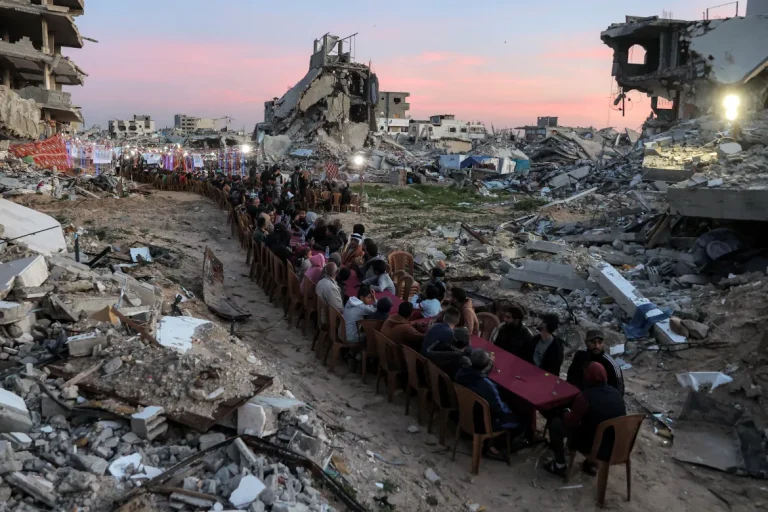
As Netanyahu presents the war in existential terms, the civilian death toll rises. More than 64,000 Palestinians have died since October 2023, most of them civilians, Gaza’s Ministry of Health reports. Entire neighbourhoods have been reduced to rubble, and humanitarian groups are warning of starvation and disease.
Hamas has demanded a full Israeli withdrawal from Gaza in exchange for hostages. Netanyahu is seeking an “all-or-nothing” deal demanding the total surrender of Hamas. The gulf between these two stances has left family members of the remaining hostages in limbo.
Qatar, once their greatest hope for negotiation, now says Netanyahu himself has “killed that hope.”.
The Doha attack was a turning point. Israel pushed into what was once taboo territory, expanding the war beyond its traditional theatres. What comes next in the region will determine whether the war spreads further or compels Israel to reset.
For Netanyahu, the gamble is clear: project strength abroad to stay in power at home. For Qatar and its friends, the question is how to respond without plunging the Middle East into even greater chaos.
As Sheikh Mohammed told CNN, “We are betrayed. But we will not stand alone.”
About the Author