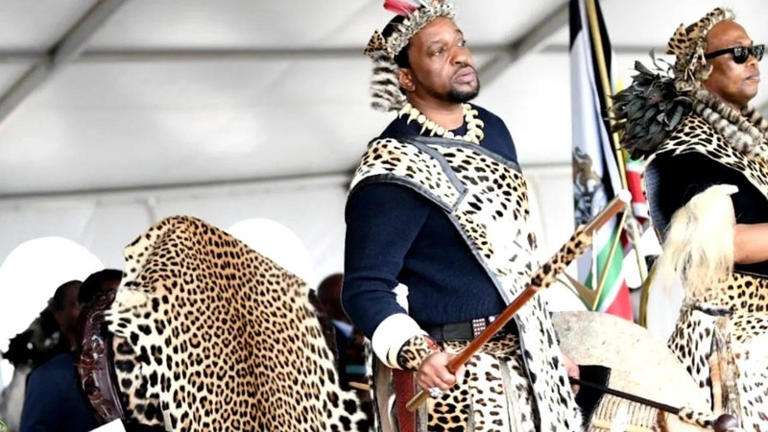
Zulu King challenges a cultural expert to a stick fight at the Reed Dance. Image by Sunday Tribune
(The Post News) – The annual uMkhosi woMhlanga (Reed Dance) ceremony became the backdrop for a dramatic confrontation between Zulu King Misuzulu kaZwelithini and Professor Musa Xulu, a cultural analyst. During his address to thousands of maidens and dignitaries at the Emashobeni Palace, the king publicly rebuked Xulu and even challenged him to a traditional stick fight. This public spat stemmed from Xulu’s previous comments in a media interview, which the king perceived as an insult to both him and the Zulu nation.
The king’s anger, while not fully explained in his speech, reportedly came from comments made by Professor Xulu. The cultural expert had publicly questioned the king’s decision to move the Reed Dance to the new eMashobeni Palace. This move, Xulu noted, seemed wasteful since a significant amount of taxpayer money had just been spent to renovate the old venue, eNyokeni Palace.
In his less than 20-minute address, King Misuzulu issued a stern warning to the media, instructing them to stop consulting Xulu for his views on the Zulu kingdom. He dismissed the professor as “useless” and accused him of being “against” his reign
“It is okay if he is against me, but when he insults me, he insults the Zulu nation as well,” the king stated, before suggesting that if Xulu wanted a fight, “there is a fighting ring… because I can take him up.” This challenge to a stick fight, a martial art deeply rooted in Zulu culture, was an extraordinary public display of anger from the monarch.
Professor Xulu, a scholar with multiple PhDs, swiftly responded to the king’s challenge. He told a news site that he viewed the king’s direct challenge as a “joke” but admitted he feared for his personal safety, claiming he had received threats. Xulu maintained that his analysis is academic and independent, and he is not a “praise singer.” He pointed out that media outlets seek his commentary precisely because his views are well-reasoned and academically sound.
The confrontation highlights a broader tension between the authority of a traditional leader and the role of an independent cultural critic in a modern democracy. The king, as the custodian of Zulu culture, sees any criticism of his actions as a direct attack on the nation he represents. For Xulu, however, the right to academic freedom and critical analysis is paramount.
About the Author