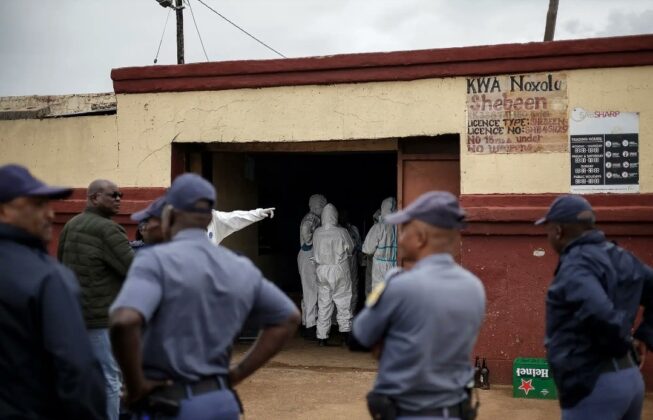
Iranian authorities announce the execution of Bahman Choubi-asl, accused of spying for Israel's Mossad, amid a surge in hangings across the country. Image: Investigation Discovery.
(The Post News) – Iran on Monday executed Bahman Choubi-asl, identified by the judiciary’s Mizan news agency as “one of the most precious Israeli spies in Iran.” The authorities accused Choubi-asl of collaborating with Israel’s Mossad intelligence agency to infiltrate government data centers and tap sensitive telephone communications projects.
It was at the behest of Mudasir that Mossad recruited Choubi-asl to steal state databases, monitor the importation of electronic goods, and map out strategic infrastructure, Mizan says. Choubi-asl’s death sentence was upheld by the Supreme Court after it rejected an appeal, affirming the charge of “corruption on earth,” one of the Islamic Republic’s most severe capital crimes.
Choubi-asl’s Execution Marks an Increase in Espionage Executions
Choubi-asl’s killing brings to light a growing wave of executions of Iranians accused of spying for Israel. At least 10 have been executed on espionage-related charges since June, according to human rights groups, including Babak Shahbazi this month.
The authorities claimed Shahbazi used his job as a contractor to fit cooling devices in order to collect information from military-related sites and protected server rooms. Activists responded, however, that he was tortured into a false confession after writing to Ukraine’s president vowing to fight Russia.
Iran Human Rights (IHR), a Norwegian-based organization, stated more than 1,000 were executed in Iran within the first nine months of 2025, while 64 were executed within one week. The organization believed that the real count is likely higher because many of the executions go unreported.
“Iran initiated a campaign of mass executions in its prisons whose scale expands day by day with no international reaction,” IHR director Mahmood Amiry-Moghaddam stated. He criticized Tehran for using executions as a tool of terror, warning that they are crimes against humanity.
The increase in executions comes as Israel and Iran engage in the most publicized fight in decades. In June, Israel attacked inside Iran, hitting military and intelligence facilities. The operations, some reported involving Mossad commandos in Iran, killed more than 1,100 people, including high-level military officials.
Iran retaliated with missile strikes against Israel. Tehran has since strongly cracked down against suspected spies and domestic dissent. Authorities hold that dismantling espionage networks is essential in ensuring the country’s national security, but activists say Iran is taking advantage of the war environment as a pretext for mass executions.
International Condemnation
The United Nations and European Union on Monday reimposed sanctions on Iran over its nuclear program. On the same day, UN human rights experts condemned the scale of executions, accusing Iran of carrying them out on an “industrial scale.”
“The sheer volume of executions in Iran is staggering and represents a grave violation of the right to life,” the experts have stated, referring to more than nine hangings a day in the past few weeks. Human rights agencies are holding Tehran responsible for carrying out secret trials with no fair legal defense or even access to evidence. Most suspects, according to them, are tortured or coerced into making confessions.
Iran’s government frames the executions as part of a campaign of defending the country against foreign plots, but they insist critics think they’re also about suppressing domestic dissent. The country has experienced many waves of nationwide protests in recent years, motivated by economic hardship, demands for women’s rights, and demands for drastic reform.
And as sanctions worsen the economic crisis throughout Iran and the clandestine war against Israel reaches a fever pitch, analysts say the Islamic Republic is resorting to its most violent instruments of repression since the 1988 mass killings at the end of the Iran-Iraq war.
Choubi-asl’s killing, carried out under heightened international scrutiny, demonstrates the way Iran’s internal repression and external war with Israel have become increasingly entwined.
About the Author