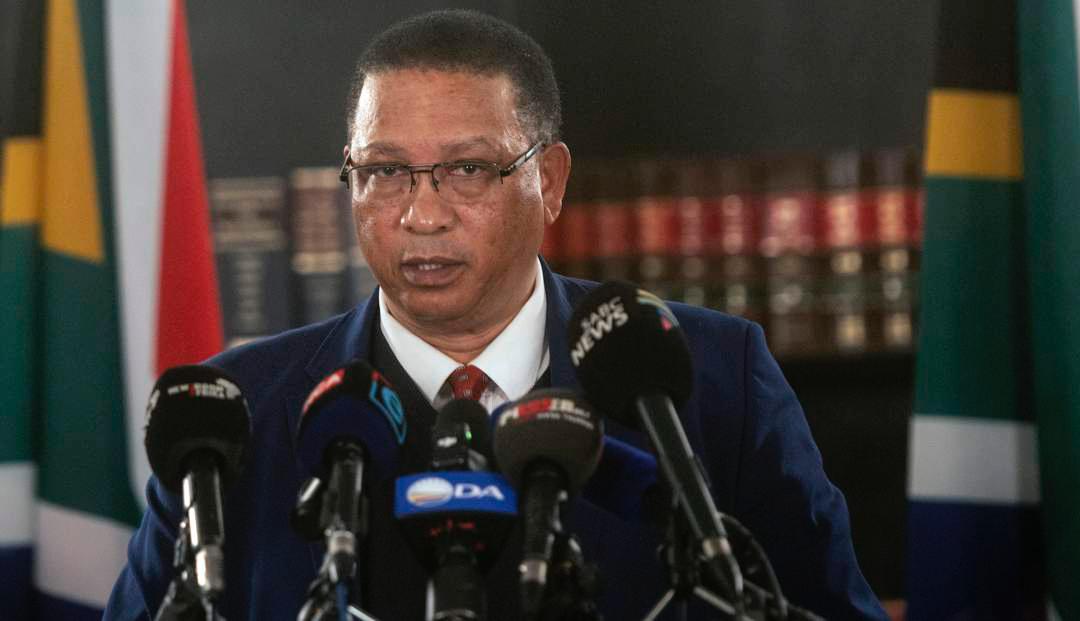
DA's Ivan Meyer spearheads major political reset, positioning the party for potential coalition government leadership. Brenton Geach/Gallo Images
(The Post News)- As South Africa is nearing the forthcoming local government and general elections, the Democratic Alliance (DA) is getting ready to reveal a major change in policy. This move aims at reshaping its position in the evolving political scenery of the country.
For a long time, the DA has presented itself as South Africa’s chief opposition party. However, internal conflicts and issues related to race and identity politics, along with competition from new parties, have posed threats to its voter base. At present, the party leaders claim they are prepared to “adjust” their policies in order to connect directly with everyday South Africans who feel neglected due to government shortcomings.
The change is anticipated to address issues that are common in daily life—from repairing malfunctioning towns and dealing with continuous power outages to enhancing employment generation and rekindling trust in public services. DA insiders argue that if the party does not make its policy positions clearer and reinforce their local structures, it may lose support in both city-based and countryside constituencies.
DA Policy Shift Targets Jobs, Corruption, and Energy Challenges
One important tactic of the DA is to conduct wide listening campaigns. High-ranking leaders have been journeying to townships, informal settlements, and countryside regions where anger about service delivery is high.
“We don’t have the luxury to provide solutions from comfortable offices in Cape Town or Johannesburg,” a DA councillor from KwaZulu-Natal mentioned. “People prefer seeing us on-site, hearing their issues, and giving practical progress directions.”
This approach, which is more focused on people, signifies a change from the DA’s usual emphasis on governance history in cities like Cape Town. The party now aims to present itself as a national power that comprehends the struggles of joblessness, poverty, and imbalance.
Power outages, unemployment, and corruption are still the biggest issues for people in South Africa. The DA intends to focus on these problems as main points of their campaign. Members of the party have stated that they will strive more for changes that allow private businesses into the energy sector. They also plan to introduce new ways aimed at decreasing joblessness among young people.
John Steenhuisen, the leader of DA, has many times said that South Africa’s future needs a “clear separation from corruption and cadre deployment.” He has made promises that if his party leads the government, they will focus on merit-based selections in public service jobs and be firm against corrupt officials. This position against corruption will probably strike a chord with many voters who have felt let down by numerous years of state capture controversies and governance mishaps.
In South Africa, the political situation is such that no one party might come out with a clear majority in upcoming elections. The DA has already started planning for coalition discussions, especially in local municipalities where councils without a decisive control have become more frequent.
But experts suggest that coalition politics can be complicated. “The DA must prove it can lead successfully in coalition governments and prevent the instability we’ve observed in some municipalities,” stated political expert Sandile Hadebe. “Voters desire stability and effective outcomes, not continuous conflicts between parties.”
For a lot of people in South Africa, politics is not about talking or plans—it’s about if water will flow from taps, if kids can get jobs, and if houses will have power. In Soweto, there is a 34-year-old woman named Nompumelelo Mkhize who says she has previously voted for various parties, but now she is exhausted by promises that are never fulfilled. “She said, ‘I only desire water and electricity that function properly. If the DA or anyone else can achieve this, then I will pay attention.'”
In Cape Town, Thabo Molefe, who owns a small business, expressed similar frustrations. “Load shedding has destroyed my earnings,” he said. “I am eager to know how the DA plans to simplify things for small businesses such as mine.”
By highlighting these daily tales, the DA desires to bring a human touch to its policy suggestions and create an emotional bond with voters.
Upcoming months may turn out to be critical for the DA. If people accept the party’s new policy changes, it could strengthen its position as the top opposing voice—and maybe even a governing partner in future national coalitions. However, if they fail to engage with disappointed voters, this might give an opportunity for growing parties like ActionSA, the EFF, or the newly established uMkhonto weSizwe Party to step in.
Currently, it seems that the DA is set on battling in several areas—they want to rebuild trust, reclaim voters they have lost, and show that they possess the foresight needed for governance.
When the elections are coming closer, people of South Africa will be paying much attention to see if DA’s promises become real actions or if it stays as just one more opposition voice among many in a busy political landscape.
About the Author