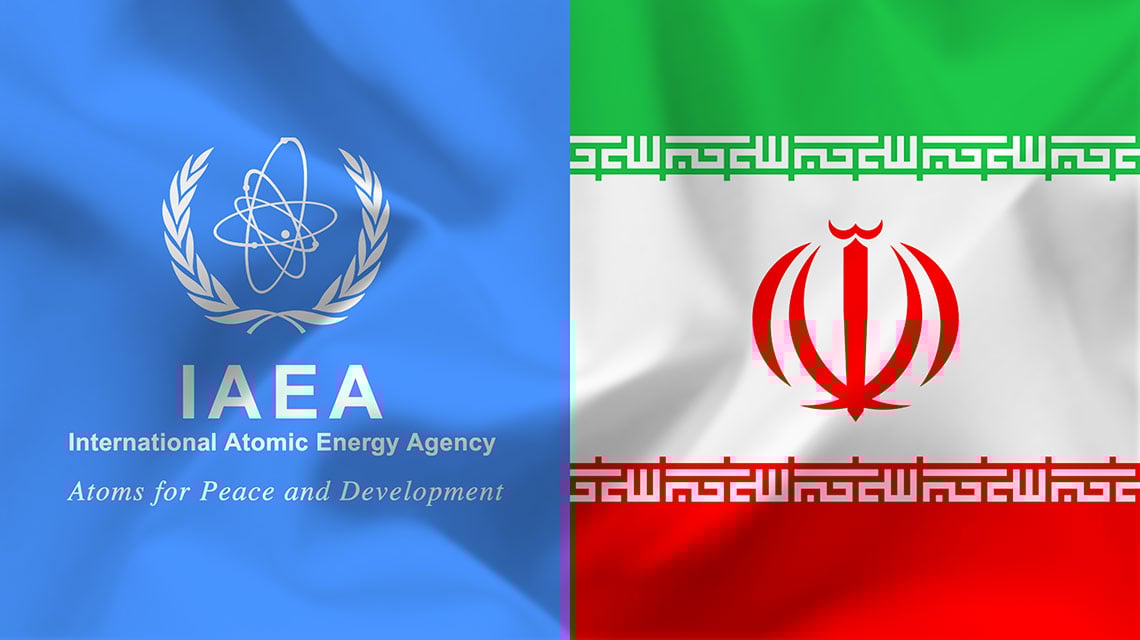
Iranian Foreign Minister Abbas Araghchi during a meeting with foreign diplomats in Tehran, declares the cooperation with UN nuclear watchdog IAEA is no longer relevant following the reinstatement of sanctions [Image by Daily Times]
(The Post News) – Iran’s foreign minister announced on Sunday that collaboration with the UN nuclear watchdog is “no longer applicable” following the reinstatement of international sanctions against the Islamic Republic by Western powers.
Iran’s Foreign Minister Abbas Araghchi, stated that the Cairo Agreement in September between Tehran and the International Atomic Energy Agency (IAEA), whereby monitoring and collaboration were to be re-established, has practically lapsed.
“The Cairo agreement is not applicable to our cooperation with the IAEA anymore,” Araghchi said in a meeting with foreign diplomats in Tehran.
The agreement was mediated last month to facilitate resumed Iranian access to nuclear sites after Iran cut off cooperation last June. That suspension was a response to a series of air strikes on Iranian nuclear and military targets, attributed by Iran to Israel and the United States.
However, the accord has since broken down after Britain, France, and Germany, key European signatories of the 2015 nuclear deal (JCPOA), applied the so-called “snapback” clause to reimpose UN sanctions. This came after a move in response to Tehran’s alleged failure to comply with nuclear caps, which Iran has consistently denied.
The three Europeans thought they had a lever in their hands and were threatening to activate a snapback,” Araghchi stated on Iranian TV. “Now they have taken this lever and used it and seen what has happened. The three Europeans have definitely lost their role and almost destroyed the justification for negotiation with them.”
He added that Europe would “have a much smaller role than ever before” if any negotiation on Iran’s nuclear programme occurred in the future.
Tehran Accuses IAEA of Bias and Western Double Standards
Iran faulted the IAEA for failing to condemn Israel’s bombing of its nuclear facilities for saying that the agency’s silence robs it of its neutrality under the Non-Proliferation Treaty (NPT).
Western countries, headed by the US and assisted by Israel, have always suspected Iran’s uranium enrichment program to be a covert attempt to develop nuclear weapons. The Islamic Republic denies the accusation categorically, stating its nuclear program is for peaceful ends — civilian energy and medicine — and within the provisions of the NPT.
Iranian legislators called on the country to leave the NPT altogether, though President Masoud Pezeshkian stated Iran would continue to uphold its obligations under the treaty, at least for the time being.
Iran’s “decision on cooperation with the agency will be made,” Araghchi stated, offering no details but insisting that “there is still room for diplomacy.”.
Iran was indirectly talking to America since April in an attempt to get back to the negotiating table for a wider nuclear deal and removal of sanctions. Those talks broke down after Iran’s June attacks against Iranian nuclear, military, and residential targets.
Tehran accused Washington of sabotaging the peace process and demanding security assurances and recognition of its rights as a prerequisite for the resumption of negotiations.
Iran has consistently denied seeking nuclear weapons, pointing out that its regional rival Israel is openly suspected of possessing an undeclared nuclear warhead arsenal, which Israel neither confirms nor denies.
“Western hypocrisy is obvious,” an Iranian lawmaker said in a statement published by state media. “They accuse Iran of seeking nuclear weapons and are oblivious to Israel’s arsenal.”
Uncertain Future for Iran-IAEA Cooperation
With the UN sanctions taking hold and confrontation with Europe at a new level, Tehran’s near-term behaviour may determine whether the final channels of nuclear diplomacy are maintained. Terminating ties with the IAEA may lead to further isolation of Iran and expedite conflict with the West, analysts warn.
However, Araghchi’s statement that diplomacy “remains possible” suggests Tehran may be leaving the door open for talks in the future, but on its terms.
About the Author