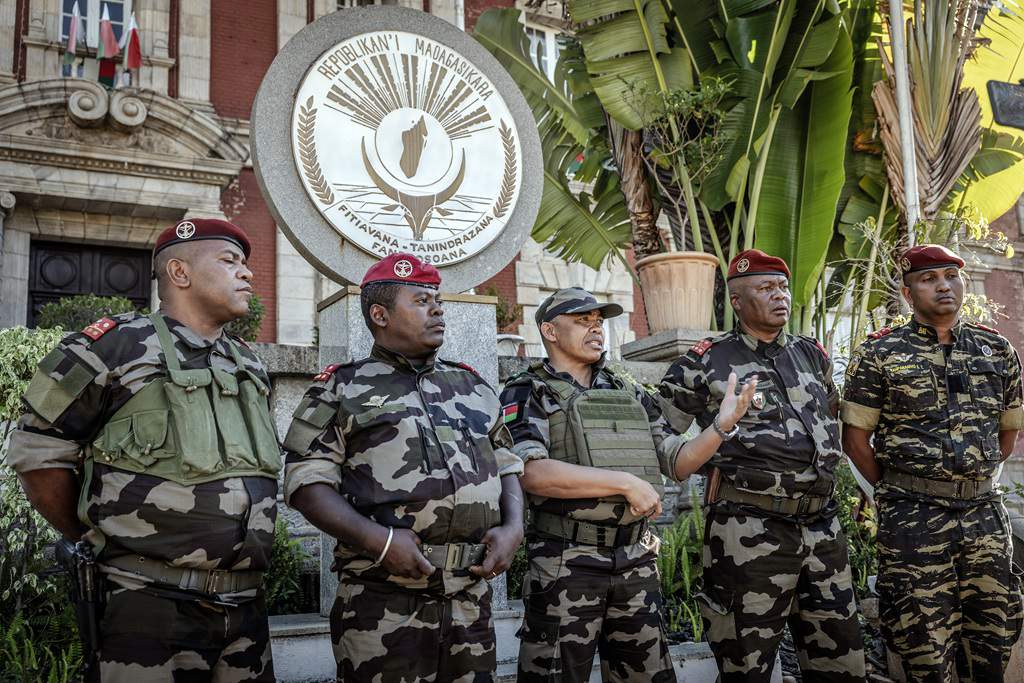
The elite CAPSAT unit led a swift takeover in Madagascar. Image: LUIS TAPO AFP.
(The Post News)– Madagascar’s Army CAPSAT unit ceases control following the impeachment of President Andry Rajoelina. This comes after weeks of mounting pressure, including mass protests, a student-led uprising, and growing calls for Rajoelina’s resignation.
Madagascar’s president, who had retreated to a secure location, was ousted after the National Assembly voted to impeach him for “desertion of duty”—a charge rooted in his absence during escalating civil unrest.
The unrest was ignited by widespread frustration over economic stagnation, corruption allegations, and deteriorating public services. University students in Antananarivo played a pivotal role in galvanizing public dissent, staging sit-ins and marches that drew thousands into the streets.
Their demands included education reform, transparency in government spending, and accountability for alleged misuse of public funds. The protests intensified when parts of the military, including the CAPSAT unit, joined demonstrators and declared their support for regime change.
Military Takes Control
On October 14, Colonel Michael Randrianirina of CAPSAT publicly announced that the military had assumed control, stating, “We have taken power.” He later told reporters that a committee led by the military would rule the country for a period of up to two years alongside a transitional government before organizing new elections.
“The renovation period will last a maximum of two years. During this time, a referendum will be held to establish a new constitution, followed by elections to gradually set up the new institutions,” he told reporters. The declaration was met with celebrations in the capital, though concerns remain about the stability of the transition and the potential for further unrest.
SADC Meeting Still to Be Held
The Southern African Development Community has dispatched a fact-finding mission to Madagascar to assess the situation and engage with key stakeholders, including civil society, military leaders, and opposition figures.
The bloc’s intervention aims to prevent a repeat of past instability and ensure that Madagascar’s transition respects constitutional principles.
About the Author