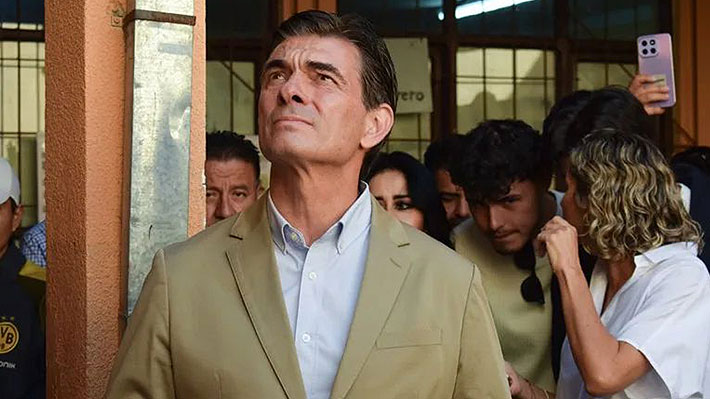
Rodrigo Paz's victory in La Paz, marks the end of the two decades of MAS dominance. Image credit: Emol
Early returns from the Supreme Electoral Tribunal showed Paz, 58, with 54.6% of the vote, defeating former right-wing President Jorge “Tuto” Quiroga, who secured 45.4%.
The trend is irreversible,” said tribunal chief Oscar Hassenteufel after initial counts confirmed Paz’s lead. Quiroga conceded defeat, offering congratulations to his adversary and promising to accept the outcome.
A Centrist Shift After Years of Populist Rule
Paz’s victory brings to an end MAS era, which had begun with the election of Evo Morales in 2005 and continued with Luis Arce. The once-stronghold party was excluded from the runoff ballot for the first time since its foundation, after a decline in popularity following deep internal crises and Bolivia’s worst four-decade-long economic crisis.
Let’s continue constructing a new trajectory since 20 years ago, which excluded us from the economy and geopolitics,” Paz said to followers in La Paz. “Ideology does not fill the belly, work, institutions, and legal certainty do.”
Paz, a senator for the country’s southern Tarija region and son of late president Jaime Paz Zamora, ran on “popular capitalism,” a center-economic agenda blending gradual market reforms with social shields.
Bolivia is hit with drastic fuel shortages, US dollar shortages, and inflation of over 23%, a three-decade high.
Paz promised to stabilize the economy by stopping fuel subsidies, abandoning the fixed exchange rate, and attracting private investment, without the acrid austerity measures of past IMF interventions.
His running mate, former police captain Edman Lara, inspired backers with a pro-anti-corruption message and a trendy social media following. “The people are suffering,” Lara said after the vote count. “We need to stabilize prices and restore confidence.”
Foreign Policy Reset on the Horizon
Paz’s victory also could redesign Bolivia’s foreign policy. Paz has signaled his desire to restore relations with the United States, which deteriorated in 2008 under Morales, but maintain open commerce with China, Bolivia’s biggest buyer of minerals and lithium.
In Washington, the U.S. State Department wished Paz well and said it looked forward to working with his government “to restore economic stability, increase private-sector growth, and enhance security.”.
Though Paz’s Christian Democratic Party (PDC) captured the biggest Congress bloc, it did not control a majority, so he will need to make alliances in order to implement significant reforms.
Bolivian politics remains tenuous, with MAS being reduced to two deputies and zero senators. But even most voters suggested that they wished that Paz’s centrist turn could end decades of turmoil.
“Since 2005 we never had true options,” replied Carlos Flores, a teacher in Tarija. “This is a new start.”
Paz will assume power on November 8, 2025, with a nation eager for peace, but facing gigantic issues.
About the Author