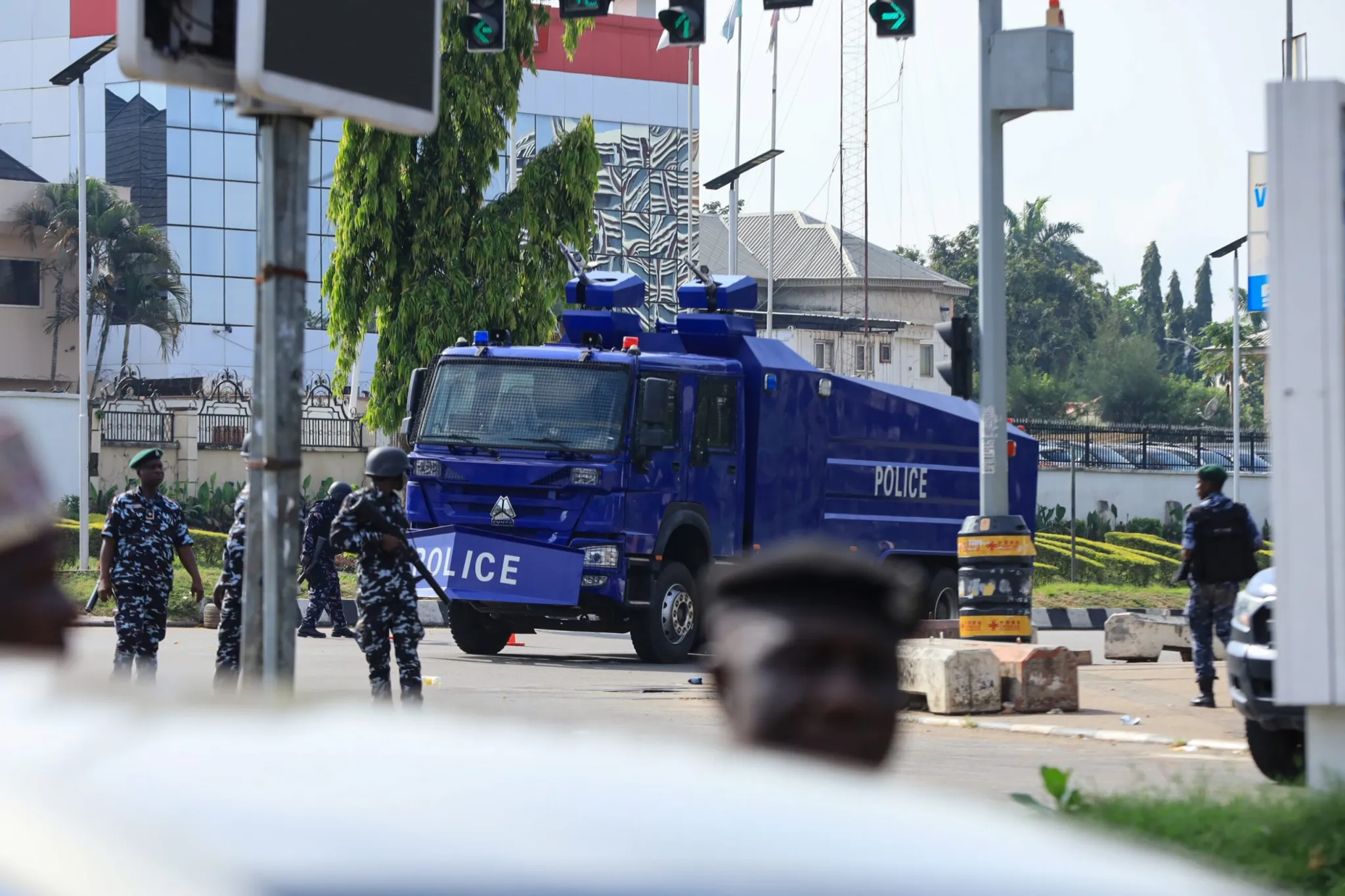
Nigerian police fire tear gar at protest that are calling for the release of Nnamdi Kanu. Image credit: EMMANUEL ADEGBOYE
(The Post News) – Nigerian police fired tear gas in Abuja to disperse demonstrators calling for the release of separatist leader Nnamdi Kanu, whose detention since 2021 has drawn both national and international criticism.
Earlier on Monday, Omoyele Sowore led a group of protesters through Nigeria’s Federal Capital Territory, demanding freedom for Kanu — the leader of the Indigenous People of Biafra (IPOB) — who faces charges of treason and other related offences.
#FreeNnamdiKanuNow
The protest, organised under the hashtag #FreeNnamdiKanuNow, which coincided with the fifth anniversary of the #EndSARS movement amplifying its symbolic weight and drawing attention to broader issues of civil rights and government accountability.
Police spokesperson Benjamin Hundeyin, during an interview on Channels TV’s Politics Today, said that once investigations are concluded within 24 hours, all eight arrested individuals will be taken to court for prosecution.
Kanu who is on trial facing terrorism charges, holds British citizenship, leads IPOB that advocates for the secession of southeastern Nigeria, where the majority belong to the Igbo ethnic group.
Supporters of Nnamdi Kanu argue that his continued detention since 2021 is driven by political motives. They are demanding his release and the dismissal of the seven terrorism charges against him. Kanu has denied all allegations, which could result in life imprisonment if he is convicted.
The Nigerian Civil War, which erupted in 1967—the same year Nnamdi Kanu was born—claimed the lives of more than a million people after the southeastern region sought to break away and form the Republic of Biafra.
Police Respond with Water Cannons
Mr Hundeyin explained that police arrested all eight individuals because they violated a valid court order — not because they were exercising their lawful rights as citizens.
Police responded with force, deploying tear gas, water cannons, electric barricades, and armored vehicles to disperse the crowd. Eyewitnesses reported gunfire in parts of Maitama, and dozens of protesters were arrested, including a journalist from Agence France-Presse (AFP), who was later released.
This caused widespread disruption, major roads leading into the federal capital territor were blocked, resulting in severe gridlock on highways such as Nyanya-Mararaba and Keffi-Abuja.
As calls for Nnamdi Kanu’s release grow louder, the Nigerian government faces mounting pressure to either justify his continued detention or engage in meaningful dialogue. The events in Abuja underscore the volatile intersection of political dissent, ethnic identity, and state power in Nigeria’s evolving democratic landscape.
About the Author