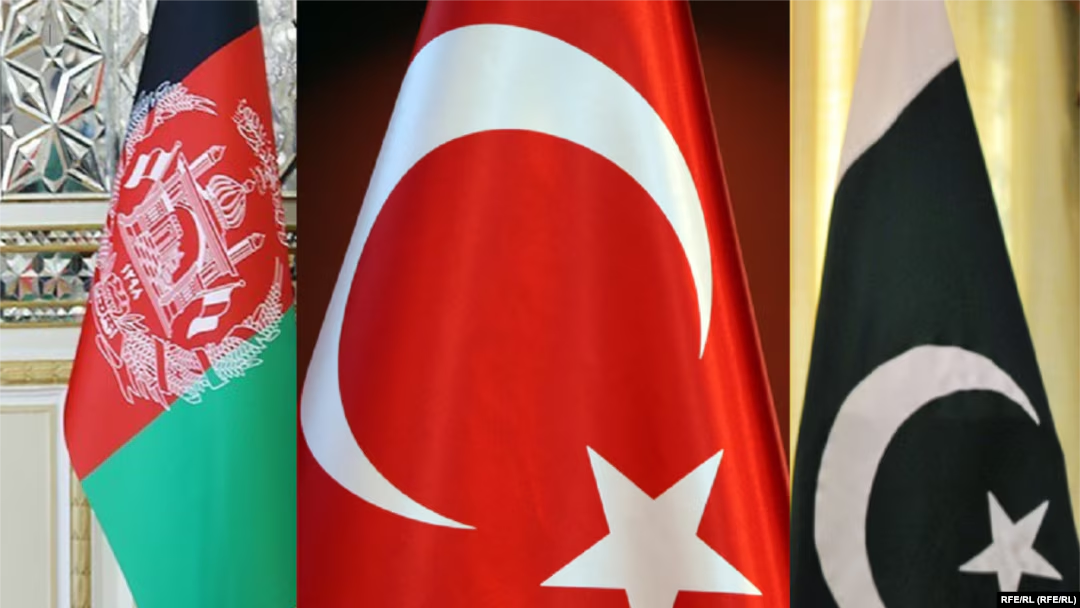
Afghan and Pakistan officials gather in Istanbul to finalize a border security deal after weeks of deadly clashes [Image by RFE/RL]
(The Post News) – Afghan and Pakistani envoys met on Saturday in Istanbul to entrench the fragile ceasefire on their shared border and establish a mechanism for a long-term check on cross-border terrorism. The two nations’ top-level negotiations followed two weeks of fierce fighting that resulted in the killing of scores of soldiers and civilians.
The recent violence began following huge explosions that rocked the central section of Kabul in early this month. The Taliban regime controlling Afghanistan blamed its neighbouring country, Pakistan, for the blasts and retaliated with an attack near the border. Islamabad replied by carrying out what it called “precision strikes” against armed groups in Afghan territory.
Conflict raged on, and both nations turned to mediators from Turkey and Qatar. The ceasefire agreed on in Doha last week partially relaxed tensions, but officials admit that peace is tenuous. The talks in Istanbul aim to turn that quiet into a lasting peace pact.
Pakistan Pushes for Monitoring Mechanism
Pakistan’s Foreign Ministry confirmed the session on Friday, with an emphasis that there must be a “concrete and verifiable monitoring mechanism” to stop attacks being launched out of Afghanistan.
Foreign Office spokesman Tahir Hussain Andrabi said Islamabad desires the talks to produce a clear framework of action.
“Pakistan desires peace and stability in the region,” Andrabi said in Islamabad. “But Afghanistan must take verifiable steps against terror groups like Tehreek-i-Taliban Pakistan (TTP) and Balochistan Liberation Army (BLA). They are indulging in threats against our citizens and our security forces.”.
Andrabi also expressed gratitude to Qatar and Türkiye for organizing the first round of negotiations in Doha on October 19. “The meeting in Istanbul carries forward the momentum achieved at Doha,” he added, and mentioned that Pakistan does not desire further bloodshed.
Kabul had confirmed that it was attending, stating a delegation headed by Deputy Interior Minister Mawlawi Rahmatullah Najeeb had left for Istanbul. Taliban spokesperson Zabihullah Mujahid said that the team would discuss “remaining issues” with Pakistan, making a point that Afghanistan wishes to maintain its sovereignty and territorial integrity.
The Taliban regime denies claims by Pakistan of hosting militants, and counters that Islamabad is infringing on Afghan airspace with cross-border strikes. Mujahid said the aim in Istanbul is to make the two sides respect shared borders and resolve disputes peacefully.
Turkey, where the second round of negotiations was held, greeted the decision to reconvene following the Doha summit. Turkey’s Foreign Ministry said both countries should now “build mechanisms to consolidate peace and stability.”.
Experts predict the talks might result in mutual exchange of intelligence or joint operations against the militant strongholds. “If Pakistan identifies suspected TTP targets, it might share coordinates with Kabul instead of undertaking unilateral raids,” International Crisis Group analyst Ibraheem Bahiss said.
He warned that “technical mechanisms alone won’t bridge the deep mistrust between the two sides,” though.
A Fragile Relationship
Pakistan had long supported the Taliban as a counterweight to Indian influence in Afghanistan. But with the Taliban’s return to power in 2021, ties have deteriorated. Islamabad blames the group for failing to keep the TTP under control, which has unleashed a wave of gruesome attacks inside Pakistan.
The latest clash occurred just as the Taliban foreign minister was on an official visit to India, ratcheting up yet another source of geopolitical tension.
Both countries, temporarily at least, say they want peace. Whether Istanbul is a turning point or just another fleeting respite will depend on how much each country is willing to sacrifice to allay the other’s vital security issues.
About the Author