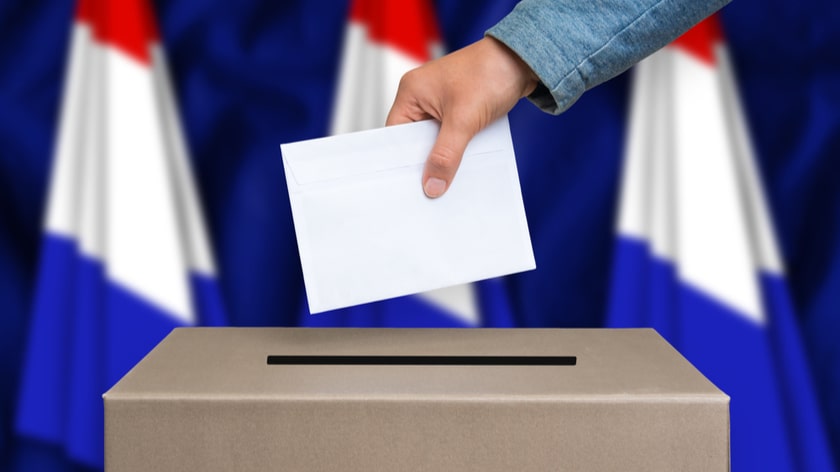
Dutch voters cast their ballots in a high-stakes election that could redefine the political landscape amid fierce debates on immigration and housing [Image by ABN AMRO]
(The Post News) – Dutch citizens voted on Wednesday in a tense snap election that could reshape the nation’s political landscape. The vote, which was triggered after far-right leader Geert Wilders collapsed the ruling coalition over immigration policy, has morphed into a battle over the Netherlands’ identity, housing crisis, and position in Europe.
Immigration and Housing Take Center Stage
From Amsterdam to Maastricht, voters debated two burning questions: how to manage immigration and how to fix a growing shortage of affordable housing. The issues have dominated the campaign and fueled sharp divisions between the country’s leading parties.
Geert Wilders’ Freedom Party (PVV) has been leading polls for months on a hardline anti-immigration platform. But in the last few weeks, support for centrist and progressive rivals sped up and narrowed the gap. Last-minute polls suggest Wilders could win 24 to 28 seats in the 150-seat parliament, far less than the 37 seats his party gained in 2023.
The contest now pits Wilders against three moderate leaders: Frans Timmermans of the GreenLeft–Labour alliance (GL-PvdA), Rob Jetten of the pro-European D66, and the centrist Christian Democratic Appeal (CDA). All have vowed not to join a government with Wilders.
“It’s up to the voters today,” Wilders said after casting his ballot in The Hague, flanked by security guards. “It’s a close call, but I’m confident.”
Wilders’ exit from the fragile right-wing coalition last June prompted the election. He walked out after coalition partners refused to back his 10-point anti-immigration plan, including sending the army to patrol borders, closing refugee hostels, and deporting Syrian refugees. That move angered allies and cost him credibility with mainstream parties.
The centre-left bloc leader, Frans Timmermans, voted in his hometown of Maastricht, accompanied by his black labrador. “It’s going to be so close,” he said to reporters. “We have to come in first if we want to avoid another far-right government.”
Meanwhile, D66 leader Rob Jetten has captured national attention with a pro-European message of optimism and renewal. “We’ve seen too much fighting and too few results,” he said after voting in Nijmegen. “This is our chance to put the Netherlands back at the heart of Europe.”
Jetten’s campaign calls for greater European cooperation on climate policy, defence, and migration, in sharp contrast with Wilders’ Euroscepticism. Analysts say his positive message and media performances, including a spot on a popular Dutch television quiz show, have boosted his popularity in the final weeks.
Dutch Democracy in Action
Polling began at 7:30 a.m. (06:30 GMT) at schools, churches, and town halls, but also at unusual places such as windmills, zoos, and Amsterdam’s Anne Frank House museum. Voting closes at 9 p.m. local time, when an Ipsos I&O exit poll is conducted. These polls have in the past been accurate to within one to three seats.
At least 16 parties are expected to enter parliament, ensuring lengthy coalition talks once results are in. To form a majority, parties must secure 76 of the 150 seats, a threshold no single party has met in over a century. Negotiations after past elections have lasted months, reflecting the Netherlands’ tradition of consensus politics.
Europe’s governments are turning to the Dutch election as a barometer of the far right’s surge. Populist movements have gained traction in France, Germany, and Italy, preying on disgruntlement over migration and economic inequality.
If Wilders’ party again wins the largest number of seats but is once again shunned, it could be an indication that Dutch voters, and perhaps Europe, are moving back towards the political mainstream.
“The future of our nation is at stake,” Wilders declared on the campaign trail. His competitors argue the election is also about rebuilding cooperation and trust after two years of drama.
As the sun set on election day, voters across the Netherlands had one thing in common: the outcome could decide not just their country’s future but the future of Europe itself.
About the Author