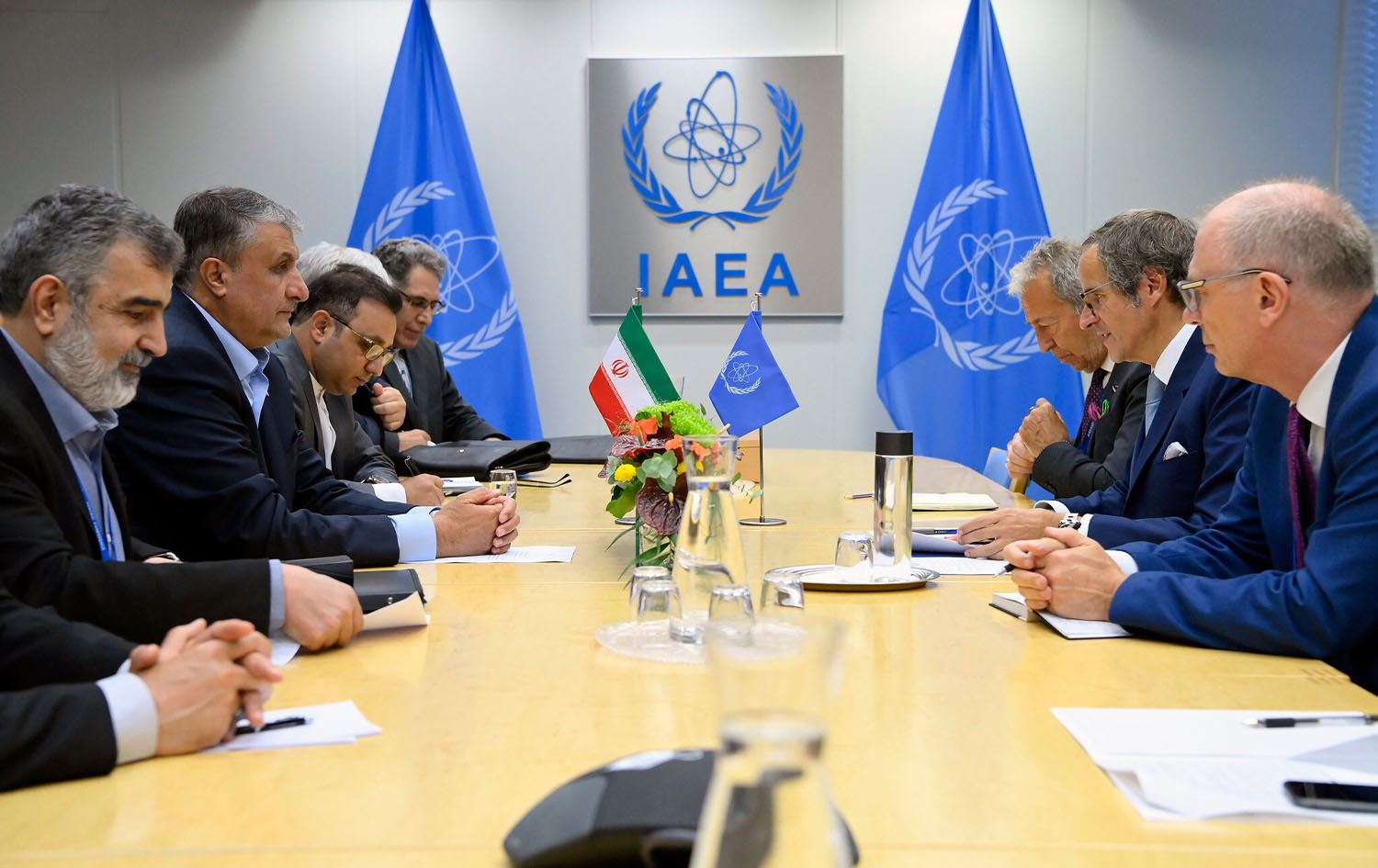
IAEA Director General Rafael Grossi says Iran isn't actively enriching uranium but warns inspectors have spotted renewed movement at key nuclear sites [Image by Rudaw]
Rafael Mariano Grossi, the director-general of the International Atomic Energy Agency (IAEA), told The Associated Press that his team has seen movement around Iran’s enrichment facilities even though the country hasn’t restarted high-level enrichment since the June war with Israel.
“The nuclear material enriched at 60% is still in Iran,” Grossi said at U.N. headquarters in New York. “We must confirm that the material remains in place and hasn’t been diverted. This is very important.”
Grossi underscored that satellite imagery shows industrial movement – but no direct signs of enrichment. “Activity does not necessarily mean production,” he added.
According to the IAEA, Iran’s existing stockpile could fuel up to 10 nuclear weapons if the country decided to weaponize its program, though there’s no evidence of that happening. Iran maintains that its nuclear work is peaceful.
Setbacks After Iran War with Israel
The IAEA and Iran signed a new cooperation deal in Cairo last month to restart inspections, but Tehran has yet to implement it. Iran cut off all cooperation after the June conflict, when U.S. strikes damaged major nuclear facilities at Fordo, Natanz, and Isfahan.
CIA Director John Ratcliffe later told Congress that the strikes destroyed Iran’s only metal conversion plant but most enriched uranium likely remains buried under debris.
Tensions had been on edge since Israel launched its surprise attack soon after the IAEA’s board voted to censure Iran for noncooperation, the first such vote in two decades. Iranian leaders accused the agency of aiding Israel and the U.S., then threatened to arrest Grossi if he returned to the country.
Vienna police now guard the Argentine diplomat around the clock. “The Israel-Iran war erased years of progress,” Grossi said. “We were about to gain access to a third enrichment site when the conflict began.”
Limited Inspections Resume
Since the Cairo agreement, the U.N. has reimposed sanctions under the 2015 nuclear deal’s “snapback” mechanism. Grossi said IAEA inspectors are present in Iran again “in a limited capacity” and “in constant contact” with Foreign Minister Abbas Araghchi.
“Does that mean full cooperation? No,” Grossi said. “They’re not denying us access entirely, but it’s far from ideal.” The IAEA is continuing to seek full access to all of Iran’s nuclear locations. “We’re rebuilding trust step by step,” Grossi said. “We see movement, but not enrichment.”
About the Author