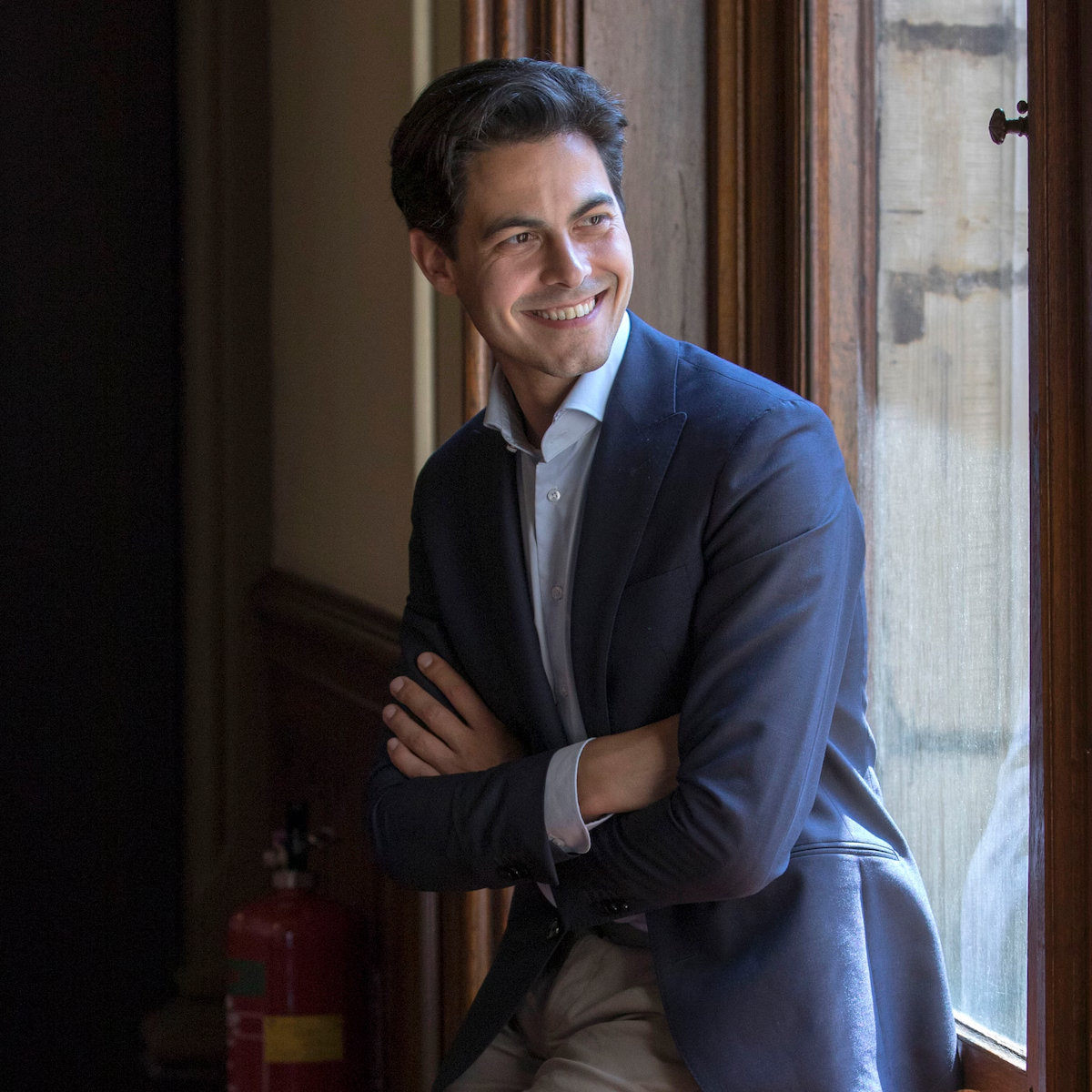
D66 leader Rob Jetten celebrates after his party edges ahead of Geert Wilders' PVV in the Dutch general election, marking a historic tie in parliamentary seats. Image credit: Trouw
Counted ballots almost produced a dead heat: both parties landed 26 seats in the 150-member parliament. But late results from Amsterdam and Hilversum pushed D66 ahead by 15,122 votes, according to the Dutch news agency ANP.
“This is the best result for D66 ever,” Jetten said to supporters in The Hague. The 38-year-old leader celebrated by cutting a cake adorned with the party slogan “Het kan wel,” meaning “It is possible.”
Wilders’ PVV, previously buoyed by a strong showing earlier this year, lost 11 seats compared with the last election. Still, Wilders insisted that his party be allowed to lead coalition discussions.
“There will be no D66 scout starting until there is complete clarity,” he argued, meaning that contracts will be established to form coalitions.
D66, VVD, and the GreenLeft-Labour bloc have all ruled out even considering bringing Wilders onboard, stating that it was due to his history of breaking down the previous coalition government last June.
Henk van der Kolk: Symbolically, this is of much more importance than practically. The academic’s forecast is that Jetten will be seen heading towards a broad centrist coalition.
Jetten Rises as a Centrist Star
Rob Jetten, a former junior railway manager and junior athlete, leads a remarkable comeback for D66. Just weeks before the elections held a few days ago, polls indicated his party with only 12 seats. His message of optimism, pro-European position, and polished performances in institutional debates all contributed to the surge.
“Rob brings positivity back into politics,” said Eindhoven deputy mayor Robert Strijk. “People were tired of anger and division.”
He will be the first openly gay leader of the Netherlands, and at 38, will rank among the youngest in modern Dutch history if he becomes prime minister.
Dick Schoof, the caretaker prime minister, joked that forming a government before Christmas would be “un-Dutch.” Coalition talks in the Netherlands often stretch for months, and officials have already postponed appointing the coalition “scout” until next Tuesday.
Counting came to an abrupt halt in Venray, where the fuse box caught fire in what is traditionally a windy moya of one of the PVV strongholds, delaying the conclusion of the final tally. The officials also await 90,000 postal votes from Dutch citizens overseas.
For all his setbacks, populism endures in Dutch politics. The rightist JA21 leaped from 1 to 9 seats, signalling that the anti-establishment sentiment is still simmering.
Former vice president of the European Commission Frans Timmermans announced his resignation after his GreenLeft-Labour bloc fell below expected performance levels.
A Nation Searching for Unity
The election comes amid increasing tensions over migration and a national housing crisis, relayed by violent protests in The Hague this month at D66’s vandalized headquarters.
Supporters of D66 claim the vote demands optimism and progress.
“It shows the Dutch want a leader who can unite the country,” said young D66 supporter Eline in Leiden.
Jetten pledged a stable and ambitious government on climate goals and housing reform. His party plans to establish 10 new cities to alleviate the 400,000-home shortage facing the nation.
Millions of Dutch people turned the page. They said goodbye to the negativity and chose to believe in possibility.”
About the Author