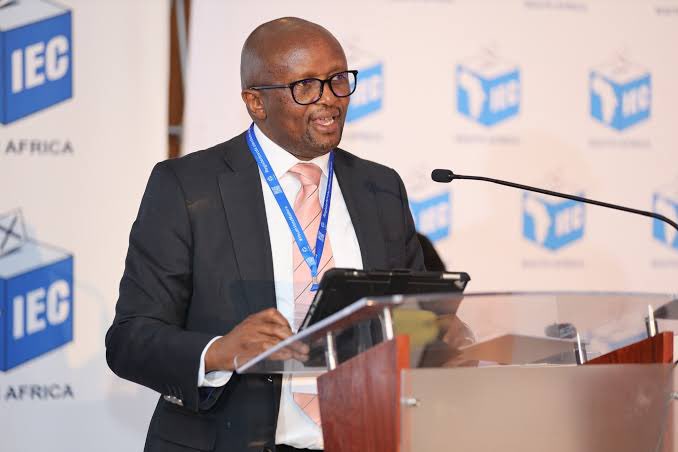
President Ramaphosa has reappointed Mosotho Moepya as Chairperson of the IEC. Image: Central News shared via X @centralnewsza.
(The Post News)– The Independent Electoral Commission of South Africa (IEC) has announced a significant bolstering of its ranks with the reappointment of Mosotho Moepya as Chairperson.
President Cyril Ramaphosa confirmed the full slate of appointments, which includes two new IEC commissioners who will serve a seven-year term. The newly appointed commissioners are Judge Dhaya Pillay, who will serve as a part-time member, and Joyce Pitso, a seasoned elections consultant appointed as a full-time commissioner.
The appointments come as the IEC intensifies its preparations for upcoming electoral processes, including the 2026 local government elections. The new leadership is expected to guide the IEC through an evolving political landscape, ensuring continued integrity, transparency, and public confidence in South Africa’s democratic processes.
Continuity and New Appointments
Moepya, who has served as the IEC chairperson since his initial appointment in 2022, is a seasoned veteran whose history with the IEC includes a crucial tenure as director for electoral logistics. His reappointment is widely seen as a commitment to stability and operational continuity in the critical period leading up to the next polls.
The IEC is further strengthened by its two new appointments, who will serve a seven-year term:
- Judge Dhaya Pillay: An existing IEC Commissioner since 2018, Judge Pillay will continue to bring her valuable judicial experience to the body’s critical decisions as a part-time member.
- Joyce Pitso: Appointed as a full-time Commissioner, Pitso brings significant practical experience, having previously served as an elections consultant on the African continent.
These IEC Commissioners are collectively tasked with managing the elections of national, provincial, and municipal legislative bodies, ensuring the results are free and fair, declaring results, and compiling and maintaining the national voters’ roll.
Mandate and Challenges
The Chairperson and the newly appointed Commissioners assume office at a pivotal moment for the institution, as it navigates an increasingly complex electoral environment.
Among their key priorities will be boosting voter participation, particularly among the youth, through expanded registration drives and targeted civic education initiatives aimed at strengthening democratic engagement.
They will also be tasked with overseeing the integration of new digital systems and electoral reforms, ensuring that technological advancements enhance efficiency, accessibility, and transparency throughout the voting process.
Equally crucial will be the maintenance of public trust in the IEC’s work, a challenge that requires careful management of political pressures while safeguarding the credibility and independence of South Africa’s electoral system.
About the Author