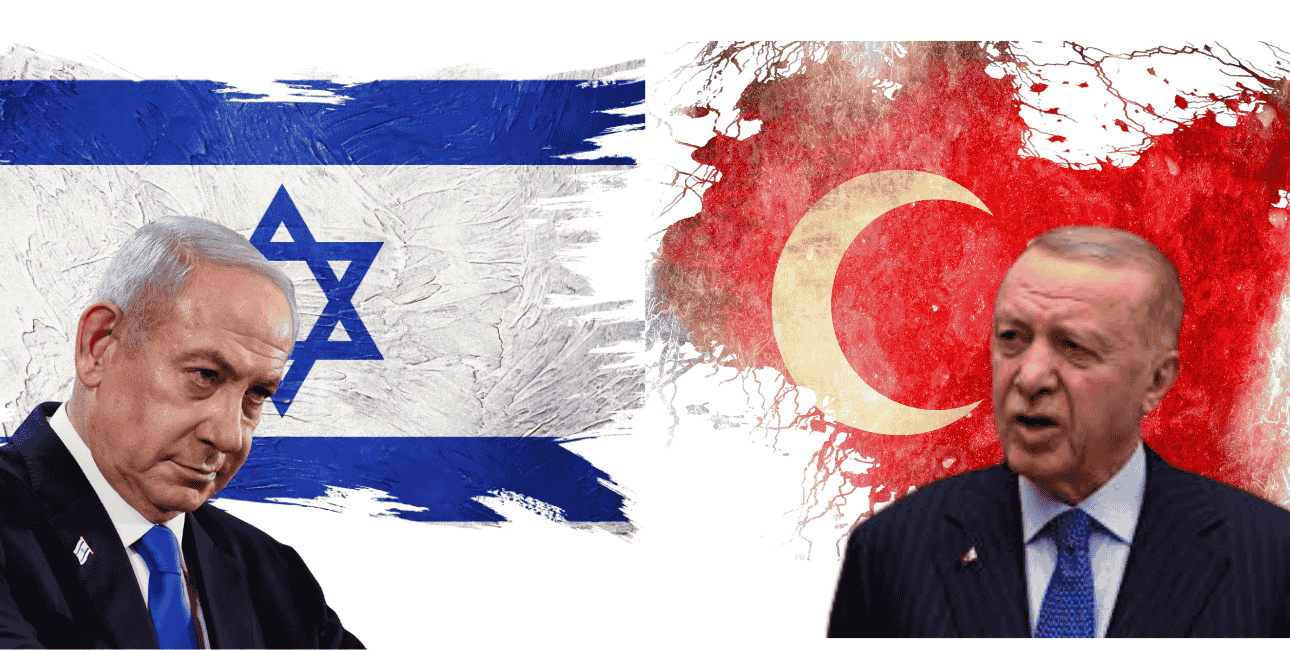
Turkish President Tayyip Erdogan announces arrest warrants for Israeli leaders, signaling a new low in Israel-Turkey relations amid a shaky ceasefire in Gaza. Image: EurAsian Times.
(The Post News) – Turkey has issued arrest warrants for Israeli Prime Minister Benjamin Netanyahu, along with 36 other senior officials, accusing them of genocide and crimes against humanity in Gaza. The move heightens Israel’s global isolation and strains a fragile US-brokered ceasefire that has barely held since October 10.
The Istanbul Chief Prosecutor’s Office listed among the suspects Israeli Defence Minister Israel Katz, National Security Minister Itamar Ben-Gvir, and Israel’s Defence Forces Chief Lt. Gen. Eyal Zamir. Prosecutors claim that those officials “systematically perpetrated crimes” against the civilian population of Gaza and deliberately targeted its infrastructure, including the Turkish-Palestinian Friendship Hospital that was bombed in March.
Israel Rejects Turkey’s Political Theater
Israeli Foreign Minister Gideon Sa’ar denounced the warrants against him on X as “the latest PR stunt by the tyrant Erdoğan.” For Israeli officials, this legal move is political and runs counter to efforts toward maintaining the ceasefire.
But international analysts said that Turkey’s move reflects a growing consensus against the military conduct of Israel. The International Criminal Court and the International Court of Justice have ongoing cases accusing Israel of war crimes and genocide.
An intense two-year warfare involving the two sides finally reached a temporary standstill with a Trump-brokered ceasefire. However, raids and airstrikes by the Israelis continue unabated all over the Gaza Strip, where local health officials have reported over 240 deaths since the truce.
UN observers warn that humanitarian aid barely reaches civilians because of continuing blockades. “The ceasefire exists on paper, not in reality,” said a UN field officer in Rafah.
Turkey is eager to participate in the proposed post-war International Stabilization Force (ISF) for Gaza, as foreseen within the US peace plan, aiming to contribute to infrastructure rebuilding and the training of a new police force. Turkey’s close relations with Hamas have led Israel to oppose Turkey’s involvement. Avigdor Lieberman, the former Israeli foreign minister, stated that Turkey’s actions demonstrate its lack of trustworthiness in any Gaza role.
Israel’s Diplomatic Isolation Grows
Israel is increasingly isolated in Europe, Latin America, and the Middle East, as many governments have recalled their ambassadors or suspended the arms trade. Public opinion polls in Europe record historic lows in support for Israeli policies.
The move represents the first genocide-related arrest warrants ever issued by a NATO member state against Israeli leaders and marked a dramatic escalation in tensions in an already volatile Middle East, testing Israel’s few remaining alliances. Turkey, which last year joined South Africa’s genocide case against Israel at the ICJ, has turned out to be among the most outspoken voices against Israeli actions in Gaza.
“Turkey’s move is symbolic, but it is powerful,” said Dr. Leora Ben-David of Tel Aviv University. “It shows that even countries once friendly to Israel are no longer willing to look the other way.” Humanitarian agencies warn of a complete collapse of infrastructure in Gaza, a crippling of hospitals, and a lack of clean water. With violations every day and no political solution in view, the ceasefire is on life support. Fears are that a further outbreak of violence might undo months of negotiation. “Wars end with silence,” said one European envoy. “Isolation is the noise that follows.”
About the Author