U.S. President Donald Trump signs the National Security Strategy document, outlining a new era of American dominance. REUTERS/Kevin Lamarque
(The Post News)- The United States is set to reassert its dominance in the Western Hemisphere, bolster its military presence in the Indo-Pacific, and potentially reevaluate its relationship with Europe, as outlined in President Donald Trump’s National Security Strategy document.
Western Hemisphere
This sweeping strategy, dubbed “flexible realism,” seeks to revive the 19th-century Monroe Doctrine, asserting U.S. influence in the Western Hemisphere. The document warns that Europe faces “civilizational erasure” and must change course to remain a reliable ally.
Trump’s vision prioritizes American interests, with a foreign policy approach that’s “pragmatic without being ‘pragmatist,’ realistic without being ‘realist,’ principled without being ‘idealistic,’ muscular without being ‘hawkish,’ and restrained without being ‘dovish'”.
The strategy document highlights China’s growing economic influence in Latin America, a concern for successive U.S. administrations. To counter this, the U.S. aims to strengthen military ties with allies in the region.
In Asia, the document emphasizes deterring conflict with China over Taiwan and the South China Sea by building up U.S. and allies’ military power. This priority reflects the longstanding irritant in U.S.-China relations.
Europe Criticized
Europe, however, faces criticism in the document, with warnings that certain NATO members may become majority non-European within decades. This has sparked concerns that the U.S. is abandoning its traditional alliances.
The Trump administration’s stance on Europe echoes far-right European political parties, which have gained traction in Germany, France, and other traditional U.S. allies. The document advocates restoring “Western identity” in Europe.
European politicians have expressed unease at Washington’s tone, but they still rely heavily on U.S. military support amidst perceived Russian threats. The document suggests negotiating a quick resolution in Ukraine and re-establishing “strategic stability” with Russia.
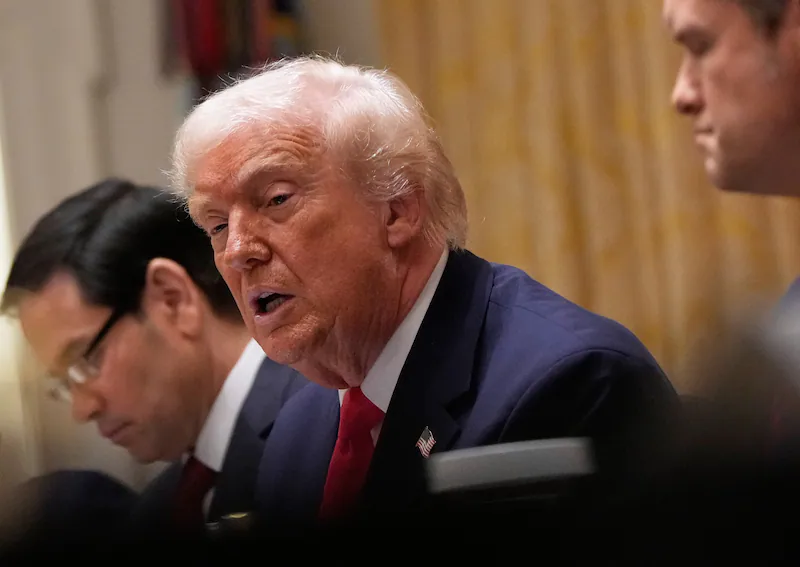
Trump’s history of unconventional foreign policy moves makes it challenging to predict concrete actions. Critics argue his rhetoric evokes modern-day imperialism in the Western Hemisphere.
The U.S. has deployed over 10,000 troops to the Caribbean, along with an aircraft carrier, warships, and fighter jets, sparking concerns in the region.
Experts assess that the Western Hemisphere and Pacific regions are winners under Trump’s agenda, while Europe is a loser. The Middle East and Africa remain uncertain.
The National Security Strategy document marks a significant shift in U.S. foreign policy, prioritizing American interests and redefining global alliances.
About the Author