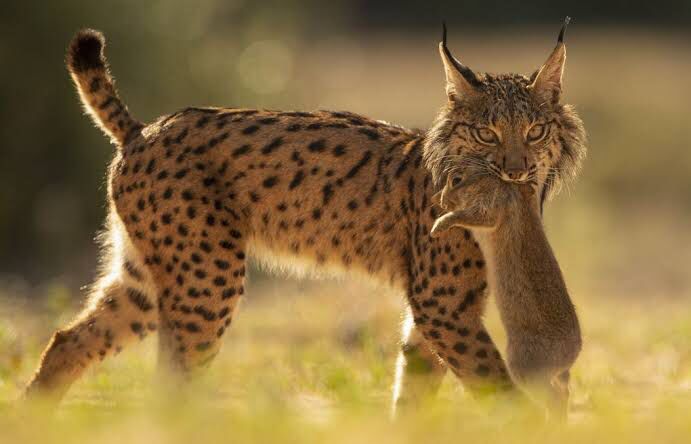
Iberian lynx population making slow progress into the wild. Image: The Seattle Times
Iberian lynx population making slow progress into the wild. Image: The Seattle Times
(The Post News)- Currently, there are over 2,000 Iberian lynx species in the wild across Spain and Portugal, which is more than what one would see 20 years ago. Rodrigo Serra, who oversees the Iberian lynx reproduction program in Spain and Portugal, recalls that the species was “alarmingly close to extinction.” At one point, there were fewer than 100 lynxes left in two populations that did not interact, and 25 of them were females of reproductive age.
The cause of the decline of the lynx population was particularly due to increased land usage for agriculture, which raised fatalities on roads and led to a struggle for food. The lynx prey on wild rabbits, essential for their diets; unfortunately, two pandemics led to a 95% decline in their numbers. By 2005, there were no lynxes left in Portugal, but that was also the year Spain saw the first litter born in captivity.
It took years before Portugal decided to save the lynx, and then a National Breeding Centre for Iberian lynxes was built in Silves in the Algarve. The centre monitored them 24 hours a day, with a twofold aim: to prepare them for life in the wild and to pair them for reproduction.
The breeding programme and the return of the lynx have been hailed as a great success, with their population increase. However, problems may arise as well. Such issues may include the release of the lynxes. The lynxes are normally released on private land in Portugal, but the organisers of the reproduction programme have to reach an agreement with the owners first, and where they go afterwards is totally up to them.
Pedro Sarmento has been studying the Iberian lynx for 30 years and is responsible for the reintroduction of the lynx in Portugal. It has been 30 years since Spain decided to save the lynx, and they are no longer endangered. Sarmento is hopeful that it will reach a favourable conservation status by 2035.
There are risks involved in the reproduction of the lynxes, but the reproduction team is not being complacent. Although 80% of the lynx deaths were related to road accidents, they feel confident that the Iberian lynx has been saved.
About the Author