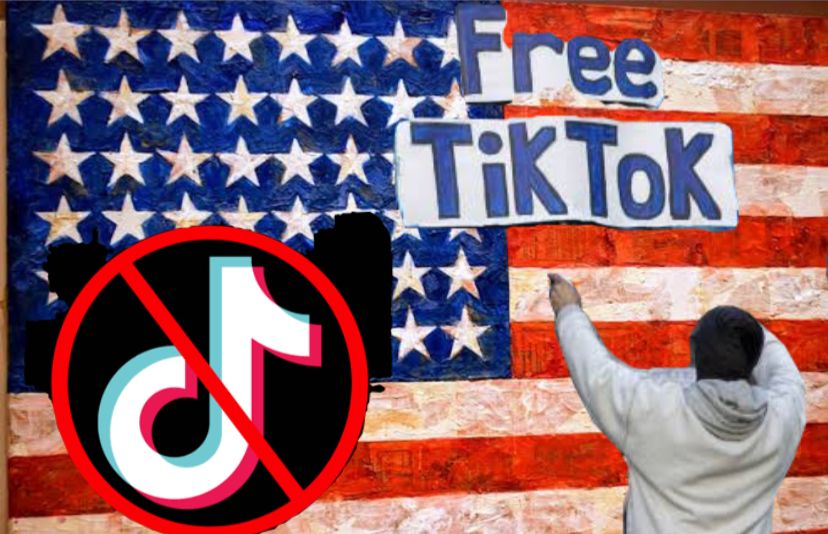
(The Post News)- Millions of TikTok users in the United States were met with an unexpected message late Saturday night as the popular video-sharing app became inaccessible. This shutdown follows the enactment of a bipartisan law passed by Congress last year.
TikTok pre-emptively ceased its service to US users before the official Sunday ban. Upon opening the app, users were greeted with a message stating, “Sorry, TikTok isn’t available right now.” The message further explained that a law banning TikTok had been enacted in the US, preventing its use. It also offered a glimmer of hope, mentioning President Trump’s indication to work towards reinstating the app once he takes office.
With no sale materializing, TikTok’s final legal recourse, a challenge based on First Amendment grounds, was rejected by the Supreme Court on Friday.
The Biden White House has deferred enforcement of the law to the incoming Trump administration. President-elect Donald Trump has publicly pledged to “save” the app. On Saturday, Trump informed media that he was exploring the possibility of extending the deadline. TikTok has threatened to go dark in the US on January 19th if the Biden administration fails to provide the necessary clarity and assurance to service providers that are integral to maintaining TikTok’s availability to over 170 million Americans.
In a statement provided to the media on Friday evening, TikTok said that the Biden administration had “failed to provide the necessary clarity and assurance to the service providers that are integral to maintaining TikTok’s availability to over 170 million Americans.
For years, U.S. officials have expressed concerns about the Chinese government building detailed profiles on American citizens, citing major data breaches attributed to China. One such example was the hack of the Office of Personnel Management, which exposed sensitive information about millions of federal employees. These incidents have underscored fears of Beijing’s ability to access vast troves of personal information for surveillance or other strategic purposes.
The Justice Department, defending the law before the Supreme Court, emphasized two key national security risks posed by TikTok. First, the app’s capacity to collect data from its 170 million American users raised fears about the information falling into the hands of the Chinese government. Second, the app’s alleged ability to manipulate content for geopolitical purposes created further apprehension. U.S. officials worried that Beijing could use TikTok to influence public opinion or disseminate propaganda, leveraging the platform’s immense reach and popularity.
The Supreme Court’s unanimous ruling focused on the first justification: the threat posed by China’s potential access to user data through TikTok and its parent company, ByteDance. The justices found that Congress acted within its constitutional rights by taking measures to address this threat, stating that lawmakers had “good reason to single out TikTok for special treatment.” The Court rejected arguments that the law violated the First Amendment, emphasizing the government’s prerogative to prioritize national security over commercial interests.
However, the Court refrained from fully endorsing the Biden administration’s assertion that TikTok posed a risk of covert content manipulation. While this concern remains a key talking point for U.S. officials, the justices chose not to weigh in on this aspect, leaving the matter open to further debate and investigation.
About the Author