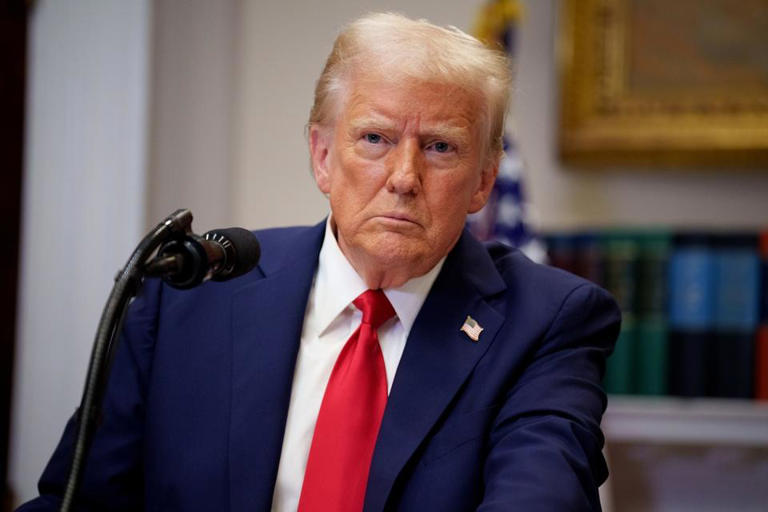
Newly inaugurated American president Trump addresses the media. Image: Forbes.
(The Post News)– A recent decision by the Trump administration to temporarily halt federal grant funding has raised significant concerns among lawmakers, budget analysts, and communities dependent on these programs. While the administration insists that the freeze is only a temporary measure, scepticism abounds regarding the true intentions behind this move and its potential long-term consequences.
The freeze immediately halts previously announced grant awards and funding opportunities, creating an uncertain financial environment for grantees who rely on federal support. Federal agencies must report to the Office of Management and Budget (OMB) by February 10 regarding programs affected by the pause, further complicating financial planning for those expecting stable funding streams.
Despite reassurances from the administration, many Democratic aides and budget experts question whether the pause will, in fact, be reversed. Senate Majority Leader Chuck Schumer voiced doubts, warning that, “They say this is only temporary, but no one should believe it.” His statement reflects a growing belief that the move is part of a broader strategy to cut long-term federal funding commitments.
Federal grants play a crucial role in supporting education, healthcare, infrastructure, and other vital services across the nation. The sudden pause raises urgent concerns about the economic well-being of communities that depend on these funds. Experts warn that if the freeze persists, it could have ripple effects on essential services, job security, and local economies.
While the administration maintains that it remains committed to assisting Americans, the financial uncertainty surrounding federal programs is causing anxiety among grant recipients and the broader public. As legal and political battles unfold, those who rely on federal support for their livelihoods are left to navigate an unpredictable landscape—one where economic security hangs in the balance.
The full impact of the freeze remains to be seen, but one thing is certain: the discussion surrounding federal funding priorities is far from over.
According to a memo from Matthew Vaeth, the freeze could impact nearly $3 trillion allocated for federal financial assistance programs, raising concerns about potential disruptions to critical services across the country.
Vaeth’s memo indicates that while some federal agencies may be granted exceptions to issue grants on a case-by-case basis, the overall freeze is expected to cause significant disruptions. Millions of Americans rely on federal grants for essential programs, including education, healthcare, and infrastructure. The uncertainty surrounding this move has already created anxiety among recipients and administrators alike.
Minority Leader Chuck Schumer has been vocal in his criticism; he cautioned, “It will mean missed payrolls and rent payments and everything in between: chaos for everything from universities to nonprofit charities.” His concerns echo those of many who rely on federal support, as the freeze threatens funding for higher education, research institutions, and charitable organisations that serve vulnerable populations.
As uncertainty looms, affected communities and organisations are left grappling with potential funding gaps. The coming weeks will be crucial in determining whether exceptions will be made to mitigate the damage or if the freeze will persist, exacerbating financial strain across the nation.
Observers point out that the funding freeze may violate established laws designed to regulate presidential authority over federal spending. The Impoundment Control Act, passed in 1974, limits the executive branch’s ability to withhold or delay funds approved by Congress. Legal scholars and watchdog groups fear that the administration’s actions could set a dangerous precedent, allowing future presidents to exert greater control over congressional appropriations, thereby undermining the balance of power between the executive and legislative branches.
About the Author