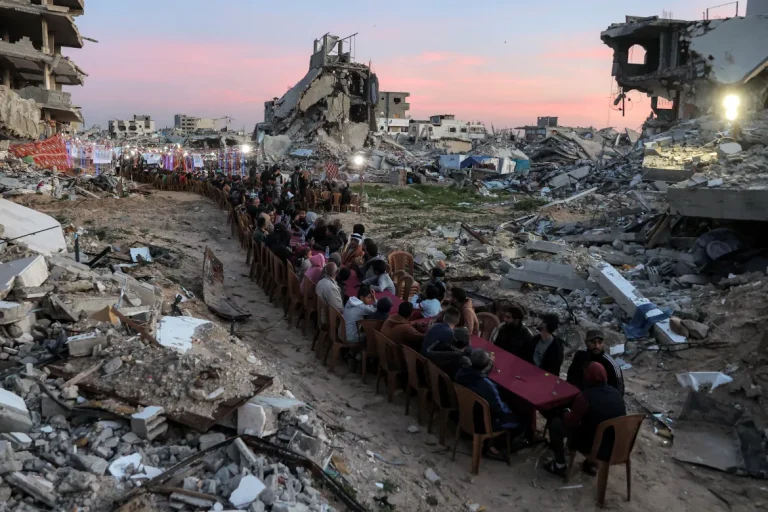
An abandoned Congolese army truck in the streets of Goma, which was taken by the Rwanda-backed M23 group. © ALEXIS HUGUET / AFP
(The Pist News)- A simmering crisis in the Democratic Republic of Congo has reached a boiling point, as Rwanda-backed rebels captured the eastern city of Goma and announced plans to take their fight to the capital, Kinshasa. The rebels, known as the M23, have been accused of receiving support from Rwanda, a claim denied by Rwandan officials.
The M23’s bold declaration has sparked international alarm, with Congo’s President Félix Tshisekedi calling for a massive military mobilization to resist the rebellion. Congo’s Defense Minister Guy Kabombo Muadiamvita has rejected calls for talks, stating that plans for dialogue with the rebels should be “completely burned immediately”.
The M23 rebels, who claim to be fighting for the rights and protection of Congolese Tutsis, have been accused of committing atrocities and human rights abuses.
The crisis in eastern Congo is rooted in a complex of historical grievances, ethnic tensions, and the illicit trade in natural resources. Decades of conflict have left the region in a state of perpetual instability, with millions displaced and countless lives lost.
The M23 rebel group emerged from the aftermath of the 1994 Rwandan genocide, which sent hundreds of thousands of Hutu refugees fleeing into eastern Congo. The region has since become a tinderbox of tensions between Congolese Tutsis and Hutus, many of whom were implicated in the genocide.
The African Union has expressed deep concern over the escalating violence, with calls for a ceasefire and dialogue. The East African Community has proposed a regional solution, while the United Nations has warned of a looming humanitarian disaster.
The consequences of this conflict extend far beyond Congo’s borders. A wider regional war is a real possibility, with devastating consequences for millions of innocent lives. Internal instability could further weaken the already fragile democratic institutions in Congo, pushing the nation deeper into crisis.
Finding a pathway to peace in eastern Congo is a daunting task. International calls for a ceasefire and dialogue are vital, but addressing the root causes of the conflict is essential. This includes investigating allegations of foreign interference, addressing the concerns of the Congolese people, and holding accountable those who support the M23.
About the Author