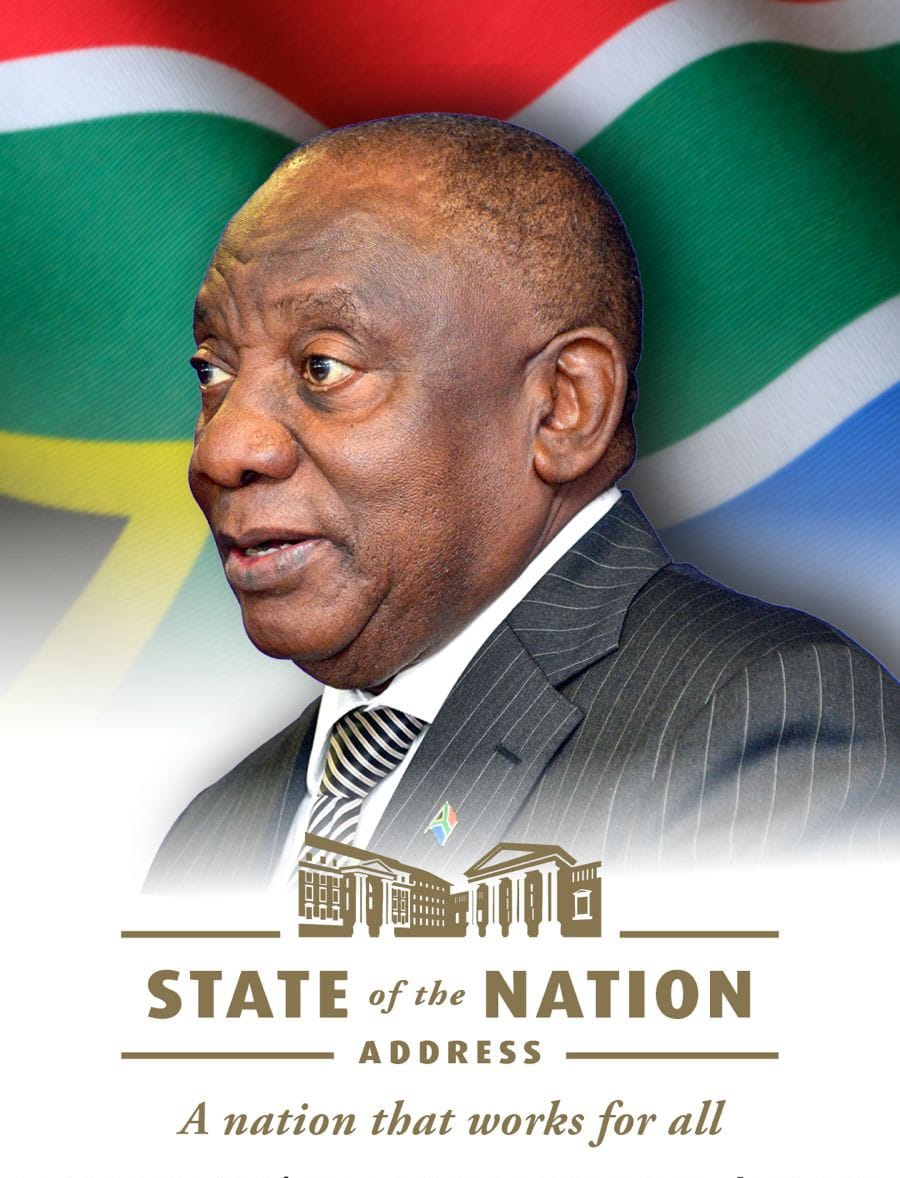
All systems go for SONA, as President Cyril Ramaphosa prepares to address the Nation under the 7th Administration under the Theme “A Nation that Works for All.” Image: South African Government.
(The Post News)– President Cyril Ramaphosa is poised to deliver the first SONA of the 7th Administration under the theme “A Nation That Works, For All.” This address becomes very important in that it coincides with South Africa’s 30th anniversary of democracy and the nation’s presidency of the G20.
Presidential Spokesperson Vincent Magwenya underscored that this SONA is an opportunity for the nation to reflect on progress toward the achievement of the foundational ideals of democracy and to recommit to the democratic project. On the other hand, the MTDP identified the following as key strategic priorities: the driving of inclusive growth and job creation, reduction of poverty, dealing with the high cost of living, and building of a capable, ethical developmental state.
During the 2024 SONA, President Ramaphosa referred to “Tintswalo,” a child born in 1994, as a metaphor for the transformation that had taken place in South Africa. He alluded to critical gains in economic growth, job creation, and service delivery and asserted that millions had been afforded opportunities in education, health, housing, and basic services. Challenges persist, however, with unemployment, health, infrastructure, and crime.
Though there is some evidence of economic improvement, challenges still remain. The president cited positive indications in the economy, which has had its levels of employment steadily increase. The reality is that South Africa’s unemployment rate decreases to 32.1% in Q3 of 2024 from 33.5%, and programs such as the Extended Public Works Programme and SAYouth.mobi make opportunities available.
Meanwhile, challenges also persist, as youths aged between 15 and 24 are facing unemployment as high as 60.2%, while their immediate older peers aged 25-34 years are equally affected, albeit at a lesser rate of 40.4%. Moreover, one-third of youth are NEET—one-third are not employed, not studying, and not receiving any training.
On the other hand, the National Health Insurance Bill (NHI) has been passed, but practical implementation remains slow. While over 1,800 junior doctors are not employed despite an acute shortage of healthcare workers, budget cuts of R1.4 billion have impacted the employment of staff. Additionally, public hospitals battle overcrowding, staff shortages, and decaying infrastructure, and scandals related to corruption in provincial health departments put a dent in health delivery. The uncertainty over US financial aid to critical health programs has left patient care in jeopardy.
Speaking ahead of the 2025 SoNA, during an interview with SABC, political analyst Lebohang Pheko had this to say: “All that is very well and good, but by now, a lot of what needs to happen should be plans and not rhetoric. The systemic causes of economic backwardness and social underdevelopment in the country remain unaddressed.” She called for the adoption of inclusive economic policies that focus on marginalised communities and address issues of structural inequalities. She emphasised transparent governance with mechanisms for accountability to help restore public trust.
On health, Pheko said the government should hasten the implementation of the NHI to overcome the deficiencies that characterise the public health system, including a shortage of staff and incomplete infrastructure.
Additionally, she said that infrastructure development should be sustainable, coupled with fighting corruption, which slows down the completion of projects, and further underlined that community-based programs are required, alongside reforms in the criminal justice system, to resolve the root causes of violence and crime.
As South Africa enters its fourth decade of democracy, President Ramaphosa should assure the government of renewed commitment to economic reform, infrastructure development, and social justice. The 2025 SONA will therefore be a roadmap on how to navigate the next phase of the country’s transformation amid remaining challenges.
About the Author