The Sudanese army has announced that it has regained control of the presidential palace in Khartoum, a key stronghold seized by the rival paramilitary group, the Rapid Support Forces (RSF). Image: BBC Nwes.
(The Post News)– In a dramatic shift in Sudan’s fatal civil war, the Sudanese military confirmed that it has reclaimed the presidential palace in Khartoum, the principal stronghold seized by the opposition paramilitary group, the Rapid Support Forces (RSF), nearly two years ago. It may be a turning point in the conflict that has ravaged the country and brought unimaginable suffering to the people.
The announcement was made on Friday, and the army spokesperson Nabil Abdallah confirmed that the military campaign had been successful. “Our soldiers destroyed the enemy combatants completely and took enormous amounts of weapons,” Abdallah said on state television. He also pledged that the army would never cease to fight “until total victory.”
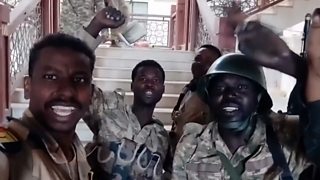
Social media videos and photos, verified by the BBC, showed jubilant soldiers rejoicing at the triumph. Soldiers raised guns in the air, cheered, and knelt to pray in the palace grounds, now scattered with shattered glass windows and bullet-punctured walls. The palace, a representation of the country’s government, was severely damaged in the shootout, with explosions tearing pieces from its facade.
Despite the army’s boast of victory, later hours saw the RSF, led by Mohamed Hamdan Dagalo (also known as Hemedti), release a statement indicating that they were still positioned near the palace. The RSF added that they had launched a lethal counterattack and dozens of soldiers under the army had been killed. The two factions have a strained standoff, and the occasional gunfire continued to ring out in Khartoum on Friday while the fight continues.
Taking back the presidential palace is a setback for the RSF, which was generally on the defensive for the majority of the war. The RSF controls vast tracts of Khartoum and has solidified control over western Sudan, raising concerns the country is careening toward de facto partition.
This event also highlights the deeply entrenched nature of the April 2023 war, which came in the wake of clashes between the army and RSF intensifying after they disagreed on integrating the latter into the national army system. The RSF, having splintered from Darfur’s Janjaweed militias, had at the beginning of the war taken over the presidential palace and large parts of Khartoum, launching a brutal fight for Sudan’s capital.
For most Sudanese, the army’s recapture of the palace is a reason to be hopeful. “The freeing of the palace is the best news I have heard since the war began,” Mohamed Ibrahim, a 55-year-old Khartoum resident, told the Associated Press. “It could mean the army seizes the rest of the city. We want to be safe again and live without hunger or fear.”
But the conflict is not even close to its end. The RSF vowed to keep on fighting, and Dagalo threatened further attacks against other northern cities. Neither of the two conflict parties has shown much interest in negotiating despite tireless attempts at negotiations, and the conflict has unleashed what the United Nations described as the globe’s worst humanitarian crisis, driving millions from their homes and into famine and disease on a wide scale.
The crisis remains dire, with both sides being accused of war crimes and atrocities, including genocide by the RSF. With the combatants refusing to lay down their arms, the future of Sudan remains uncertain, with hopes for peace and stability in the nation hanging in the balance. The recapture of the presidential palace by the Sudanese army is a turning point in the war, but with neither side so willing to yield, the path to lasting peace in Sudan remains elusive.
About the Author