Mercado Kantamanto 1024x640 1
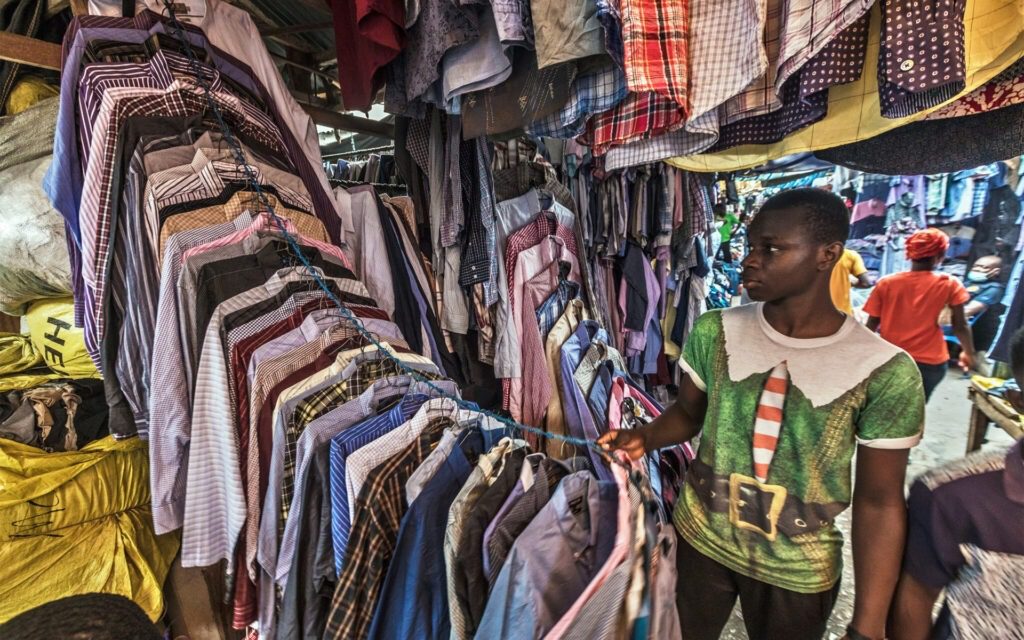
Ghana Markets Overwhelmed By Imported Second-hand Clothing Picture courtesy: (Kantamanto Market, Africa Magazine)
Kantamanto, a bustling second-hand clothing market, has become the centre of Ghana’s recent fashion boom among the country’s youth. This market is a source of rare designer garments like Prada, which are otherwise nearly impossible to obtain. It has created a new avenue of expression and access, like a burgeoning thrifting culture, which has proven to be beneficial for fashion lovers looking for unique pieces to either add to their collection or further their fashion business.
Although clothing markets like Kantamanto have become a go-to place for fashion enthusiasts to seek inspiration and nurture their creativity, there are negative impacts that must be addressed sooner rather than later, or they could spell doom for the environment of The Gold Coast.
International brands donate unsold clothing to charity shops, which later sell them to Ghanaian traders starting from $120 per bale. Approximately 70% of donated clothes from Europe are given a new lease of life in Africa, while the rest are either disposed of or burned.
Kantamanto is a massive market that heavily relies on second-hand clothing. Every week, around 100 bales of clothing are distributed among the 5,000 stalls in the market. These stalls provide income for approximately 30,000 individuals. The Kantamanto market receives an estimated 3.4 million kilograms of second-hand garments every week, which is equivalent to approximately 15 million items.
Retailers struggle to sell clothes with bloodstains, rips, tears, mold, and broken zips. They either sell them at a discounted price or throw them out. Unfortunately, the number of unsellable clothes has increased, causing concern among retailers. High-quality garments sell faster, so it’s essential to avoid buying bales of unsellable clothes.
“The problem of waste is getting worse. For 12 years, the goods coming here have not been good, we can’t benefit from them. It’s my impression that countries abroad think Africa is very poor so they give us low-quality goods and their waste,” said John Opoku Agyemang, the secretary of the Kantamanto Hard Workers’ Association, who has worked at the market for 24 years.
The informal disposal of clothes in Kantamanto and its surroundings is causing an environmental issue. The amount of waste generated is an indication of the lack of infrastructure in place for safe refuse disposal. Every day, 100 tons of clothing are left as waste, with only 30% of it being collected by the city. The remaining 70% is dumped into illegal landfills. Old Fadama, the largest informal settlement in Accra with a population of 80,000, is two miles away from the market. Unfortunately, the area is now overwhelmed by waste and rubble. Houses are built on top of them, and the Korle Lagoon is surrounded by dirt.
Photographer Alhassan Fatawu, who is 24 years old, shared his memories about the lagoon, stating that he recalls a time when people used to fish in it. However, due to its current state, he can no longer go near it as it has become like a pit of death. The lagoon was previously a source of livelihood for many people who depended on it. Fatawu remembers seeing a lot of canoes on the lagoon, but now it has become too dangerous to use.
About the Author