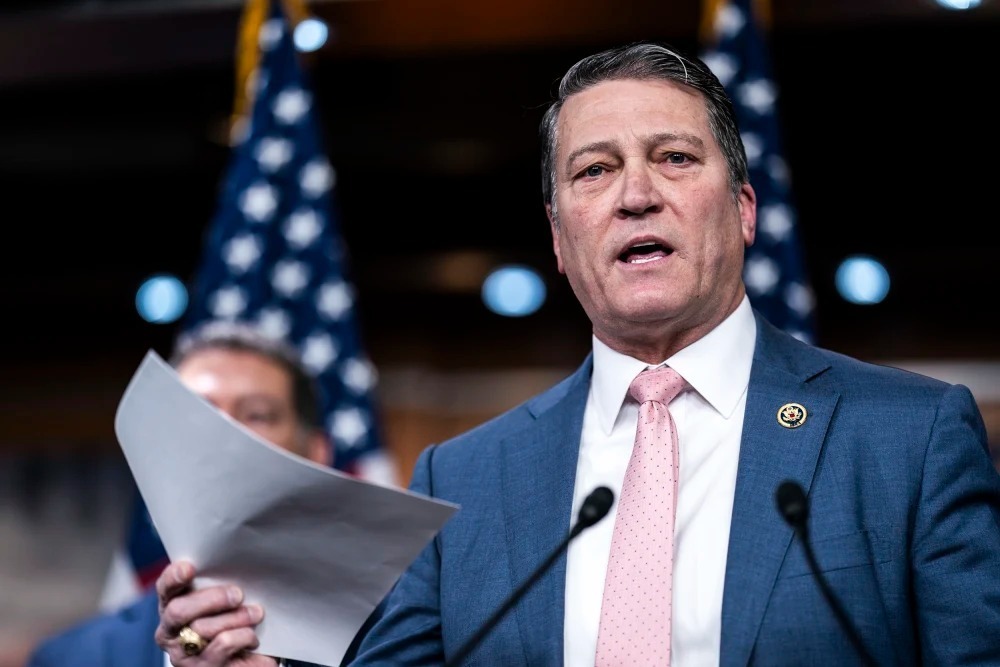
US Congressman and Republican Ronny Jackson has introduced a bill to hold South Africa accountable. Image: AP.
(The Post News)– On Thursday, Congressman Ronny Jackson introduced the U.S.-South Africa Bilateral Relations Review Act of 2025, a bold proposal aimed at reassessing the relationship between the United States and South Africa. The bill, which is a continuation of similar legislation passed in the House of Representatives last year but stalled in the Democratic-led Senate, has gained renewed momentum now that Republicans control both chambers of Congress.
The legislation’s main goal is to examine and perhaps sanction South African officials, especially those associated with the African National Congress (ANC), for allegedly aiding American enemies including China, Russia, and Iran. Jackson has been outspoken in his criticism of South Africa’s foreign policy, claiming that the nation is undermining it.
“South Africa has brazenly abandoned its relationship with the United States to align with China, Russia, Iran, and terrorist organizations a betrayal that demands serious consequences,” Jackson declared in a press release. He added that the bill was a necessary step to hold officials accountable for actions that he believes jeopardize U.S. interests.
Jackson’s bipartisan efforts stem from the previous Congress, when similar provisions were passed in the House, are being followed up by this legislative action. Additionally, it is consistent with the Executive Order issued by President Trump in February 2025, which addressed what the administration considers to be extraordinary acts by the South African government.
Jackson has cited South Africa’s expanding relations with Beijing, Moscow, and Tehran in his criticism, as have other members of Congress. They contend that these connections jeopardize South Africa’s democratic structures in addition to posing a threat to American national security. The relations between the South African government and the Chinese Communist Party, which they accuse of violating human rights and using economic coercion techniques worldwide, are of special concern to them.
Deeper ties with countries in the Global South, particularly those that oppose American hegemony, have been sought for by South Africa. This shift has been met with skepticism in Washington, especially as it involves partnerships with nations that endorse alternative global governance models that often clash with U.S. interests.
According to some analysts, this tactic is a component of a larger U.S. plan to undermine competitor states’ influence, especially in strategic areas. Others, however, are worried that the plan to apply sanctions could worsen tensions between the United States and South Africa as well as throughout the Global South.
About the Author