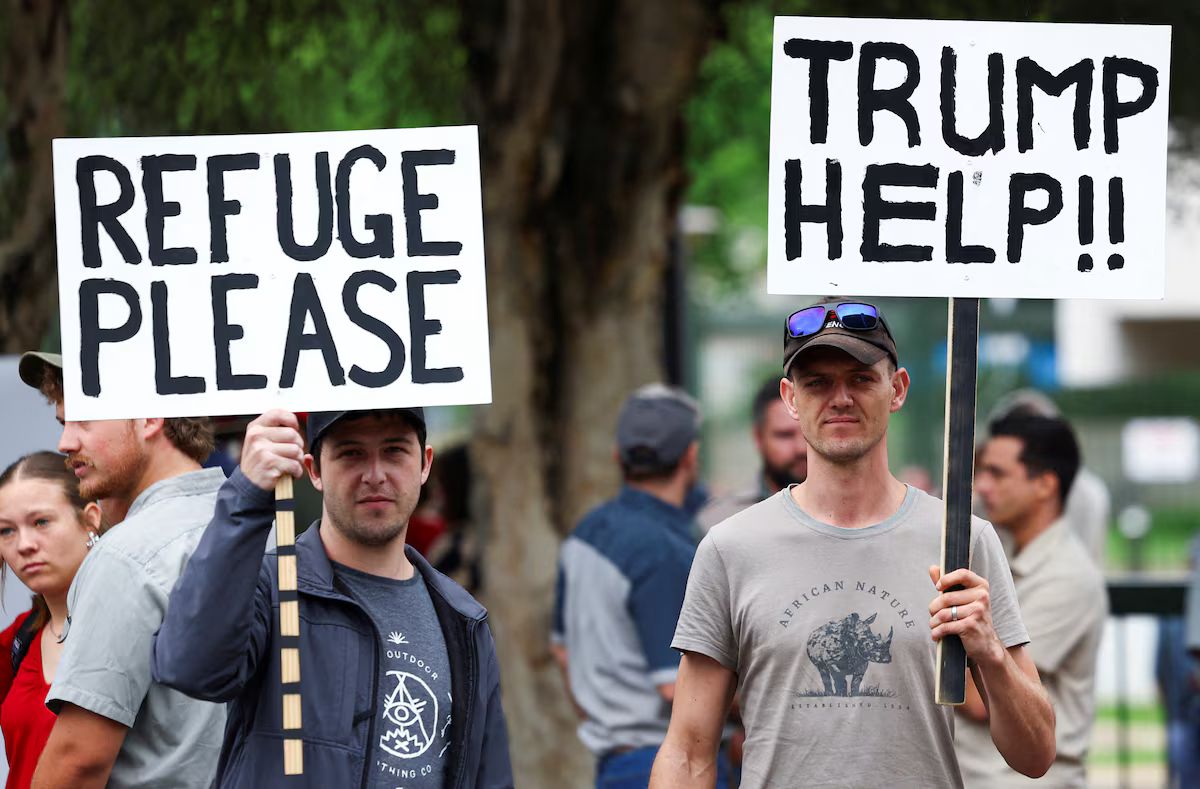
Protesters outside the U.S. Embassy in Pretoria hold placards supporting former President Donald Trump’s stance on South African land expropriation and farm attacks, calling attention to what they describe as “racist laws” and threats to white farmers. Image Source : REUTERS/Siphiwe Sibeko
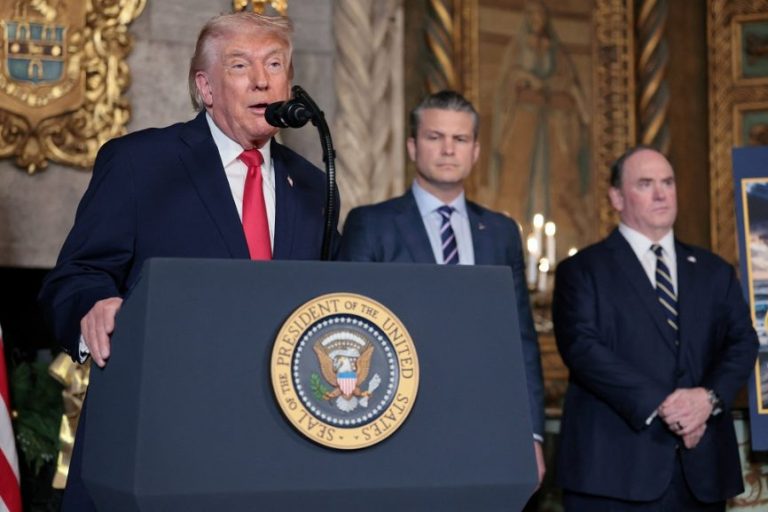
(The Post News)- The U.S. has admitted a group of white South African refugees, marking the first such exception under former President Donald Trump’s controversial “refugee freeze” policy.
The group, composed of approximately 50 Afrikaners, arrived in the United States this week and is expected to resettle in states like Minnesota, Idaho, and Alabama.
This development comes after Trump signed an executive order earlier this year limiting most refugee admissions, citing national security concerns. However, the administration carved out a specific provision allowing Afrikaners — a white minority in South Africa — to apply for resettlement on the basis of alleged racial discrimination and threats to personal safety.
Critics argue that this exception reflects a racially motivated double standard. “There are countless refugees fleeing war, persecution, and genocide who remain excluded,” said one immigration analyst. “Allowing this group in while blocking others sends a troubling message.”
The South African government has also condemned the move, emphasizing that Afrikaners remain one of the most economically secure communities in the country. “This decision is not based on any objective human rights criteria,” a spokesperson said.
While some Afrikaners have welcomed the opportunity, citing insecurity and marginalization, advocacy groups like Solidarity and AfriForum have rejected the refugee label. They reaffirm their commitment to remaining in South Africa, with Solidarity’s CEO Dirk Hermann stating, “Our members work here, and want to stay here, and they are going to stay here. We are committed to build a future here. We are not going anywhere.”
As debates intensify over refugee policy and racial bias in immigration decisions, the arrival of these white South African families adds another layer to an already heated national conversation.
The selective acceptance of these refugees has sparked debate, particularly as other vulnerable groups from conflict zones remain excluded due to the broader suspension of U.S. refugee programs. Critics argue that this focused resettlement signals a politically charged prioritization rather than addressing global refugee needs equitably.
About the Author