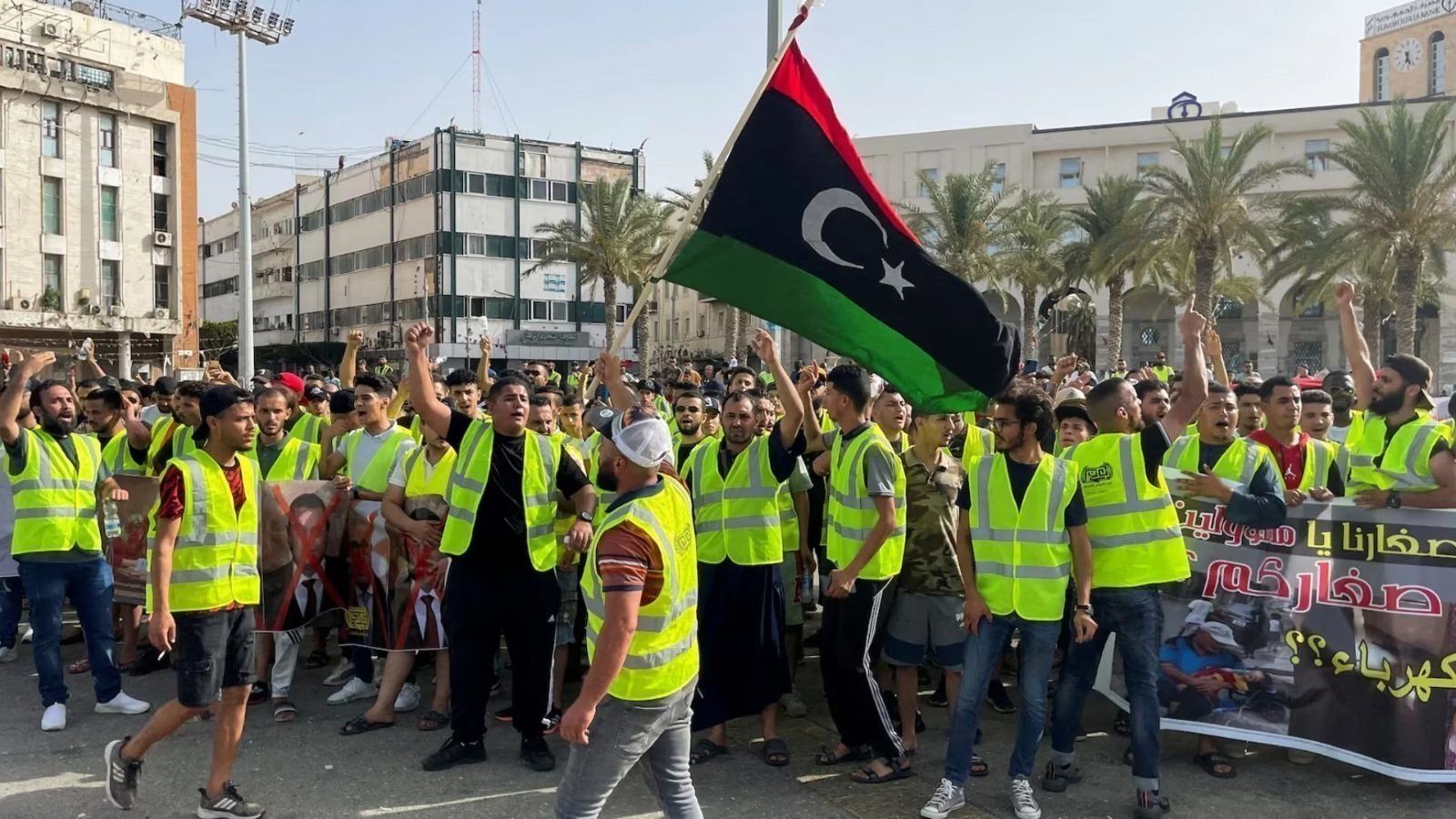
Libyan Protestors demanding the Prime Minister to Resign. Image: The Daily Guardian.
(The Post News)– Protests have erupted in the heart of Tripoli, Libya, shaking the stability of the nation’s government.
Carrying portraits of Prime Minister Abdulhamid Dbeibah and other officials, protesters made their demands clear. One notable figure among them was Interior Minister Emad Tarbulsi, whose image was defaced in a powerful statement. Chanting “We won’t leave until he leaves”, the crowd showcased their determination.
Dbeibah, who has led Libya’s UN-recognized Government of National Unity since 2021, finds himself in a precarious position. His rise to power followed an internationally supported peace process. However, planned elections in 2021 were postponed indefinitely, leading to increased frustration among the populace. Many feel Dbeibah has overstayed his welcome.
Tensions reached a boiling point this week following violent clashes between rival armed factions in Tripoli. Reports indicate that eight civilians lost their lives during the unrest. A United Nations report highlighted the escalating violence, which erupted after Dbeibah ordered the dissolution of various militias. Critics have labelled this action as “too little, too late”.
In response to the backlash, three ministers tendered their resignations. Economy and Trade Minister Mohamed al-Hawij, Local Government Minister Badr Eddin al-Tumi, and Housing Minister Abu Bakr al-Ghawi all stepped down, signalling a fracture within the government itself. Their departures have intensified calls for Dbeibah’s resignation, adding to the chaos.
Militia commander Abdulghani Kikli, known as Ghaniwa, reportedly died in the recent clashes. His death illustrates the dangerous atmosphere in which Libya resides. The violence ended briefly after a ceasefire announced by the government, but the underlying tensions remain unresolved.
Libya has been politically fractured since the 2011 NATO-backed revolution that ousted long-time leader Muammar Gaddafi. The eastern part of the country is controlled by Khalifa Haftar’s Libyan National Army, while the west, particularly Tripoli, remains a battleground for competing armed groups.
Despite the turmoil, Libya’s oil production—the country’s economic lifeline—has not been significantly disrupted. Engineers in the south and east confirmed that operations continue, offering a flicker of stability amid the chaos. This is crucial as oil revenues are essential for rebuilding the nation.
Public sentiment is raw and palpable. Families are fearful as violence continues to threaten the safety of their neighbourhoods. Protesters insist on reform and accountability from their leaders. They demand a government that addresses their grievances rather than prolongs its power.
International attention is turning to Libya once more, with a delicate balance of power at stake; the world watches closely. The future remains uncertain, and the people’s calls for change echo loudly.
As the protests persist, so too does the hope for a unified and peaceful Libya. Citizens yearn for stability and a functioning democracy. Whether their voices will be heard remains to be seen. For now, Libya stands on a knife’s edge, teetering between chaos and change.
About the Author