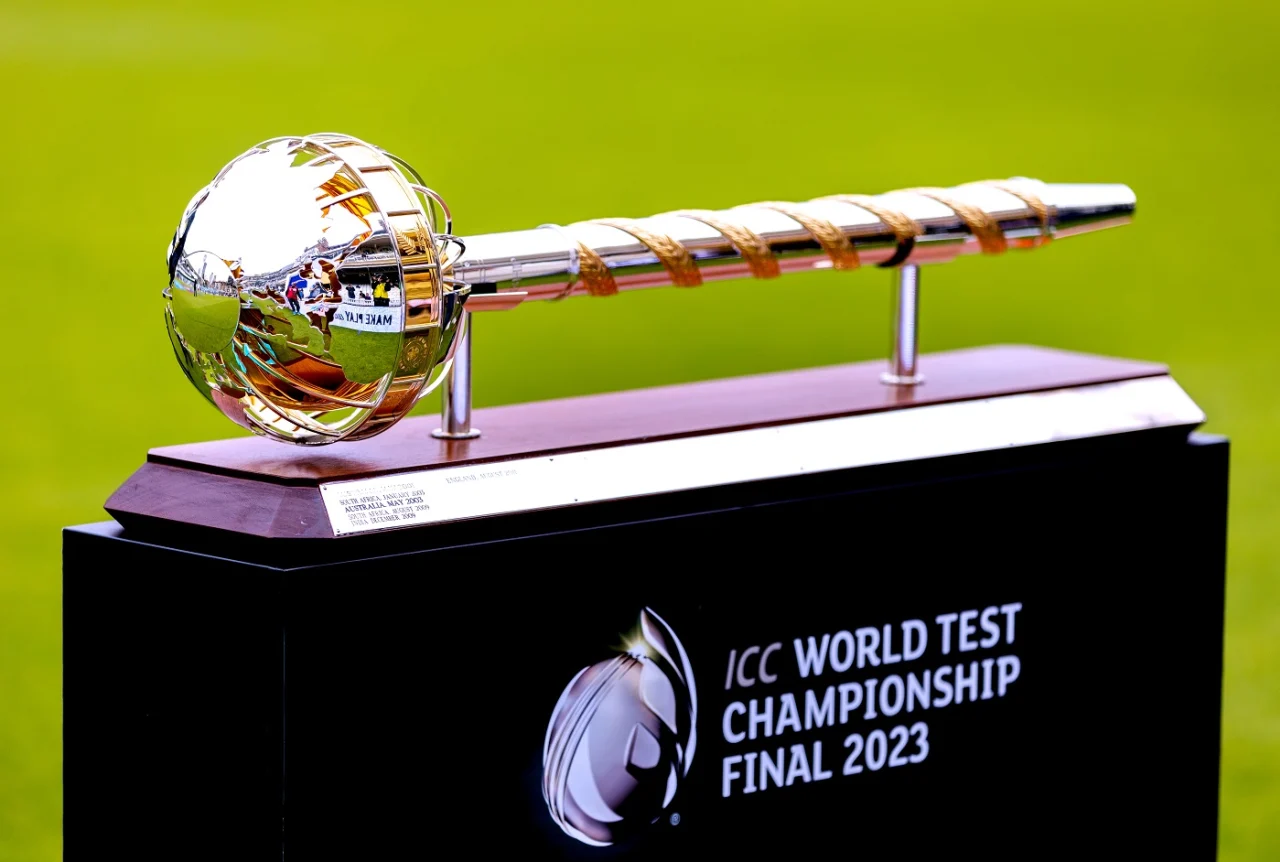
South Africa and Australia will face off in the third ICC World Test Championship final at Lord’s on 11 June, continuing a legacy of competitive Test cricket that dates back over a century. Image: IPL.
(The Post News)– As the World Test Championship (WTC) gears up for its third final, this time between Australia and South Africa at Lord’s on 11 June, the journey to this point stretches far beyond its 2021 inception. While many view it as a modern innovation, efforts to create meaningful competition in Test cricket date back over a century.
Concerns about the future of Test cricket aren’t new. As early as 1909, reports criticised the slow pace of international play, with players described as overly cautious compared to domestic cricketers. This led to the 1912 Triangular Tournament in England, featuring the only Test nations at the time, England, Australia, and South Africa. Though England won that rain-affected series, the tournament flopped financially and was never repeated in the same form.
Subsequent attempts, like the short-lived Test-format Asia Cup in 1998-99, also failed to take off. Yet today’s WTC, despite its structural flaws, has become an essential part of the international calendar. Cricket’s top administrators agree it’s here to stay, offering structure and context to a format often challenged by scheduling constraints and commercial pressures.
The WTC has its limitations: uneven match totals, selective fixtures, and the absence of contests like India vs Pakistan. Even so, it serves a critical role in uniting cricket’s top nations under a shared competitive banner. Instead of scrapping it, the focus has shifted to reform, such as the possibility of introducing two divisions, though top-tier nations would likely be protected from relegation.
Meanwhile, countries like Zimbabwe, Afghanistan, and Ireland, which hold Test status but remain largely excluded from the WTC spotlight, raise questions about inclusivity in the format’s future.
This year’s final is seen as a mismatch, South Africa, with fewer established stars, viewed as underdogs against the formidable Australians. Still, the enduring appeal of Test cricket, bolstered by the WTC, affirms what early 20th-century organisers envisioned, even if their original idea took over 100 years to flourish.
About the Author