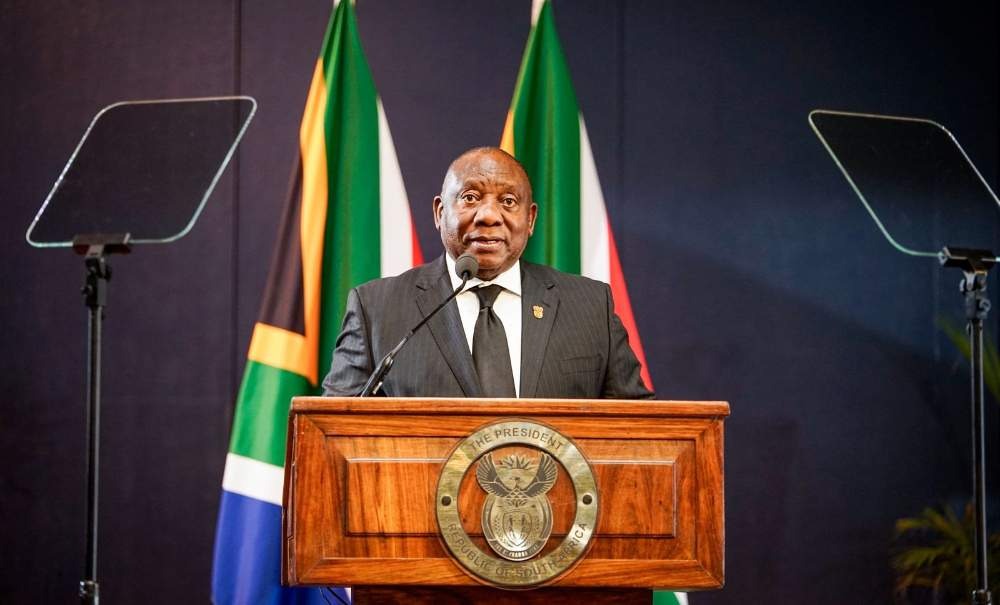
Ramaphosa says that the National Dialogue talks would help create a national ethos and a set of common values that will bring the plagued by economic inequality, high crime, unemployment, and political instability together. Image: GCIS
(The Post News)– President Cyril Ramaphosa has made an announcement of a 31-member Eminent Persons Group (EPG) to steer South Africa’s upcoming National Dialogue.
The announcement has raised mixed emotions around the country—some people are cautiously hopeful, and others are quite sceptical about the choice of list of patrons. The project is being framed as a historic chance to change the country’s destiny. It hopes to capture the spirit of the CODESA debates from the 1990s, but with more people from all walks of life taking part.
The EPG, unveiled on 10 June, includes prominent individuals such as academic Prof. Nomboniso Gasa, actor and activist Dr John Kani, mining executive Bobby Godsell, and Springbok rugby captain Siya Kolisi. The dialogue’s formal launch is set for a national convention on 15 August. Former President Thabo Mbeki, a key advocate, has emphasised that this process must go beyond political elites.
“It must include political formations, plus the people,” he told delegates at the South African Communist Party’s 5th Special National Congress, held in December last year, stressing the need for binding outcomes shaped by diverse sectors, including youth, workers, civil society, traditional leaders, and business.
However, critics warn that the process already appears exclusionary. Vocal media personality Ntsiki Mazwai labelled the EPG “a national dialogue of coconuts and good Blacks”, highlighting a perceived absence of working-class and youth representation. She and others point to the exclusion of grassroots and controversial movements like #PutSouthAfricansFirst and Operation Dudula, groups that, while polarising, reflect the frustrations of many South Africans.
Former MP Themba Godi echoed these sentiments, describing the dialogue as a “ruse to save the ANC” and likening it to past “talk shops” under Ramaphosa’s administration that failed to produce tangible change. Underlying these critiques is a concern that the dialogue will not confront urgent, lived realities such as youth unemployment, service delivery failures, landlessness, and the impacts of undocumented migration. These issues, though often framed in populist rhetoric, remain central to many South Africans’ daily struggles.
Analysts say that for the dialogue to succeed, it must avoid being a top-down, elite-driven process. Instead, it should incorporate real grassroots input through community forums, imbizos, and town halls. Transparent mechanisms for accountability and open engagement with uncomfortable topics are also viewed as essential.
As the countdown to August begins, the legitimacy of the National Dialogue may hinge not on the prominence of its participants but on who gets to speak, what is heard, and how seriously outcomes are implemented. Whether this becomes a truly national conversation or another symbolic summit, it could shape South Africa’s political landscape for years to come.
About the Author