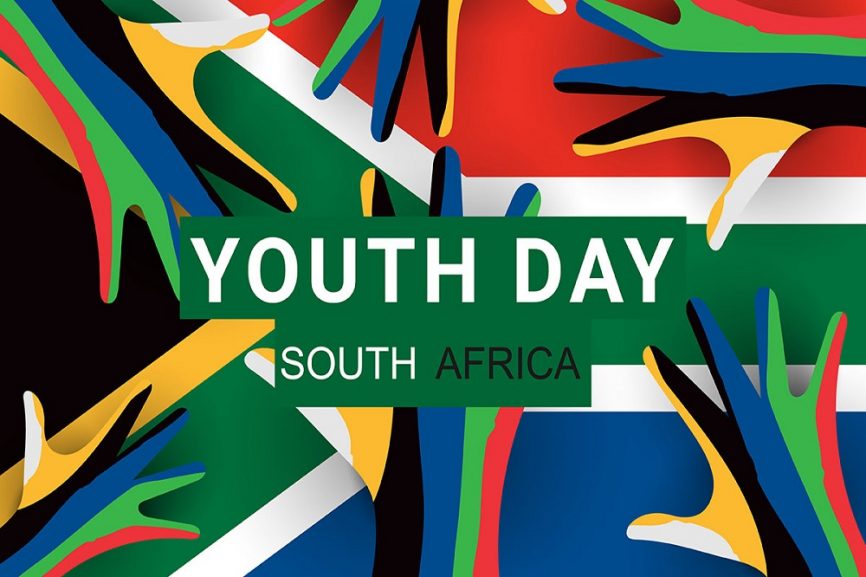
This graphic symbolises the vibrant spirit of South African youth, serving as a reminder of the millions, including those in Potchefstroom's townships, who are finding creative ways to navigate a challenging job market. Image: SABC News.
(The Post News)– In Promosa township, just outside Potchefstroom, the struggle for survival is a daily reality, yet so is the fierce spirit of its young people. Here, amidst the challenges, you find more than just struggling communities; you see an incredible resilience. You see young people, often with little more than their bare hands and a fierce will, finding ways to survive, to put food on the table, and to simply get by.
The numbers are stark, chilling even. The Deputy President, Paul Mashatile, recently said youth unemployment hit a staggering 56.3% in the first three months of this year. That’s 9.2 million young people like those in Promosa, shut out – no jobs, no studies, no training. It’s not just a number on a page; it’s a daily struggle, a gnawing worry for so many.
Take Itumeleng Meyer. He’s one of the faces of this fight. He’s often found, with others, on Promosa’s bumpy roads, doing what many would call an “odd job”.
“We patch the roads because we come from poor backgrounds,” Itumeleng explains, his voice steady but carrying the weight of their reality. “So, we don’t want to resort to crime in the township. So, we are here to patch roads with mud in Promosa just to put food on the table.”
Think about that for a moment. Patching potholes with mud. Not with fancy equipment, not with a steady pay cheque, but with whatever they can find, hoping for a few coins, just enough to silence the rumble of an empty stomach. It’s a stark reminder of how far young people are pushed when formal jobs vanish.
And jobs have vanished. In industries that used to offer a lifeline – trade, construction, mining, and even community services – thousands of jobs have disappeared recently across South Africa. The decline in sectors like platinum group metals mining specifically weakens the economic fabric of areas like this.
Itumeleng’s words aren’t just about today; they’re about tomorrow and the day after. He sees what’s happening around him, the desperation that pushes some friends down dark paths.
“They see what happens to our youth on a daily basis, especially when you look at our prisons; it’s mostly youth. So, you can’t tell me you don’t see what effect it has on them,” he urges, his frustration palpable. “We have to invest in our youth. So, what’s going to happen to South Africa if all the kids are on drugs? Where are the programmes? What’s going to happen to us? The government has failed us.”
It’s a raw cry, a mix of heartbreak and a desperate plea. It’s the fear every parent, every community leader, and every young person in Promosa carries – the fear of losing a generation to hopelessness and the grip of addiction and crime. Deputy President Mashatile himself acknowledged this, calling youth unemployment not just a labor market issue but a “social and moral emergency”.
On Monday, National Youth Day, the country’s main celebration will be in Potchefstroom, at NWU Rag Farm Stadium. Deputy President Mashatile will be speaking, focusing on “Skills for the Changing World – Empowering Youth for Meaningful Economic Participation.” He believes entrepreneurship is the answer, a way for young people to create their own future. He talks about big national initiatives – a R100 billion Transformation Fund for Black businesses, a R500 million Spaza Shop Support Fund for township and rural economies, platforms like SAYouth.mobi that have seen millions of applications, and thousands of first jobs through the Basic Education Employment Initiative. Even new laws, like the Public Procurement Act and the National Small Enterprise Amendment Bill, are being looked at to make it easier for young entrepreneurs. Mashatile stressed that these are “strategic investments in youth potential”, not handouts.
The North West government also has its plans, like the Labor Activation Plan (LAP), aiming for over 24,000 youth job opportunities in fields like engineering, agriculture, and artisanal work. The provincial budget for 2025/26 also allocates R81.492 million to the Presidential Youth Employment Initiative and billions more for infrastructure projects that promise temporary jobs. The Youth Day event itself will feature a career exhibition, aiming to link young people with opportunities.
But for many like Itumeleng, the question remains: Are these big promises reaching the dusty streets of Promosa? Are these programmes truly helping those patching potholes with mud? The challenge often lies in bridging the gap between national policy and local access.
Despite the crushing statistics and the daily grind, there’s a flicker of something powerful in Promosa: a relentless hope, a refusal to give up. It’s in Itumeleng’s hands as he smooths out another patch of mud. It’s in the eyes of every young person looking for a way to contribute, to build a life.
The youth here aren’t asking for handouts, as Mashatile himself noted. They are asking for a fair shot, for investments in their potential. They are asking for an economy where their hard work, their resilience, and their creative ways to survive can finally turn into sustainable ways to thrive.
As the nation celebrates Youth Day, the voices of Promosa’s young people serve as a powerful reminder: true empowerment means making sure that the opportunities and promises reach every corner, every township, and every young person who just wants to put food on the table and build a better future.
About the Author