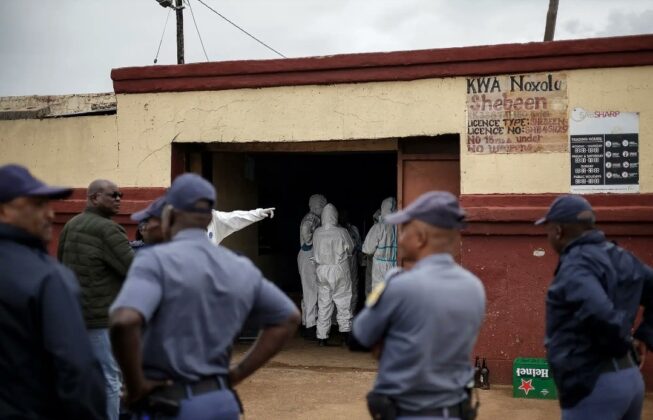
Sasha Lee Monique Shah beams in her graduation photograph from 2021, a moment symbolizing a future tragically cut short. Her mother, Jessica Naidoo, now fights for justice in her beloved daughter's name. Supplied image/Jessica Naidoo
(The Post News)- How many tears must a mother cry before justice listens? How many children must die before our protectors choose to protect? This is the agonizing question burning in the heart of Jessica Naidoo, whose beloved daughter, Sasha Lee Monique Shah, was brutally murdered – a death Jessica declares was entirely preventable, a direct consequence of a system that failed, spectacularly and repeatedly, at Phoenix SAPS.
Sasha Lee was bright, kind, and deeply loved. She was everything to her mother. But her life was ripped away by her ex-boyfriend, Kyle Inderlall, armed with a firearm that should have been confiscated long before. Jessica’s pain is amplified by a chilling truth: Inderlall already had three criminal cases against him, all lodged at Phoenix SAPS. Three blaring sirens screaming danger, three chances for the police to act. They were ignored.
The officer in charge of the Domestic Violence Unit, Captain Emmanuel, was the one meant to ensure Sasha Lee’s safety, meant to serve a crucial interim protection order demanding that the firearm be removed. She didn’t. And Sasha Lee paid the ultimate price.
Jessica Naidoo doesn’t speak from assumption; she speaks from documented, undeniable fact. Official evidence from the formal murder inquest into Sasha Lee’s death, with three eyewitnesses, proves Captain Emmanuel’s gross negligence. Incredibly, even after an internal SAPS disciplinary process found Captain Emmanuel guilty of her failure – a failure that led to two deaths, Sasha Lee’s and Inderlall’s suicide with that very gun – her punishment was a paltry two-month unpaid suspension. Two months. For two lives.
“Who made this decision?” Jessica cries out, her voice raw with disbelief. “Does wearing a badge remove one from the full consequences of inaction?”
Unwilling to accept such minimal consequences for what she views as a criminal dereliction of duty, Jessica Naidoo has taken the fight further. She has laid formal criminal charges against Captain Emmanuel – for culpable homicide, contempt of court, dereliction of duty, and breaches of laws meant to protect the vulnerable. The case is now with IPID, but Jessica’s trust is shattered.
And then, the unspeakable horror that chills to the bone: In his suicide note, Sasha Lee’s murderer, Kyle Inderlall, chillingly thanked Detective Raviburan of Phoenix SAPS for “helping” him. What kind of “help” does a murderer receive from a police detective? This is not just negligence; this is a grotesque shadow hanging over the integrity of Phoenix SAPS, a detail that screams for an immediate, merciless investigation.
The betrayal runs deep, extending beyond the courtroom and into the public sphere. As Jessica bravely speaks out, she faces vicious attacks, like those from a social media user named “Phoyisa.” In comments obtained by The Post News, “Phoyisa” callously accuses Jessica of “just looking for free money,” arguing that “the police didn’t kill your daughter, Kyle did!” and that Sasha Lee should not have met him after obtaining a protection order. Jessica’s dignified response cuts through the cruelty: “A human being is dead. My daughter is dead. She was murdered with a firearm that should have been removed by a police officer who was later found guilty of negligence by SAPS itself. And here you are, defending the indefensible, defeating the ends of justice.”
This kind of victim-blaming, the face of documented police negligence, highlights the immense, painful battle Jessica fights daily for empathy and truth. Jessica’s pleas for transparency are met with silence. The full court transcript from Sasha Lee’s inquest, where police officers testified, is being withheld. The magistrate’s instructions – a clear directive for further investigation into the SAPS captain – remain stubbornly ignored.
But Sasha Lee’s tragedy, as devastating as it is, is tragically not isolated. Just days ago, another family reached out to Jessica, their voices trembling with a story of their own 16-year-old nephew, murdered in Phoenix two years ago. The same alleged pattern: Captain Emmanuel, once again, accused of failing to serve a protection order against his killer. This, potentially, happened after Captain Emmanuel’s brief suspension and then silently returned to her post.
“A second child was murdered after Emmanuel was given her two months suspension and placed back in her position as captain,” Jessica states, her agony palpable. “Who do we blame for this? My child.
About the Author