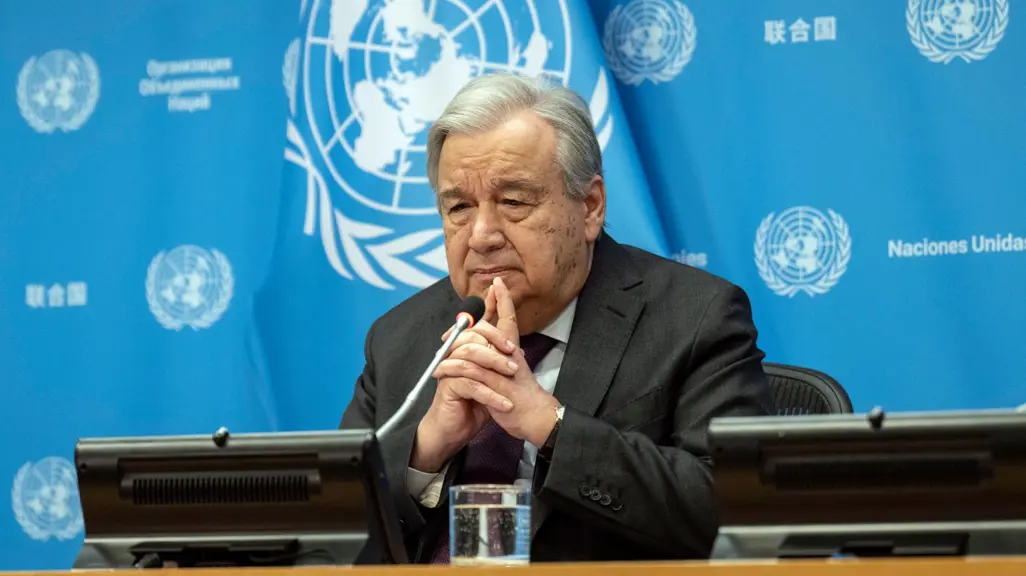
Secretary-General Antonio Guterres.
(The POst News)– On Thursday, UN Secretary-General Antonio Guterres condemned what he described as the relentless stream of brutalities in Gaza after nearly two years of war. https://www.ewn.co.za/2023/08/29/un-chief-condemns-endless-gaza-horrors-as-israel-presses-offensive
Israel, whose armed forces continue preparing to seize Gaza City, now faces mounting pressure both at home and abroad to halt or suspend its military campaign in the Palestinian territory. The United Nations has already confirmed the presence of famine in Gaza, highlighting the severity of the humanitarian crisis and calling for urgent international action.
Humanitarian Crisis and Displacement in Gaza
So far, more than two million people in Gaza, nearly the entire population, have endured displacement one or more times since the beginning of the conflict. Relief groups working in Gaza have repeatedly urged Israel to exercise restraint. The groups warn that an expanded offensive risks deepening the catastrophe and emphasizing the vulnerability of children, the elderly, and patients with chronic illnesses.
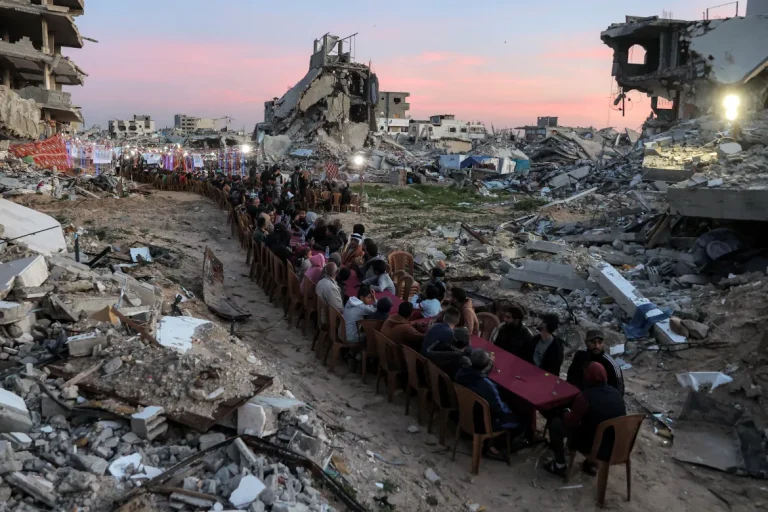
Speaking to reporters, Gutters said that areas in Gaza are “covered with rubble, littered with bodies, and filled with cases of what could be serious violations of international law.” He demanded accountability for the destruction and deaths and called for immediate humanitarian access to all affected areas.
Meanwhile, AFP footage captured massive clouds of smoke rising above Gaza City as Israeli warplanes struck neighborhoods on the outskirts. The bombardments forced many families in Gaza to flee once again, with survivors describing harrowing experiences, including nights spent outdoors with little food or shelter and children crying from fear and hunger.
Civilian Toll and Aid Challenges
Aya Daher, who fled her home in Gaza City’s Zeitoun district, told AFP she had no shelter and stayed outside a local hospital, “patiently expecting God’s kindness.” She described a terrifying night, saying, “The night was filled with explosions. I got hurt, my husband was struck by shrapnel, and my son was also injured in the head. Thank God we made it, but many others died.”
According to civil defense reports, Israeli strikes and gunfire killed at least 40 people across the territory on Thursday. Among the dead, six individuals were shot while waiting for humanitarian aid, highlighting the extreme risks faced by civilians seeking basic necessities.
In response, the Israeli military said it required precise timing and location details to investigate the reported incidents. However, due to strict media restrictions and limited access to many parts of the territory, AFP could not independently confirm the death tolls or specifics from either civil defense or the Israeli army.
Hospitals are overwhelmed, water supplies are scarce, and electricity outages affect critical medical equipment, leaving families increasingly dependent on dwindling aid deliveries.
Political Developments and International Reactions
The Israeli military, on the other hand, has announced that it was preparing to extend actions against Hamas in Gaza Municipality.
At the same time, COGAT, the Israeli defense ministry body overseeing civilian affairs in Palestinian territories, said it was coordinating efforts to shift the populace southward for their security, creating large migration movements and logistical challenges for families already under strain.
Inside Israel, political divisions also surfaced. Far-right Finance Minister Bezalel Smotrich reignited controversy by insisting that Israel should annex parts of the Gaza Strip once Palestinian civilians evacuate, as long as Hamas refuses to surrender its weapons. In contrast, Hamas immediately denounced his statement, describing it as “a clear support of… systematic removal of a particular ethnic group,” heightening tensions and drawing international criticism.
Meanwhile, Cindy McCain, director of the UN World Food Programme, voiced deep concern that the region had reached “a breaking point.” Following a visit, she said she witnessed firsthand the speed at which despair was spreading, and she appealed urgently for the reopening of 200 food supply points that the WFP once operated, noting that thousands of families depend on these distributions to survive.
In late May, after more than two months of blockade, Israel slightly loosened restrictions, allowing the creation of the Gaza Humanitarian Foundation, a private organization backed by the United States and Israel, which assumed control over food aid distribution, sidelining traditional UN agencies. Reports emerged of chaotic scenes at distribution sites, where desperate Palestinians risked their lives waiting for food and, in some cases, were injured or killed.
UN human rights experts raised alarms over allegations of “involuntary abductions” at aid sites, although the organization denied such incidents. The ongoing conflict continues to take a devastating toll, with tens of thousands of civilians killed and countless others displaced or trapped without adequate food, water, or shelter.
After nearly two years of war, Gaza’s landscape tells the story of devastation: shattered cities, mass graves, and an exhausted population pushed to the brink of famine. As Israel pushes toward Gaza City, the UN and aid groups continue to demand restraint, accountability, and above all, a halt to what Guterres called a cycle of atrocities in Gaza with no end in sight.
About the Author