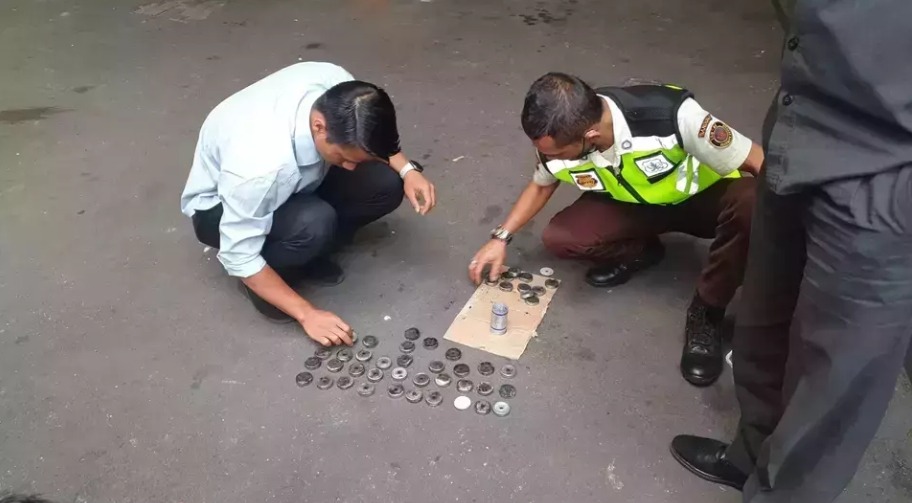
Pasundan University staff collect metal fragments from tear gas canisters fired by police at protesters on campus in Bandung, West Java, on Monday. Image Credit: B-Universe Photo/Aep Sopandi
(The Post News) – The past week of unrest has seen more than 1,200 people detained, with tensions rising further yesterday as university students led their own protest demonstrations. On Tuesday, authorities and student groups reported that tear gas was fired to disperse crowds near the Islamic University of Bandung (UNISBA) and Pasundan University, leaving 12 students fainted after being sprayed.
Students and international rights groups criticised security forces, accusing them of crossing a line by targeting educational grounds that are regarded as “safe zones” of learning and symbols of Indonesia’s struggle for democracy. UNISBA’s student body went further, alleging a “brutal attack” was meant to silence the student’s and publics unrest.
The deputy Asia director of Human Rights Watch, Meenakshi Ganguly, agreed with sentiment that the use of tear gas was harsh. She said, “The Indonesian authorities acted irresponsibly by treating the protests as acts of treason or terrorism,”.
Police admitted to firing tear gas but denied storming either campus. Official Hendra Rochmawan said the police tried to disperse a crowd of non-student protesters who had blocked nearby roads and sought refuge on the campus.
The unrest began in Jakarta, fueled by growing inequality and public dissatisfaction with the government’s handling of the country. Students and the youth accused the state of promoting a “political oligarchy” and perpetuating an unequal economic system, citing government spending, enhanced benefits and allowances for lawmakers as key grievances.
President Prabowo Subianto attempted to make concessions on August 31 by pledging to slash lawmakers’ benefits and halt their foreign travel. However, the moves failed to quell public anger, as many Indonesians saw them as insufficient in addressing deeper issues of inequality and systemic corruption
Please share your thoughts, contact Lukhona via email: journalist-lukhona@thepostnews.net
About the Author