Zuma's eligibility
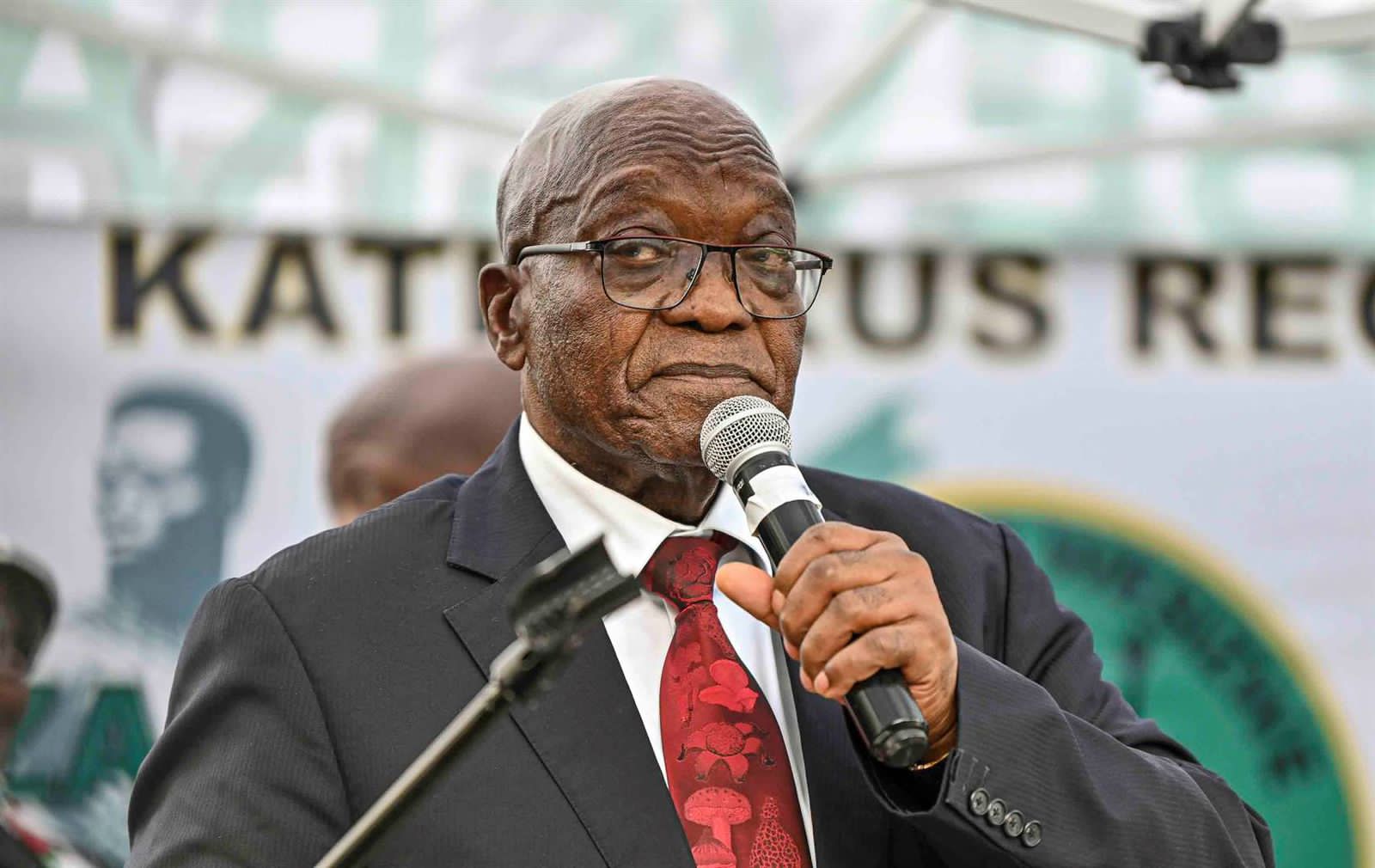
Picture Courtesy: (Mlungisi Louw / Gallo) Former President Jacob Zuma, a figure of enduring controversy and political intrigue in South Africa’s democratic saga.
(The Post News)- The Constitutional Court has issued directions regarding the Electoral Commission’s (IEC) appeal on former President Jacob Zuma’s eligibility to run in the upcoming elections. This development comes as the nation’s apex court seeks to clarify the legal standing of Zuma following the Electoral Court’s ruling.
The Constitutional Court’s directive calls for the IEC, the uMkhonto we Sizwe Political Party, and Zuma himself to submit written statements on Tuesday deadline at 17:00. The focus of these submissions is a statement made by IEC Commissioner Janet Love, which has sparked controversy and claims of bias regarding Zuma’s eligibility.The heart of the matter lies in the interpretation of Section 47(1)(E) of the Constitution, which the Electoral Court previously used to disqualify Zuma.
The IEC’s appeal to the Constitutional Court aims to overturn this decision and reinstate His candidacy. Legal experts and political analysts are closely watching the proceedings, as the Constitutional Court’s decision will set a precedent for future electoral candidacies. “The Constitutional Court’s directions are a crucial step in ensuring that the rule of law is upheld in the electoral process,” stated a senior legal analyst.
The IEC has been vocal about its stance, labeling the Electoral Court’s ruling as ‘absurd’ and asserting that Zuma’s 15-month sentence for contempt does not meet the criteria of sentence’ under the relevant constitutional section. The uMkhonto we Sizwe Political Party has rallied behind the former president, with a spokesperson stating, “We believe in the former President’s right to participate in the democratic process.
The IEC’s actions have been prejudicial, and we trust the Constitutional Court will see the merits of our argument.” As the nation awaits the Constitutional Court’s final judgment, the political landscape remains tense. The outcome will not only determine Zuma’s political future but also reflect on the integrity of the nation’s electoral system.
In the interim, the IEC has confirmed its approach to the Constitutional Court to appeal the ruling that allowed Zuma to run for office despite his sentence for contempt of court. This move underscores the complexity of the legal and political challenges surrounding Zuma’s eligibility.
The Constitutional Court’s decision is expected to be a landmark ruling, with implications that will resonate beyond the immediate case. It is a test of South Africa’s commitment to democratic principles and the rule of law as the nation grapples with the legacy of its former president.
About the Author