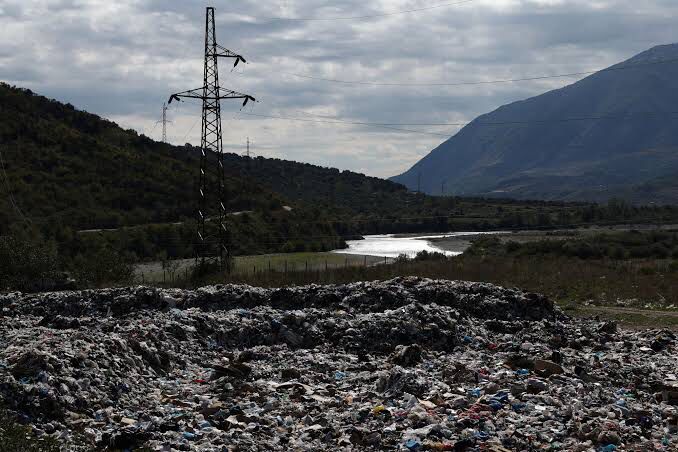
UNESCO deemed the Vjosa valley in Albania as one of the 26 newly-designated Biosphere Reserves. Image credit: The Independent
(The Post News) – In September, UNESCO deemed the Vjosa valley in Albania as one of the 26 newly-designated Biosphere Reserves. In a statement, UNESCO says that it is part of an initiative to safeguard some of the planet’s richest and most fragile ecosystems.
Since then, concerns have emerged as strong winds continuously blow scraps of plastic from an open landfill into the Vjosa River in Albania; just a few hundred metres upstream, a large pipe releases sewage into the river; and diggers are scrapping gravel from the riverbed to make concrete, altering the river’s path and destabilising its banks, according to experts.
Several parts of the valley that follow the river’s course from Northern Greece to Albania’s Adratic coast seem to meet the criteria of an environmentally rich area. These areas are home to otters, Egyptian vultures and rare plant species. Being one of the last uninterrupted waterways in Europe, the river goes through tree-lined gorges and lush empty valleys. The government then declared it as a national park in 2023.
Since the declaration, it has been an advantage for Albania, the 2.4-million-strong-strong Balkan nation whose coastlines and mountain ranges have become a tourism hot-spot and which is now racing towards the European Union (EU) membership by the end of 2029.
Yet beneath the dramatic landscape, environmentalists are concerned for the future. During one of her visits to the valley last week, Besjana Guri from a non-governmental environmental organisation Luri (River) said that international recognition papers like UNESCO do not solve these problems.
Sofjan Jaupaj, Albania’s Environment Minister, who has a framed copy of the UNESCO designation in his office, took note of the problems stating that his ministry intends to spend over 150 million euros for sewage water treatment and closing all landfills.
To most, the damage is already done, as oil wells and bitumen pits line the river, increasing the risk of pollution.
About the Author