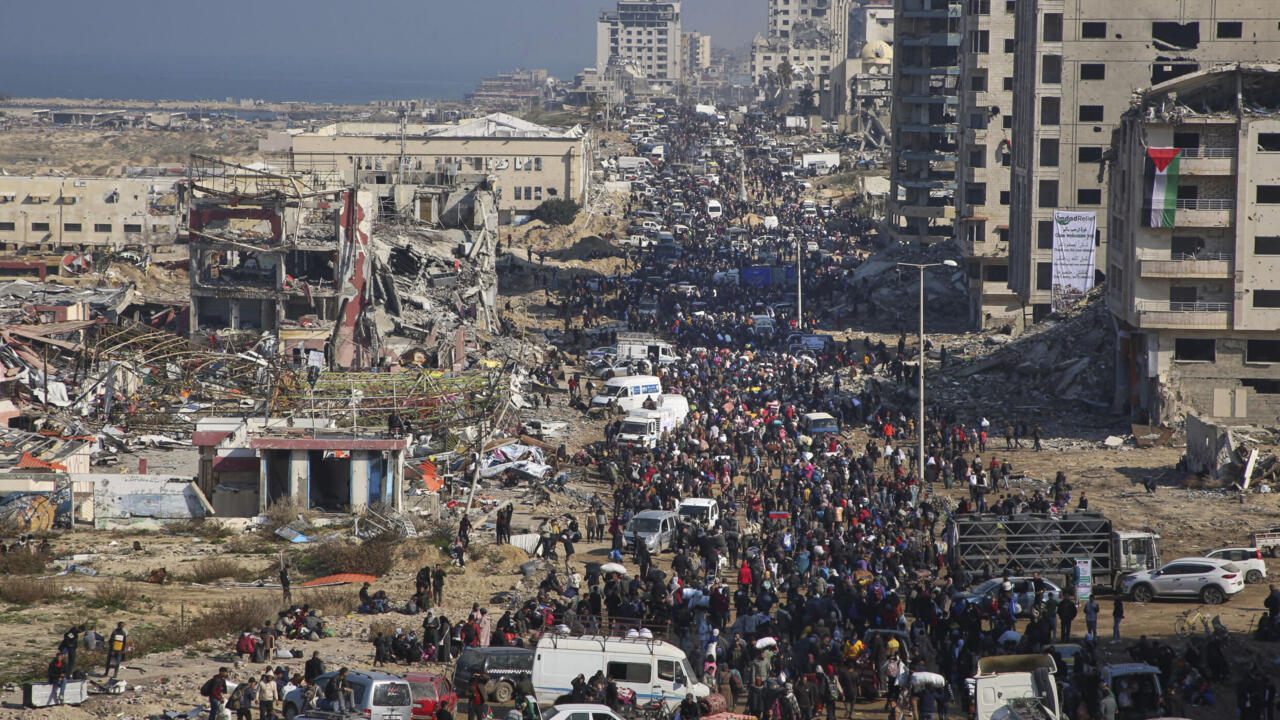
Displaced Palestinians return to Gaza City, passing the ruins of their homes destroyed by Israel bombardments. Image credit: France 24
(The Post News) – An estimated 500,000 Palestinians have returned to the northern Gaza Strip since the ceasefire went into effect, said Mahmoud Basal, a spokesman for the enclave’s Civil Defence agency. Tens of thousands more made the dangerous trek north in the last hours, many seeking their homes, or what is left of them, and missing family members.
Basal reported to NBC News that heavy machinery and supplies of shelters were urgently required to house the great numbers trekking north. He added that up to 10,000 individuals continue to be feared trapped in the rubble, with rescue teams fighting to retrieve bodies under critical shortages of fuel and machinery.
Mass Graves Unearthed After Israel Withdrawal
After Israeli soldiers retreated, a minimum of 135 dead bodies were dragged out from beneath the wreckage in Gaza, Wafa, the Palestinian news agency, reported. Dozens more were brought out from hospitals all over the enclave, of which 43 were removed from al-Shifa Hospital and 60 were taken out from al-Ahli Arab Hospital inside the city of Gaza.
Despite the ceasefire, 19 Palestinians were said to have been killed in Israeli airstrikes on Friday, including 16 members of the Ghaboun family whose home south of Gaza City was destroyed. It is unknown if the airstrikes took place before or after the ceasefire at noon local time.
When al-Rashid Street, the seafront road long closed under Israeli operations, reopened, tens of thousands of Palestinians displaced during the battles began moving northward. Reporters described scenes of families travelling by car, van, and donkey carts filled with furniture, determined to return home.
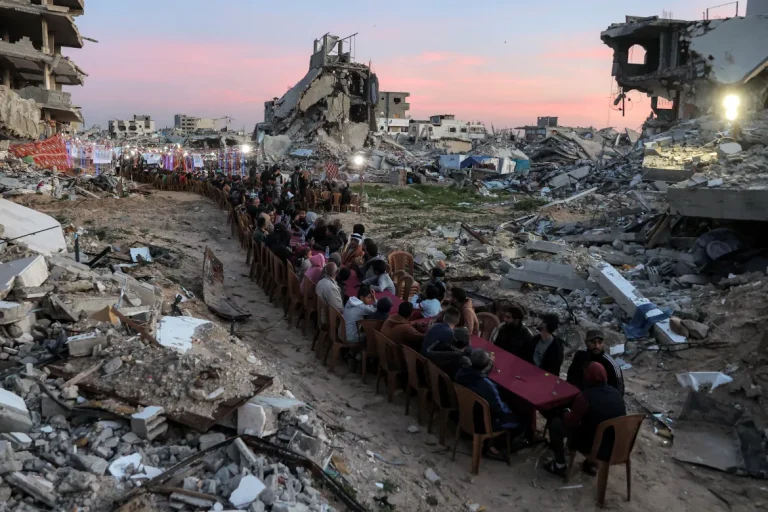
“Families have torn down their makeshift camps to move in and replant them atop what is left of their wrecked homes,” Al Jazeera’s Tareq Abu Azzoum reported from Nuseirat.
Gaza City, the bustling hub of the enclave, is ruined now, with no electricity, running water, or functioning infrastructure.
“I’m going to Gaza City in spite of no conditions for life there,” said Naim Irheem, whose son was assassinated and daughters were wounded. “However, I desire to return. We’ll establish a tent and dwell within it, whatever is possible.”
The return is not only bereavement for many, but also defiance and determination. “Each step backwards is a symbol of hope,” stated Al Jazeera’s Moath Kahlout.
Hamas, on the other hand, returned some 7,000 of its security forces to retake ground vacated by withdrawing Israeli forces. Five new governors, incidentally, all former military personnel, were named by the organization to govern the region.
A mobilisation notice sent out by SMS stated: “We declare a general mobilisation to respond to the call of national and religious duty, so that Gaza might be cleansed of outlaws and of Israeli collaborators.”
As reported locally, armed Hamas units appear to be visible again in many of the districts, some in uniform, others in civilian clothing.
A Hamas spokesman told the BBC that the arms of the movement “are there in order to resist occupation and will remain as long as the occupation continues.” But a former Palestinian Authority security official warned that the movement’s renewed militarization could trigger new internal conflict.
U.S. Denies Plans for Troops in Gaza
U.S. Central Command Chief Admiral Brad Cooper explained to X on Saturday that no American troops would be based in Gaza, despite the fact that Washington is to contribute to the coordination of post-war stability efforts.
“This great work will be achieved with no U.S. boots on the ground in Gaza,” Cooper stated after visiting the enclave.
The United States will send about 200 troops to Israel to assist with humanitarian logistics and security coordination beyond the strip.
For Palestinians, the journey north is equally a return to home and an encounter with loss. “We went back to the unknown,” Maryam Abu Jabal explained. “We don’t know whether our homes still stand. We simply pray to God that they do.”
As Gaza’s inhabitants sort through embers and memories, their return is a communal act of resilience, a testament to having lived through disaster.
About the Author