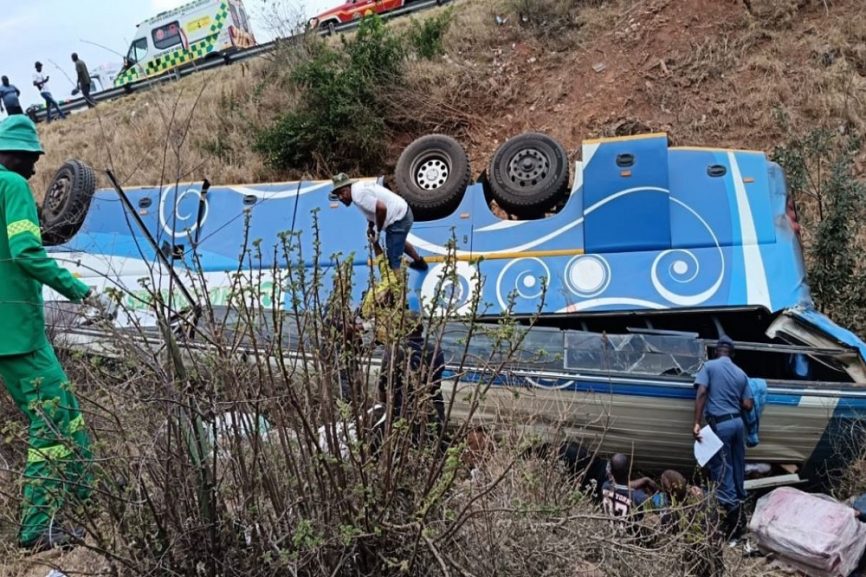
A bus crashed on the N1 North near Ingwe Lodge in Musina. Image credit: Arrive Alive
(The Post News) – Authorities have confirmed the finding of boxes of antiretroviral (ARV) pills and other prescription pharmaceuticals within the rubble, which has taken a negative turn in the investigation into the terrible bus accident that killed at least 43 people near Makhado.
As soon as the discovery was made, the accident investigation was intensified to include a significant criminal investigation into possible cross-border pharmaceutical smuggling.
Earlier this week, a cross-border bus that was heading from Gqeberha to Harare, Zimbabwe, went off the N1 and overturned. Among the passengers’ belongings, emergency personnel discovered the illegal medical supplies, which are strictly restricted and in high demand in the area.
The unusual nature of the find was confirmed by a senior person participating in the recovery effort. “There was no documentation for the medical cargo, and it’s unclear whether the transport of these drugs was legal or who the intended recipient was,” said the official.
The investigation into the cause of the incident, which is still taking into account driver fatigue, mechanical failure, and prior allegations of speeding and overloading, has taken a more complicated turn due to the presence of the prescription. According to official records, there were 21 Malawian and 52 Zimbabwean passengers.
Premier Condemns Criminal Conduct
The disclosures caused great anxiety, according to Limpopo Premier Dr Phophi Ramathuba, who said the natural disaster now covers extensive problems.
“This is not just a tragic accident it now involves deeper issues of public health and criminal conduct,” Ramathuba stated. “We are treating this with the seriousness it deserves.”
Commissioner Michael Masiapato of the Border Management Authority (BMA) has pledged to work with law enforcement and the Department of Transport to implement more stringent cross-border transportation regulations.
The BMA stated that it is currently investigating if the ARVs had the required documentation to enter South Africa, a major conduit for the trafficking of these drugs.
In order to effectively enforce passenger safety standards and stop illegal activity, the crash has rekindled calls for stronger inspections and enhanced control of long-distance buses, especially those that operate on international routes.
Survivors are receiving treatment in hospitals across Makhado and Polokwane, while the process of identifying the 43 deceased, who were mostly Zimbabwean and Malawian nationals, remains ongoing.
About the Author