IMG 20240605 WA0018
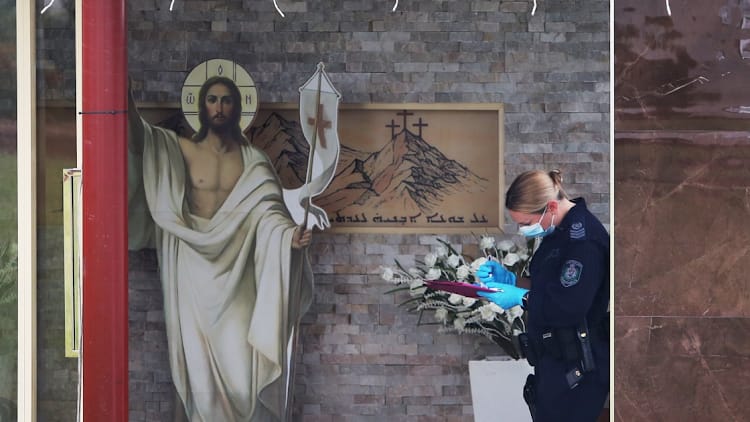
Picture Courtesy: (Lisa Maree Williams) A portion of the NSW Quantifiable Police is seen at Christ The Incredible Shepherd Church inside the Wakeley locale of Sydney, Australia.
(The Post News)- Australia’s cyber safety regulator has dropped its legal challenge against X, owned by Elon Musk, over the removal of videos depicting the stabbing of an Assyrian church bishop in Sydney.
This follows a decision by Judge Geoffrey Kennett in May, who rejected the regulator’s attempt to extend an order requiring the social media platform to block the videos, which were considered a terrorist attack by Australian authorities.
On April 16, 2024, a portion of the NSW Quantifiable Police is seen at Christ The Incredible Shepherd Church inside the Wakeley locale of Sydney, Australia.
Commissioner Julie Inman Grant announced that the organization has decided to drop its legal case against X.
“Most Australians recognise this kind of reasonable texture have to not be on broadcast TV, which asks a self-evident address of why it has to be allowed to be scattered energetically and accessible online 24/7 to anyone, tallying children,” Donate communicated.
She communicated concern about how easily adolescents could find violent content on X. Grant stated that she initially sent X a notice to remove the video to prevent the “extremely violent film from going viral,” which could potentially incite further violence and cause greater harm to the community.
“I stand by my specialists and the choices eSafety made,” she said.
A 16-year-old has been charged with terrorism following the alleged April attack. The legal battle led to tense exchanges between Elon Musk and high-ranking Australian officials, including Prime Minister Anthony Albanese, who called Musk “an arrogant billionaire” for refusing to remove the video. Musk has shared memes criticising the regulatory order, claiming it is censorship.
Other organizations, including Meta, TikTok, Reddit, and Telegram, removed the video when requested. X restricted Australian users from viewing the posts but refused to remove them globally, arguing that one country’s rules should not govern the internet.
However, the regulator argued that geo-blocking Australians, as proposed by X, was ineffective because users could use virtual private networks (VPNs) to bypass the restrictions.
About the Author