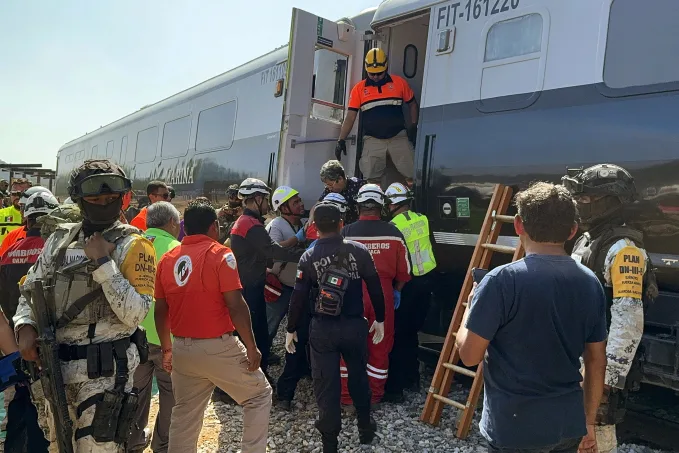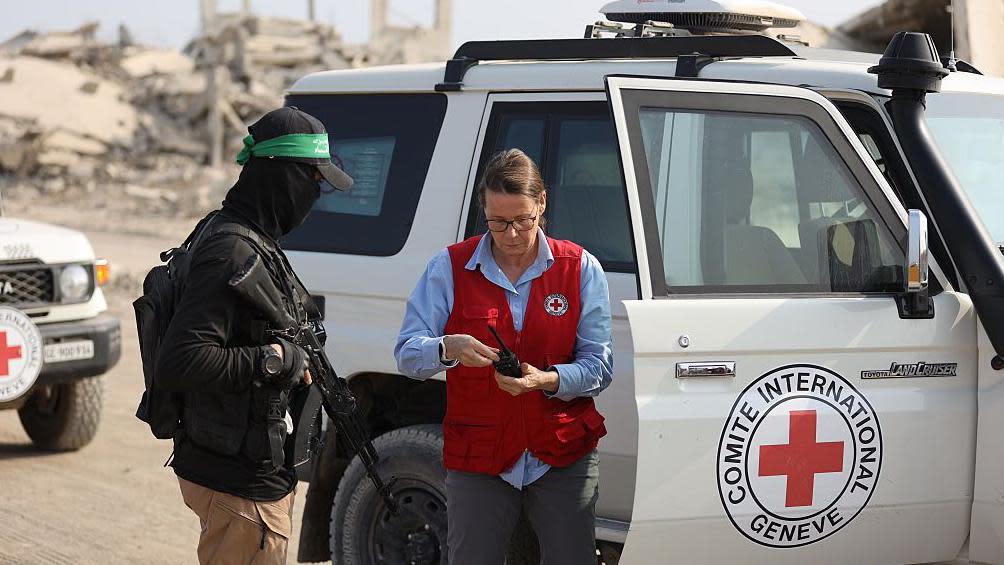
Red Cross transferred the body of Israeli hostage Meny Godard to Isreali forces under the Gaza ceasefire agreement. Image credit: Anadolul
(The Post News) – Israel received the body of 73-year-old hostage Meny Godard from Gaza on Thursday. This was a major but somber step in the U.S.-brokered ceasefire agreement between Israel and Hamas. The International Committee of the Red Cross transferred the remains to Israeli forces inside the Gaza Strip. The military then took the remains for forensic identification. Prime Minister Benjamin Netanyahu’s office confirmed that experts swiftly identified the remains as Godard’s.
Godard lived on Kibbutz Be’eri and died during the 7 October 2023 Hamas-led attack on southern Israel that killed 1,200 people and led to the abduction of 251 hostages. Militants took Godard’s body into Gaza after the assault. His wife, Ayelet, also died during the attack. “The government remains committed to returning all of our fallen hostages for proper burial,” the prime minister’s office said in a statement.
Body Found in Khan Younis
Hours before the transfer, military wings of Hamas and Palestinian Islamic Jihad made an announcement. They stated that they had found Godard’s remains in the Khan Younis area of southern Gaza. Islamic Jihad said its fighters recovered the body during recent searches in areas devastated by two years of war.

Hamas pledged to release all 20 surviving hostages under the ceasefire agreement in October. They also agreed to return the remains of 28 captives who had died. Until Thursday, 24 bodies had been returned. With Godard’s repatriation, 25 of 28 sets of remains have now reached Israel. Three bodies – two Israeli and one Thai – remain inside Gaza.
Israel has so far released approximately 2,000 Palestinian prisoners and detainees. It has also handed over hundreds of bodies of Palestinians in return. Israeli officials blame Hamas for delaying searches for bodies of slain hostages. The militant group insists remains are trapped under rubble from Israeli airstrikes and demolitions.
The transfer comes as the United States ramps up its effort. It aims to win United Nations Security Council approval for President Donald Trump’s Gaza peace plan. This plan underpins the current truce. U.S. diplomats warned that delays in approving the resolution could carry “grave consequences” if the fragile ceasefire collapses.
Russia countered with a proposal, arguing that the U.S. draft is not balanced. According to a diplomat, the U.S. resolution calls for:
A two-year transitional governing council for Gaza, called the Board of Peace headed by Trump. A 20,000-strong International Stabilization Force without US troops. A mandate to disarm nonstate armed groups and secure humanitarian corridors. Cooperation on border security by Israel, Egypt, and newly trained Palestinian police. A pathway toward Palestinian self-determination and statehood, contingent on reforms within the Palestinian Authority.
Speaking at the UNSC, U.S. Secretary of State Marco Rubio said negotiations show “good progress.” However, several UNSC members remain concerned about oversight. They also worry about the Stabilization Force’s rules of engagement.
Ceasefire Violations and Humanitarian Strains in Gaza
A month into the truce, life in Gaza is still unstable. Satellite imagery is analyzed by BBC Verify. The imagery shows that Israeli forces have demolished over 1,500 buildings in the areas they control. This destruction has occurred since the ceasefire began on 10 October. Many of those structures showed no combat damage before their destruction, which has raised concerns of deliberate demolition.
Gaza’s Government Media Office reports that Israel conducted 282 ceasefire violations, including airstrikes, raids and sniper shootings, killing more than 240 Palestinians and injuring hundreds during the truce. Israel says its forces target “terror infrastructure” in permitted security operations.
Humanitarian aid also remains far below agreed levels. Under the ceasefire, 600 aid trucks a day are called for. Between October 10 and November 9, less than 3,500 trucks entered Gaza, less than one-quarter of the promised total. The World Food Programme reports that only half of Gaza’s population receives sufficient food.
The Hamas-run health ministry reports more than 69,000 Palestinians killed since October 2023. The UN describes these figures as generally reliable. Israel disputes the totals but has not released its own data.
Diplomats warn the ceasefire is likely to fail. This will happen unless the main priorities advance in the near future. These priorities include governance, withdrawal of troops, border control, and reconstruction. For many civilians, the word “peace” no longer reflects their daily life.
“My home was heaven,” said Lana Khalil, displaced from Abasan al-Kabira. “Now it’s rubble.” The repatriation of Meny Godard’s body highlights the human cost of this conflict. It also reflects the fragile ceasefire that underpins the future of Gaza.
About the Author