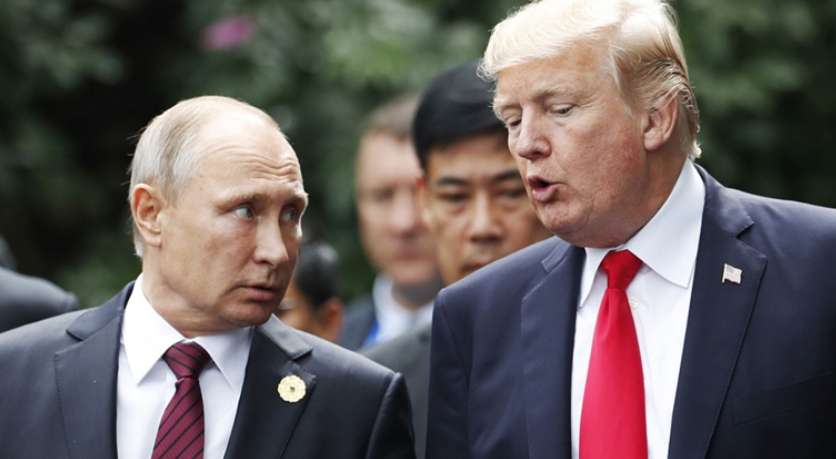
Trump and Putin to discuss Ukraine-Russia land swap peace deal on August 15 in Alaska, with European Commission and leaders involved. Image Credit: Times of India.
(The Post News) – Ukraine has sharply revised the US-backed peace plan to end the war with Russia. It has removed several of Moscow’s most aggressive demands. Additionally, Ukraine is pushing for stronger European involvement. The changes follow high-level talks in Geneva over the weekend. They also precede a possible meeting between President Volodymyr Zelenskyy and US President Donald Trump later this week.
Kyiv Pushes for Fair Terms
Kyiv has removed the provisions that demanded Ukraine’s withdrawal from the cities it controls in Donbas. It also removed the limitation of its military and the abandonment of its NATO path. There are now 19 points in the plan, instead of the initial 28. Ukrainian and European officials have insisted that talks must start from the current frontline. Moscow cannot dictate Ukraine’s alliances.

First deputy foreign minister of Ukraine Sergiy Kyslytsya said negotiators placed the most sensitive points “in brackets.” This allows Ukrainian President Volodymyr Zelenskyy and Trump to address them personally.
Zelenskyy said on Monday that, after revising the document, Washington included “many correct elements.” He expects to discuss remaining issues with Trump personally at the White House.
He also warned that Russia intends to step up attacks with the aim of destroying the peace effort. “If we are truly ending the war, there must be no missiles. There must be no massive strikes on our people,” Zelenskyy said.
The Kremlin responded swiftly. Putin’s chief foreign-policy aide Yuri Ushakov said Russia will aim to “rework” parts of the plan. He rejected the European counter-proposal as “nonconstructive.”
European leaders were more positive after reviewing their own draft during the EU-Africa summit in Angola. They remained cautious. Ursula von der Leyen, president of the EU Commission, emphasized the significance of Ukraine’s autonomy in decisions about its future. EU Council Chief António Costa said, “The process now has a solid basis,” but major issues remain open.
National leaders took harder lines.
Poland’s Donald Tusk demanded that a deal “strengthens security” and urged Europe not to pay for Russia’s aggression. Sweden’s Ulf Kristersson said that Russia “must be forced to the negotiating table.” Germany’s Friedrich Merz warned that peace “won’t happen overnight” and called for deeper Russian involvement in future talks.
Fighting Continues Despite Diplomacy
As negotiations continued, Ukraine and Russia traded overnight strikes; attacks in Russia’s Rostov region killed at least three people, while missile and drone strikes on Kyiv’s energy sector killed one person and wounded seven.
Ukraine’s delegation returned from Geneva with what it saw as a more realistic draft. Zelenskyy also spoke to US Vice-President JD Vance, who supported bringing European leaders more directly into the process.
Whether this revised plan will gain approval from Kyiv, Washington, Brussels, and Moscow is yet to be seen. The next round of diplomacy, complete with a possible meeting between Zelenskyy and Trump, will determine if this new momentum leads to a breakthrough or is defeated by competing demands.
About the Author