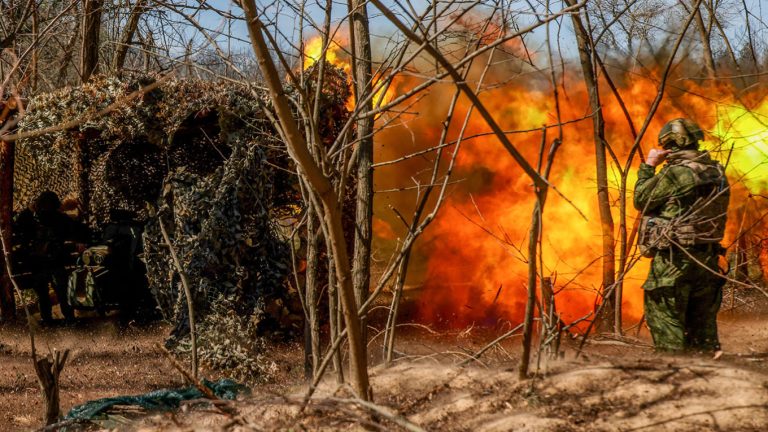
China’s People’s Liberation Army (PLA) launched the second day of live-fire military drills around Taiwan, firing rockets and deploying dozens of fighter aircraft and navy vessels. The two-day war games, code-named “Justice Mission 2025”, aim to simulate a blockade of Taiwan’s key ports and assaults on maritime targets.
The Drill Began on Monday Expected to End Tuesday
The drills began on Monday and have been condemned by Taipei as “highly provocative and reckless” military intimidation by Beijing. China claims Taiwan as part of its sovereign territory and hasn’t ruled out military action to seize the island democracy.
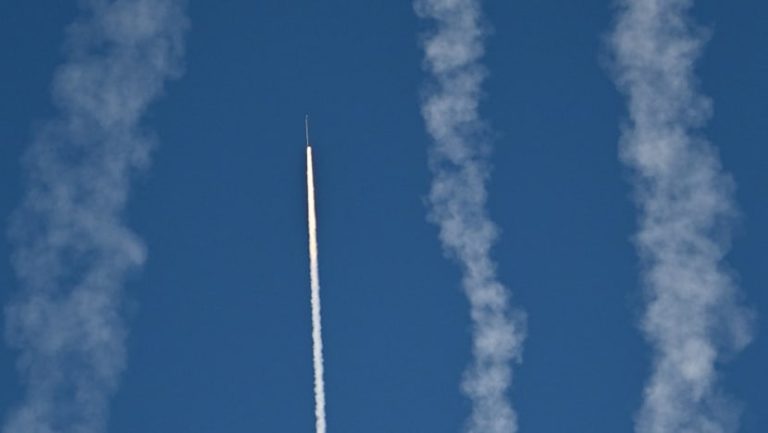
At least 10 rockets were launched in quick succession from Pingtan island, China’s closest point to Taiwan, leaving trails of white smoke and sending booming sounds reverberating throughout the area. Tourists rushed to snap photos and videos of the rockets.
The PLA’s Eastern Theatre Command stated that the exercises tested capabilities of sea-air coordination and integrated blockade and control. The drills involve destroyers, frigates, fighters, bombers, and drones, focusing on identification, verification, warning, and expulsion, as well as simulated strikes and anti-air and anti-submarine operations.
Taiwan’s President Lai Ching-te vowed not to escalate conflicts or provoke disputes, while China’s top diplomat Wang Yi warned that any attempt to obstruct China’s unification with Taiwan would “inevitably end in failure”.
The drills coincide with a recent US arms sale to Taiwan, worth $11.1 billion, and comments from Japan’s prime minister suggesting a possible military response if China attacks Taiwan. China has threatened to “forcefully counter” such moves.
Taiwan’s defence ministry detected 130 Chinese military aircraft near the island in 24 hours, along with 14 Chinese navy ships and eight government vessels. The island’s coast guard deployed 14 ships to monitor the naval activity.
The exercises are expected to finish at 6 pm on Tuesday, with China’s designated exercise zones affecting international shipping and aviation routes. Dozens of flights to offshore islands were cancelled, affecting around 6,000 passengers.
About the Author