IMG 20240627 WA0004
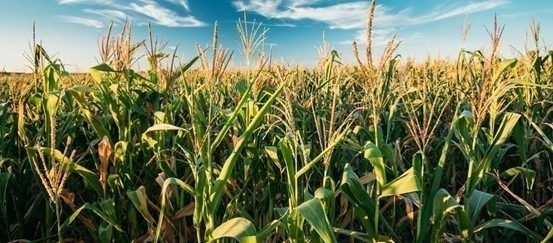
Picture courtesy: (DTE staff )Maize is estimated to reach 13,3 million tonnes a lower production as compared to previous harvest.
Phio Mohlahlo
(The Post News)- South Africa’s crop yield for 2023/24 is marked at an estimated 16 million tonnes, 20% lower than that of the 2022/23 harvest season, according to data published by the Crop Estimates Committee.
South Africa’s primary source of starch, Maize is estimated to reach 13,3 million tonnes, narrowly above the yearly average maize consumption of 12 million tonnes.
Most of the nation’s citizens consume white maize, which is expected at 6.4 million tonnes while yellow maize is estimated at 6.9 million tonnes, both are down by 25% and 13% respectively.
The lower yields are attributed to drought and heat brought by El Nino, through February and March.
“The recent rains in much of South Africa’s summer crop-growing regions are too late. The damage to the crops occurred in February and March, during the heatwave and the El Nino-induced dryness” remarks Andile Sihlobo in his article, an agricultural journalist who specializes in agricultural reporting with Agricultural Economics Today.
“The current crop forecast reflects this challenge, as the major crops are down notably compared to the 2022/23 production season, ” he adds.
Although El Nino is a natural phenomenon, its effects and the effects of climate change such as global warming, have further exacerbated South Africa’s water crisis and its arable land issue.
According to the Department of Water and Sanitation, South Africa is categorised as a water-scarce country and it is ranked as the 30th driest country in the world with a rapidly growing population, that grows by an average of 1% a year, based on the Worldometer elaboration of the latest United Nations data.
On top of that, according to the Development Bank of Southern Africa, South Africa has a land area of 122.3 million hectares, of which farmland makes up 100.6 million hectares, and 83.3% of it, is grazing land. Only 16.7 million hectares is considered potential arable land, meaning land that can be ploughed to plant crops.
A research paper by the United Nations University World Institute for Development Economic Research (UNU-WIDER), reveals that irrigation demand in South Africa has a high chance of increasing because of the increases in temperature and water evaporation.
“Rain-fed crops are likely to experience a decline in average annual yields. This is particularly the case for maize and wheat, which are stable foods” reads the paper.
The paper continues to make the point that “Agriculture is critical to South Africa’s future economic growth, job creation and national food security. However, the sector is directly affected by precipitation, temperature and evaporation and is thus particularly vulnerable to climate change”.
The effects of climate change will differ across space and time, some regions may become dryer, such as the Eastern Cape province, while at some unpredictable moments, some areas can experience floods, damaging planted crops, and while some areas are experiencing a drought.
Some could see increased rainfall, in months where it does not usually rain or rain as much.
In recent times, South Africa has experienced unpredictable weather events, such as the two different kinds of tornados that hit Kwa Zulu-Natal, violent ocean waves crashing into southmost parts of the Western Cape, Gauteng experiencing snowfall and frequent hail storms during winter, with hail the size of tennis balls.
With agriculture consuming 60% of South Africa’s available water resources, climate-driven alterations to water demand along changes in varying crop yields, the threat of food insecurity is very real.
Climate Change does not only threaten crop production and yield, it also affects fresh produce and livestock production.
About the Author