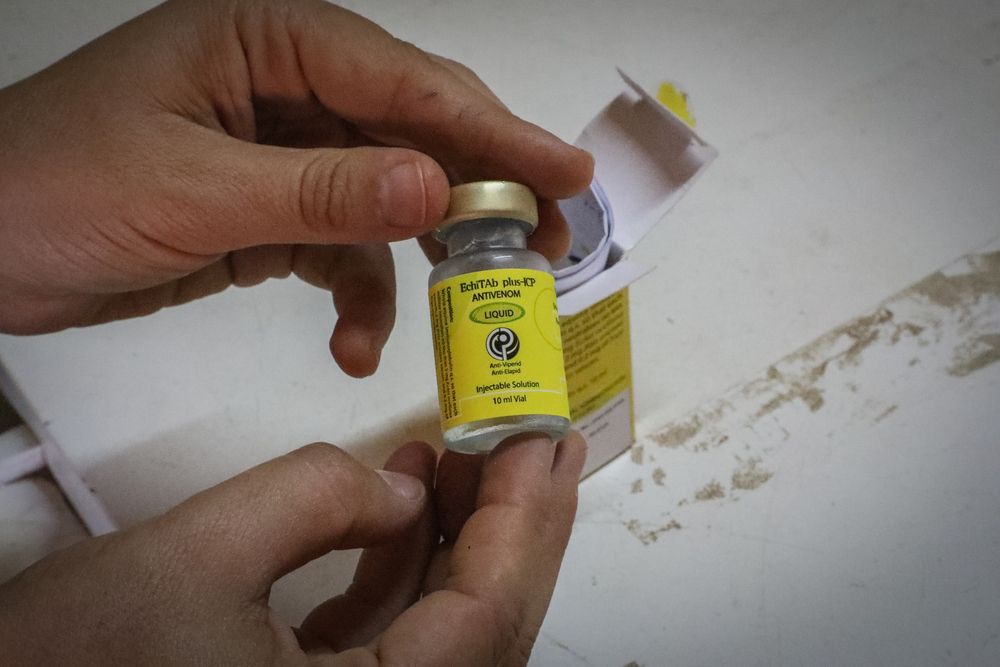
Antivenom becoming shortage in amid rise in snakebite cases. Image: MSF Southern Africa
(The Post News)- Snake bites are a problem as they kill tens of thousands yearly. WHO has warned the snake bites are being exacerbated by climate-induced flooding in many countries with limited access to antivenoms. Every year, over 2.7 million people get bitten by venomous snakes, with an estimation of 138 000 deaths.
WHO snakebit expert, David Williams says one person dies from snake bite every four to six minutes. He says about 240 000 people are left with permanent disabilities each year. Snake venom has effects like the ceasing of breathing, create bleeding disorders which can lead to fatal haemorrhage, irreversible kidney failure and damage to tissues which can cause disability and loss of limbs.
Most victims of snake bites originate from the world’s tropical and poorest regions, and the ones worst affected are children because of their body size.
Williams had emphasised the disabilities caused by snake bites can drive not only the victims but their entire family into poverty partly because of the high cost of treatment, but also loss of income when the victim is the family breadwinner. He has warned the major problem was some regions of the world simply does not have enough safe and effective treatments available to them.
An example would be Sub-Saharan Africa only has access to just around 2.5% of the treatments it is said to need. It was explained by the UN health agency in 2019 the production of life-saving antivenoms was abandoned by many companies since the 1980s, which has sparked a large shortage in African and a few Asian countries, with being worst affected in the world being India, having 58 000 people dying because of snake bites yearly. The neighbours of India,
Bangladesh and Pakistan are also hard hit.
Williams says the impacts of climate change are worsening the situation in some places, he has pointed out how particular to how flooding can often increase the number of snakebites. He indicated Nigeria is currently going through a critical shortage of snake antivenom due to an influx of additional cases of snakebite brought about by the flooding.
The major flooding events in Pakistan, Myanmar, Bangladesh, South Sudan and many other countries are also followed by a rise in snakebites, The WHO also gave warning about climate change risked shifting the distribution and abundance of venomous snakes which possibly exposed previously unaffected countries to the dangers.
About the Author