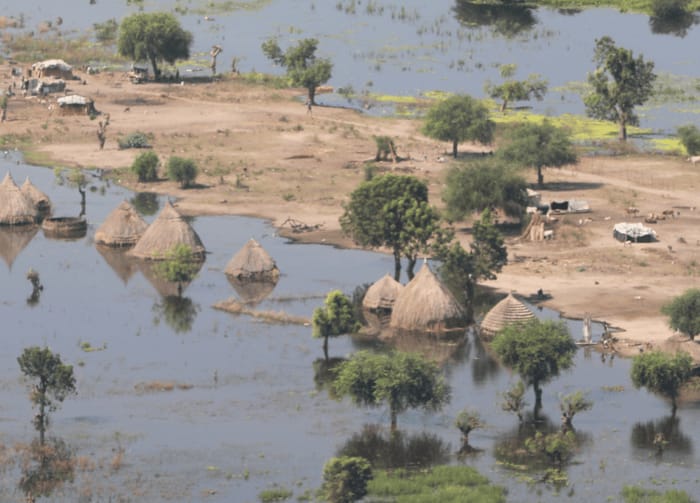
Climate-driven floods mixed with oil bring drought-like conditions. Image: ReliefWeb
(The Post News)- In South Sudan, herders have been scooping murky water from a small pond, being fully aware of the dangers they face if they drink it. Chihok Puot, chief of the herders, says the water is dirty because the area has oil in it.
A woman raising cows in the heart of the oil fields from the community of Nyatabah claims drinking the water would make one pant and cough. Despite knowing that the water is bad, they don’t have anywhere else as they are dying of thirst.
David Bojo Leju, a former oil engineer, has reported to BBC World Service that flooding in the areas is washing pollution into South Sudan’s water sources. Climate change exacerbates record flooding, leaving vast areas underwater for years. According to Mr. Bojo Leju, the floods are a disaster, while pollution from neglected oil facilities silently threatens the state.
South Sudan is known to be the youngest country and one of the poorest in the world. The country’s government hugely depends on its oil revenue. The major oil-producing state, Unity State, constantly experienced seasonal flooding. But since 2019, the extreme rains have brought in an overflow that submerged villages, grasslands, and forests. The rainfall in the state then intensified year after year, creating water buildup as it was trapped on the clay soil.
According to the UN World Food Programme (WFP), two-thirds of Unity State were submerged in 2022, which was the worst point. Currently, it’s stated that 40% is still under water.
Mr. Bojo Leju says spills from oil wells and pipelines were a recurring situation and claims he was involved in transporting contaminated soil away from roads so it would not be seen, and since then he has tried to raise concerns with company managers and says little was done and there was no treatment plan for soil. He further claims that “produced water,” which is the water released from the earth when oil is recovered and frequently contains hydrocarbons and other pollutants, was not adequately handled.
Daily meetings revealed excessive oil levels in produced water, exceeding global thresholds, which is then reinjected into the environment. Bojo Leju says that when the heavy rains began in 2019, dirt dykes were built around some spilled oil but were insufficient to withstand the amount of water.
The minister of agriculture in Unity State has blamed the deaths of over 100,000 cattle in the last two years on the floods combined with oil pollution.
A group of men and women who chop down trees to make charcoal in a forest close to Roriak say the only water they can find there is polluted. It has been found that even if the water is boiled, it still causes diarrhea and abdominal pain.
Scientists have uncertainties that the floods in Unity State will ever recede, but the residents have hope that they will return to a life of raising animals and living off the land.
About the Author