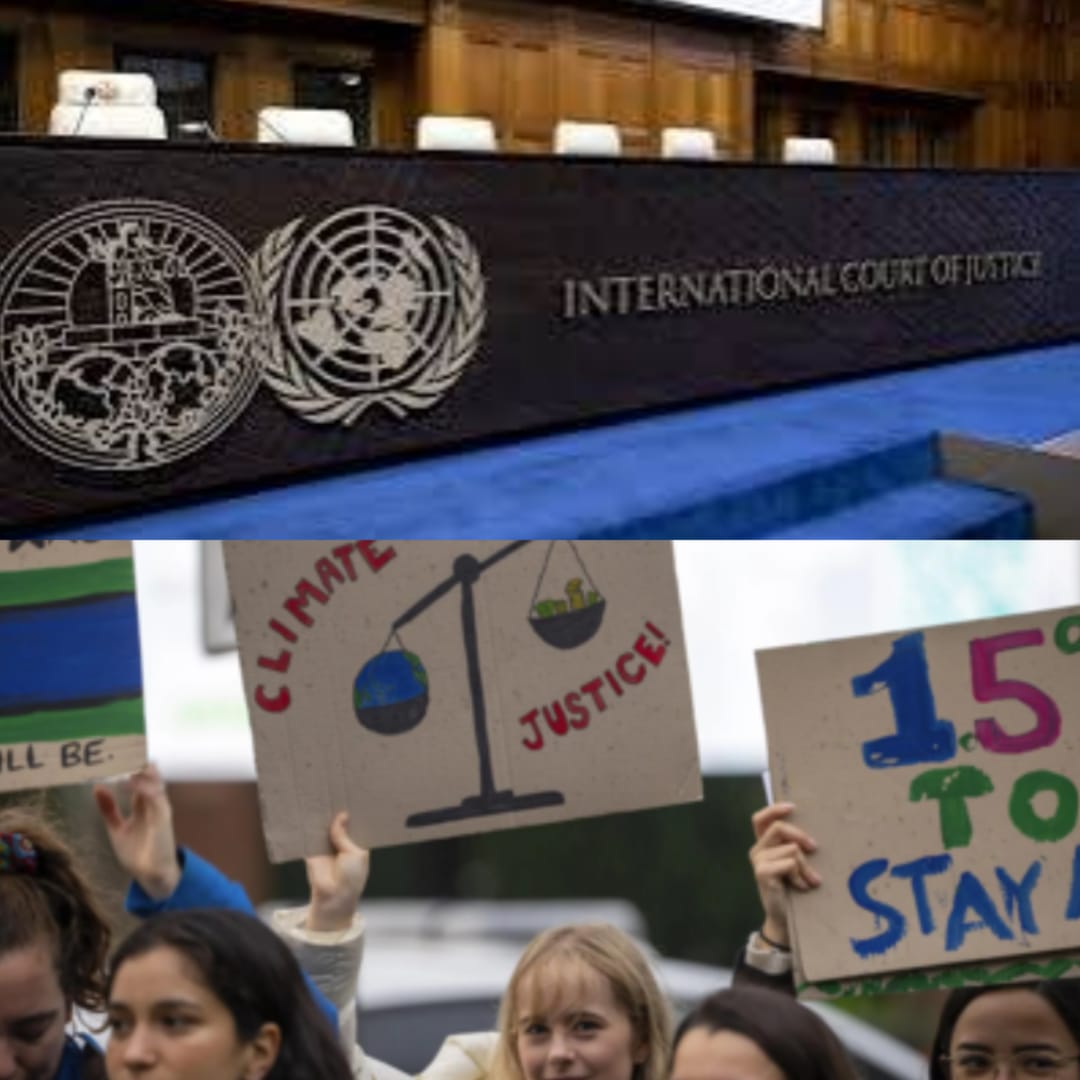
Landmark climate hearings begin at the International Court of Justice.
(The Post News)- The International Court of Justice (ICJ), located in The Hague, Netherlands, has initiated its largest case to date, hearing arguments from small island nations facing the grave existential threat of climate change. This significant case aims to hold major polluting nations accountable for their contributions to the global climate crisis, a situation that endangers the very survival of these vulnerable states.
Last year, the United Nations General Assembly (UNGA) tasked the ICJ with providing an advisory opinion on “the obligations of States in respect of climate change,” responding to years of advocacy from island nations. Rising sea levels and increasingly severe weather events—largely attributed to greenhouse gas emissions from industrialized countries—pose critical challenges for these nations.
During the opening session of the two-week hearings, Arnold Kiel Loughman, Attorney-General of Vanuatu, stressed the urgency of the situation. “The stakes could not be higher. The survival of my people and so many others is on the line,” he declared. Pointing out the inadequacy of domestic legal remedies in addressing the crisis, Loughman said states are expected to act with due diligence to prevent substantial environmental damage, cut emissions, and assist countries like mine in protecting the human rights of current and future generations.
While the ICJ’s decision will be advisory and not legally binding, it holds the potential to set a precedent for future legal actions. The court’s opinion could serve as a powerful instrument to hold major polluters accountable and inspire domestic lawsuits against governments and corporations.
Scientific data underscores the urgency of this issue. In the last decade, global sea levels have risen by an average of 4.3 centimeters (1.7 inches), with some Pacific regions seeing even higher increases. Since preindustrial times, global temperatures have risen by 1.3 degrees Celsius (2.3 degrees Fahrenheit), mainly due to fossil fuel consumption.
Ralph Regenvanu, Vanuatu’s climate change envoy, pointed out the significant disparity in contributions to the climate crisis. He emphasized that a small number of easily recognizable states have contributed the vast majority of history and current greenhouse gas emissions, while other countries, including his own, bear the brunt of the repercussions.
Cynthia Houniuhi, leader of the Pacific Island Students Fighting Climate Change, highlighted the cultural ramifications of rising sea levels. She argued that without land, human bodies and memories are separated from the essential relationships that determine who they are, and future generations are at risk, mentioning big polluters such as China, India, and the United States. According to Joie Chowdhury, a senior lawyer at the Center for International Environmental Law, significant polluters’ actions are illegal under international law.
The ICJ is set to hear submissions from 99 countries and over a dozen intergovernmental organizations, marking a significant event in its nearly 80-year history. The court’s 15 judges will hear arguments addressing two crucial questions:
- What are countries obliged to do under international law to protect the climate and environment from human-caused greenhouse gas emissions?
- What are the legal consequences for governments whose actions, or inactions, have significantly harmed the climate and environment?
At a recent U.N. climate summit, nations agreed to establish a fund to pool $300 billion annually by 2035 to assist vulnerable countries with climate disasters. Despite this, experts assert that this amount falls far short of the $1.3 trillion deemed necessary. In preparation for the hearings, the ICJ received an extensive briefing from the Intergovernmental Panel on Climate Change (IPCC) to ensure that deliberations are backed by scientific evidence. This fusion of science and law showcases the urgency of employing international legal frameworks to address climate change.
This case represents a pivotal moment in the global battle against climate change, with small island nations leading the demand for justice and accountability. While the ICJ’s opinion may not be legally binding, it has the potential to significantly impact international policy and legal landscapes, amplifying the voices of the most vulnerable in the global arena.
About the Author